
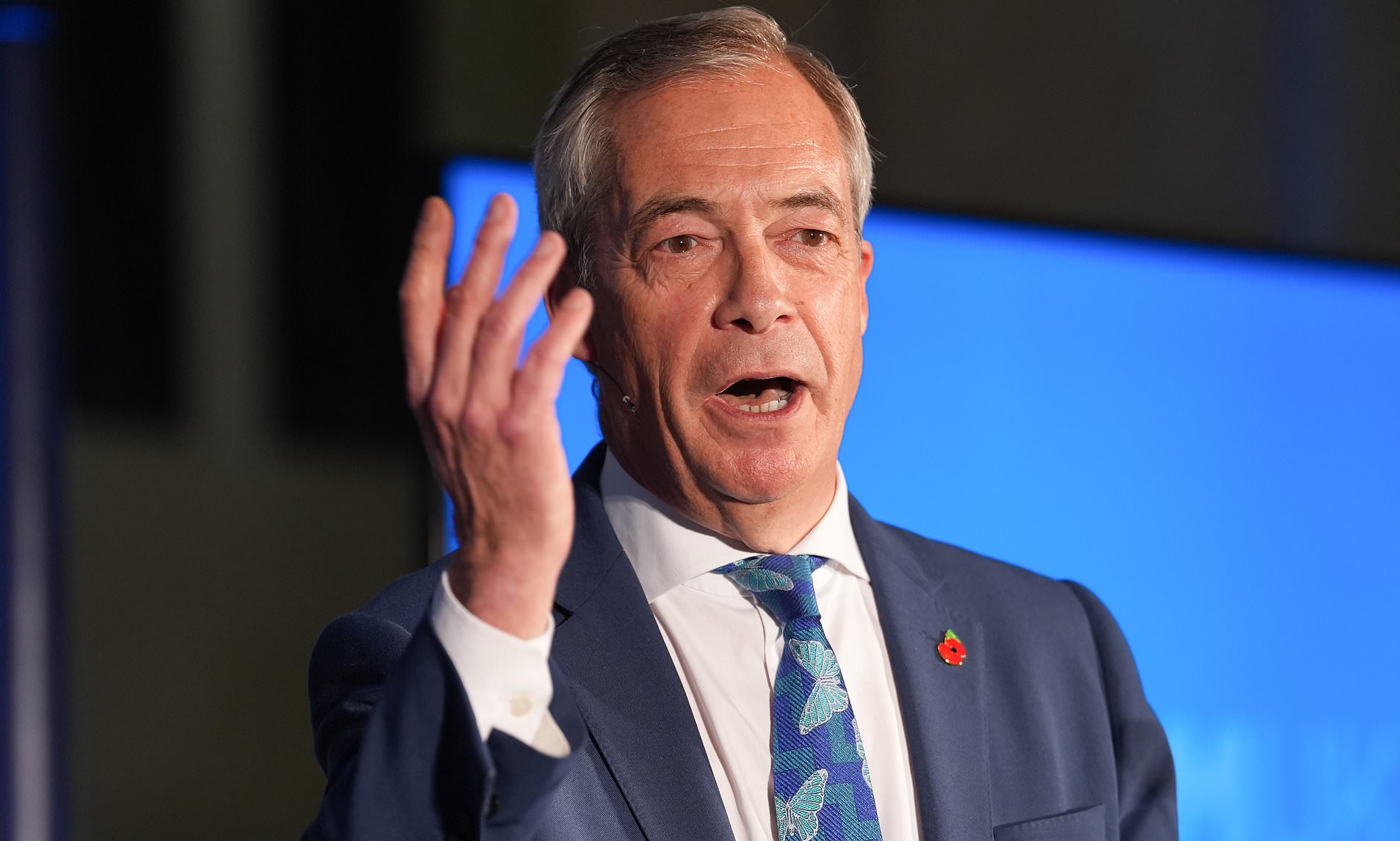
Reform UK’s Challenge in the Next General Election
New polling suggests that Nigel Farage could face significant challenges in securing a place at Downing Street during the next general election. A key factor in this potential obstacle is a possible tactical voting strategy among left-wing voters, which could prevent Reform UK from gaining ground in certain constituencies.
According to research conducted by YouGov, 57% of Liberal Democrat voters would consider switching their support to Labour if they were in a seat where Reform UK had a strong chance of winning. Similarly, nearly half of Green voters (46%) would also shift their allegiance under similar circumstances. This indicates a growing concern among left-leaning voters about the rise of Reform UK and their willingness to support traditional parties as a countermeasure.
The same survey revealed that voters from Labour, Liberal Democrats, and the Greens are even open to supporting the Conservatives in areas where Reform UK is seen as a threat. Specifically, 34% of current Labour voters, 39% of Lib Dem voters, and 19% of Green voters would back the Tories to prevent Reform from winning.
This trend highlights the impact of tactical voting, especially in regions where Reform UK has made notable gains. Senior figures within Reform have pointed to the party’s failure to win the recent Caerphilly by-election as an example of how such strategies can influence outcomes. Despite pledging to “throw everything” at the contest for a Welsh Senedd seat, Reform finished second behind Plaid Cymru, with Labour coming in third. It has been suggested that left-wing voters in the area opted for Plaid Cymru over Labour, seeing it as a more effective choice to block Reform’s victory.

The YouGov research further indicated that Labour and Liberal Democrat voters are more likely to engage in tactical voting compared to Reform supporters, who are less inclined to switch their preferences. In areas where Labour and Reform are competing closely, the gap between the two parties narrows significantly when considering the effects of tactical voting.
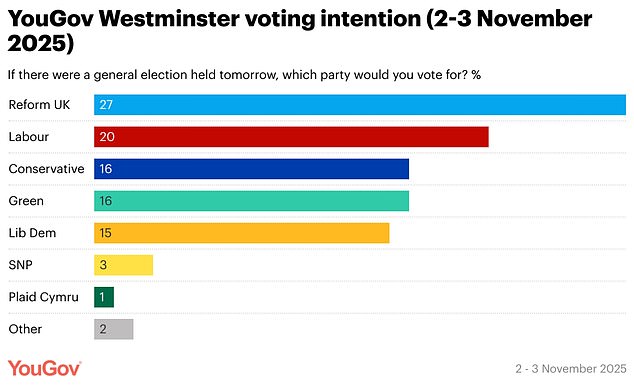
In terms of overall support, YouGov’s latest voting intention poll places Reform UK at 27%, with Labour at 20%, the Conservatives and Greens at 16%, and the Liberal Democrats at 15%. Anthony Wells, head of European political and social research at YouGov, commented on the situation, stating:
“What you have at the moment is essentially two blocks of voters on the Left and on the Right that are both prepared to support the party most likely to win in their seat. This slightly disadvantages Reform because the Left-leaning bloc is marginally larger than the Right-leaning bloc and there are some Conservative supporters who would say they would back a Left-of-centre candidate to stop Reform.”
Wells also noted that tactical voting played a major role in the last election, allowing Labour to secure a large majority with just 34% of the vote. With five viable parties now in the political landscape, the impact of tactical voting could be even more pronounced in the upcoming election.
- The potential for left-wing voters to shift their support to traditional parties poses a challenge for Reform UK.
- Tactical voting could become a decisive factor in determining the outcome of key constituencies.
- The balance between left and right-leaning voters may influence the overall results of the election.
- The presence of multiple viable parties increases the complexity of voter behavior and strategic decision-making.
As the political landscape continues to evolve, the role of tactical voting remains a critical element in shaping the future of British politics. Whether Reform UK can overcome these challenges and achieve its goals will depend on how effectively it navigates the shifting tides of voter sentiment.