
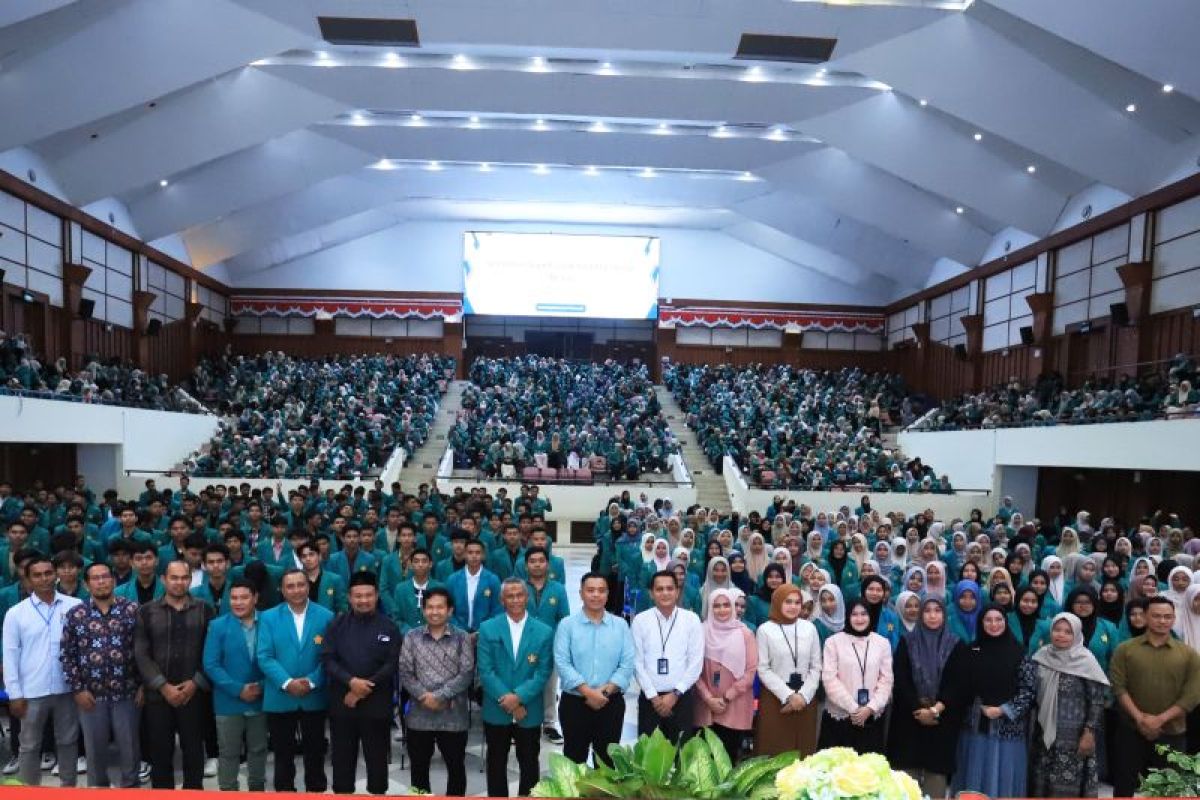
Government Expands Scholarship Opportunities for Students in Rwanda
The government of Rwanda has announced its plan to provide scholarships to 16,768 students who have been admitted to the University of Rwanda (UR), Rwanda Polytechnic (RP), and the Rwanda Institute for Conservation Agriculture (RICA) for the 2025/2026 academic year. This initiative follows the implementation of a double intake system, which aims to eliminate the one-year gap that students previously faced between completing high school and starting their higher education.
This reform is designed to reduce redundancy and keep students actively engaged in their academic journey. The Higher Education Council (HEC) highlighted that this change was made in response to the challenges students faced when they had to wait a year before enrolling in higher learning institutions.
Increase in Scholarship Beneficiaries
According to data obtained by The New Times from HEC, the number of students benefiting from government scholarships has increased significantly. In the 2024/2025 academic year, 11,789 students received scholarships, with 8,618 in Science, Technology, Engineering, and Mathematics (STEM) programs and 3,171 in non-STEM programs. For the 2025/2026 academic year, this number has risen to 16,768, including 11,135 STEM students and 5,633 non-STEM students.
The total figure includes 12,229 students at UR, 4,472 at RP, and 67 at RICA. HEC estimated that this expansion would result in a 39.2% increase in budget allocation. Both STEM and non-STEM students will be financed under this new system.
Student Reactions to Government Support
One of the new beneficiaries, Samuel Cyusa, who completed secondary studies in Mathematics-Chemistry-Biology (MCB) in the 2024/2025 academic year, expressed gratitude for the government support. He was admitted to UR’s College of Science and Technology to study Chemistry. “It’s something of great value because many of us come from families that cannot afford university tuition,” he said, noting that without the government loan, continuing his education would have been challenging.
Similarly, Divine Umuhoza, admitted to UR’s Busogo Campus, received a government scholarship to study Crop Production at UR’s College of Agriculture, Forestry and Food Science (CAFF). She emphasized the importance of the monthly Rwf40,000 living allowance, which adds to the benefits of the scholarship. Both Cyusa and Umuhoza are attending induction week and are set to officially begin their studies on November 10.
Double Intake System and Its Impact
HEC Director General Edward Kadozi explained that the double intake system was introduced to address the issue of students staying idle for a year after finishing high school. “This situation caused several issues, including students losing motivation or even dropping out,” he said.
Kadozi added that the Ministry of Education, HEC, UR, RP, and the Ministry of Finance and Economic Planning (MINECOFIN) jointly developed the plan to ensure its feasibility and sustainability. “We knew the numbers would increase, and we worked together to find practical solutions. Once this system is in place, we will no longer have students waiting at home for a year,” he observed.
Budget Implications
During the 2025/2026 national budget hearings in May 2025, over Rwf17.7 billion had initially been allocated for student loans, covering both continuing and new students, including Rwandans studying abroad. Kadozi confirmed that the funding will increase to reflect the expanded intake. “We are discussing with the Ministry to align with the number. But in principle, all the institutions, the Ministry of Education, the Ministry of Finance, the two higher learning institutions, they aligned on availing this budget,” he said.
Admission Criteria and Priorities
Admission to academic programs at UR and RP is based on the minimum entry requirements established by each college. Due to limited space, only a select number of applicants are admitted, which does not imply that others failed. Cut-off marks are determined for each program based on available capacity and applicants’ performance in their subject combinations.
Weighted aggregate scores are used for objectivity and fairness, and additional criteria apply for specific programs—such as clinical exams and interviews for Medicine and Dentistry, and fitness tests for Physical Education and Sports.
Once the list of admitted students (both STEM and non-STEM) is finalized, it is shared with HEC. Students may then apply for government scholarships, which are assessed and granted by HEC. Successful applicants sign loan contracts with the Development Bank of Rwanda (BRD), which manages student loans on behalf of the government.
However, not all admitted students receive government scholarships, as some choose to self-sponsor.
Focus on STEM and Health-Related Fields
Kadozi indicated that the government’s student loan programme primarily supports students in STEM and health-related fields, in line with national priorities and academic performance standards. This focus supports initiatives such as the “4×4 Program,” through which the Ministry of Health aims to quadruple the health workforce by 2028.
Currently, Rwanda has one healthcare worker per 1,000 population, as per data from the Ministry of Health. “We want to address the question of workforce in health sector, and that’s why we provided such opportunities,” Kadozi said.