
Supreme Court Issues Show-Cause Order in Writ Petition Against Probe Commission
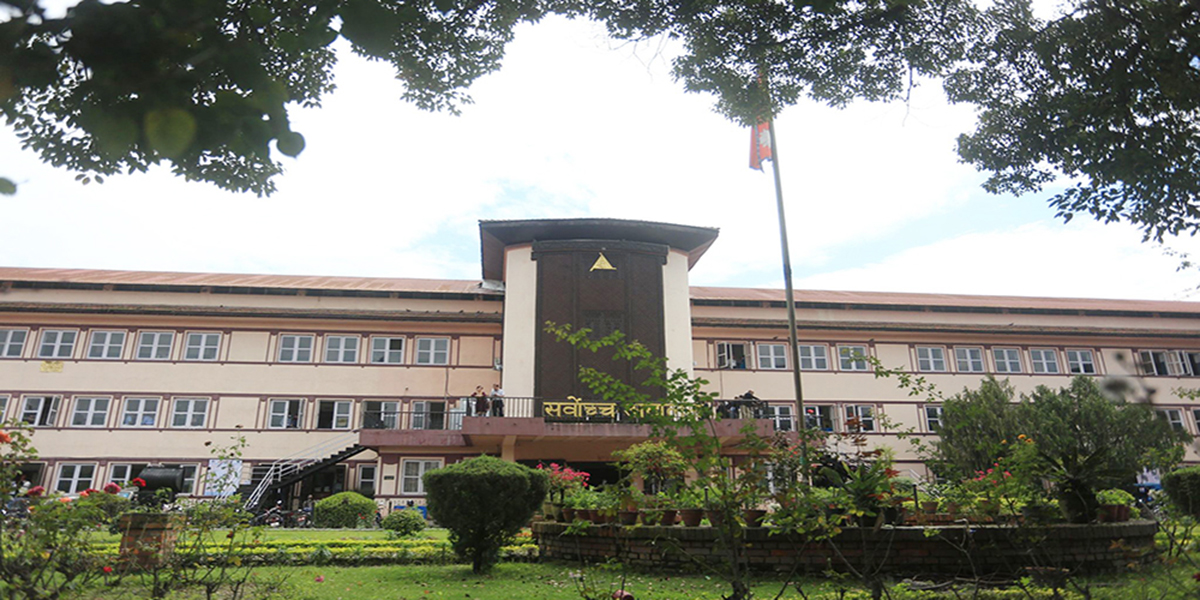
The Supreme Court (SC) of Nepal has issued a show-cause order, also known as a mandamus, and requested a written response in a writ petition that challenges the probe commission established to investigate incidents that occurred on September 8 and 9. The decision was made by a joint bench comprising Acting Chief Justice Hari Prasad Phuyal and Justice Abdul Aziz Musalman. The court directed the respondents to submit a formal reply to the petition.
The writ petition was filed by Bipin Dhakal, who has raised concerns about the impartiality of the commission. The petition names the Office of the Prime Minister and Council of Ministers (OPMCM) at Singha Durbar as one of the respondents. According to the petition, the commission is not neutral and may be biased in its approach to the investigation.
The SC emphasized that although an interim order was requested, the matter requires a full hearing before it can be decided whether such an order should be granted. As a result, no interim order has been issued at this stage.
Background of the Probe Commission
The probe commission under scrutiny was formed to examine the incidents of violence and arson that took place during the Gen Z movement. It is chaired by Gauri Bahadur Karki, with members Bigyan Raj Sharma and Bishweshwar Prasad Bhandari. The commission’s role is to conduct a thorough investigation into the events and ensure that justice is served.
The formation of the commission has been met with mixed reactions. Some have welcomed it as a step toward accountability, while others have questioned its independence and effectiveness. The current legal challenge highlights growing concerns about the legitimacy of the investigative process.
Legal Proceedings and Next Steps
The court’s decision to issue a show-cause order indicates that the matter will be taken seriously and will require a detailed response from the respondents. This move allows the court to assess the validity of the allegations and determine the next course of action.
The respondents, including the OPMCM, are expected to provide their arguments and evidence in support of the commission’s operations. The court will then evaluate the submissions and decide whether further legal steps are necessary.
This case underscores the importance of transparency and fairness in judicial processes, especially when dealing with sensitive and high-profile matters. The outcome of this petition could set a precedent for future investigations and legal challenges.
Public and Political Reactions
The development has sparked discussions among political leaders, civil society groups, and the general public. Many have expressed concern over the potential implications of the court’s ruling on the integrity of the probe commission. Others have called for a more independent and transparent investigation process.
Public opinion remains divided, with some supporting the court’s intervention and others believing that the commission should be allowed to operate without interference. The situation reflects the broader challenges faced by institutions in maintaining public trust and ensuring accountability.
Conclusion
As the legal battle unfolds, the focus remains on the balance between judicial oversight and the need for effective investigations. The Supreme Court’s involvement signals the gravity of the situation and the importance of upholding the rule of law. The final outcome of this case will likely have significant implications for the future of similar legal challenges and the functioning of investigative bodies in Nepal.