
Understanding Currency Swaps and Their Role in Economic Stability
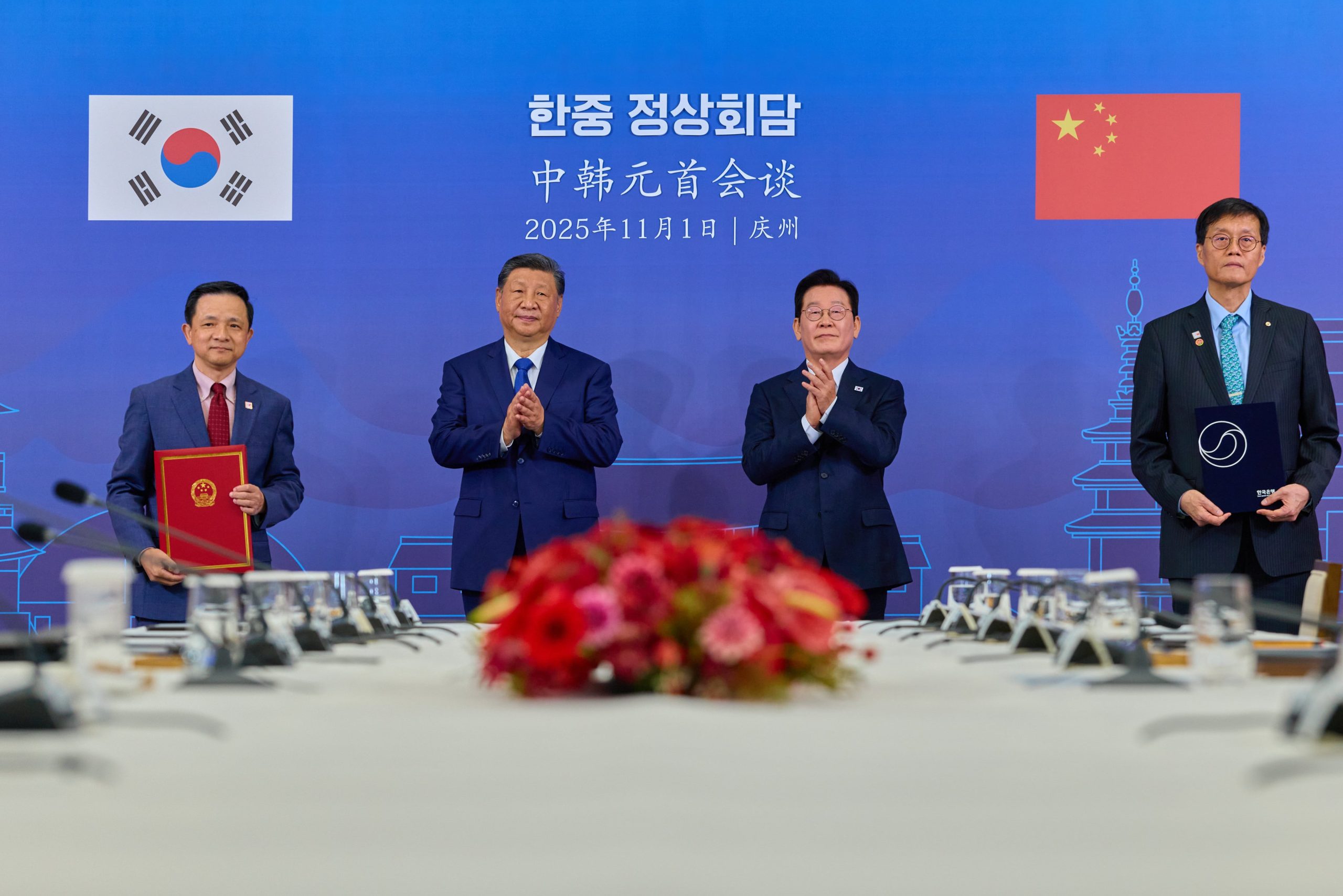
Currency swaps are an essential tool used by central banks to manage financial risks and ensure stability in the foreign exchange market. On the 1st, the central banks of South Korea and China renewed a 5-year, 70 trillion won (400 billion yuan) ‘won-yuan currency swap agreement’ during the first Korea-China summit. This agreement is expected to contribute to the stability of the financial and foreign exchange markets of the two countries and promote trade.
Q1. What is a Currency Swap?
A currency swap involves two central banks entering into a contract to lend each other money within a certain limit and return it after a set period. The agreement allows for the exchange of currencies between the two parties. For example, the Bank of Korea can borrow up to 400 billion yuan from the People’s Bank of China by depositing won, while the People’s Bank of China can borrow up to 70 trillion won from the Bank of Korea by depositing yuan. This mechanism helps both countries maintain liquidity and manage their foreign exchange reserves effectively.
Q2. Why Conclude Such an Agreement?
The primary purpose of a currency swap is to prepare for economic crises. In 1997, South Korea experienced a foreign exchange crisis when foreign capital rapidly withdrew funds, depleting foreign reserves. With a currency swap in place, it is possible to secure the counterparty’s currency under agreed conditions, allowing temporary shortages in foreign reserves to be addressed. As a result, currency swaps are often referred to as a ‘bulwark against foreign exchange crises’ or a ‘negative account for crisis situations.’
Q3. Can a Foreign Exchange Crisis Be Resolved with Yuan?
A currency swap with China, the world’s second-largest economy, can secure yuan liquidity during a rapid outflow of dollars, mitigating market shocks. However, the yuan is not yet a globally widely used reserve currency like the dollar, so it has limitations in international settlements or large-scale foreign debt repayments. Despite this, the won-yuan currency swap enhances the stability of trade transactions between South Korea and China. Companies can avoid exchange costs and time by settling directly in won and yuan without going through the dollar.
Q4. What About Agreements with Other Countries?
According to the Bank of Korea, South Korea has concluded 10 currency swaps with countries including Japan, Canada, Switzerland, and Australia, in addition to China. Excluding Canada, which has no limit, the total scale is 148.2 billion dollars (as of February of this year). Currency swaps are typically denominated in the counterparty’s currency, but with Japan, a dollar-mediated approach was used. When South Korea deposits won with Japan, Japan provides dollars, and conversely, when Japan deposits yen, South Korea provides dollars. This has been evaluated as expanding the financial safety net in emergencies.
Q5. What About a Swap with the U.S.?
South Korea and the U.S. signed a 30 billion dollar currency swap during the 2008 global Financial Services Commission crisis and renewed it for 60 billion dollars during the 2020 COVID-19 pandemic. However, South Korea currently does not have a standing currency swap with the U.S. Recently, voices have emerged suggesting that measures like a Korea-U.S. currency swap are needed to resolve foreign exchange instability caused by investments in the U.S. during tariff negotiations.
Conclusion
Currency swaps play a crucial role in maintaining financial stability and supporting trade between countries. By providing a mechanism for exchanging currencies, these agreements help mitigate the risks associated with foreign exchange fluctuations. As South Korea continues to strengthen its economic ties with various nations, the importance of such agreements will only grow.