
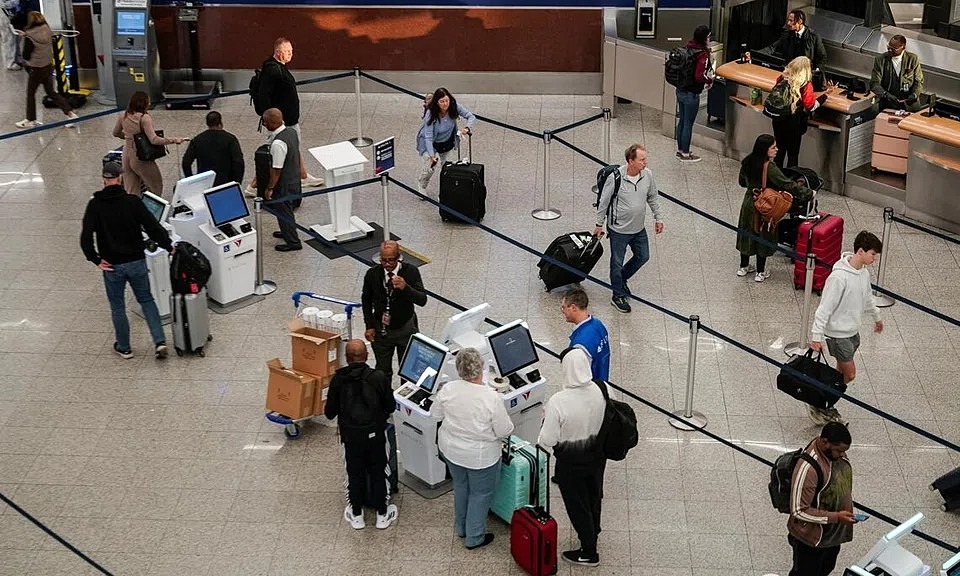
Impact of Government Shutdown on Air Travel
Travelers across the United States found themselves in a state of confusion as the ongoing government shutdown began to take its toll on air travel. The situation has led to widespread flight cancellations and delays, with major airports experiencing significant disruptions. This is primarily due to the pressure placed on the country’s air traffic control system, which has been affected by the lack of funding and personnel.
Airlines have started implementing reductions in their flight schedules, with up to a 10% decrease in flights for 40 high-traffic areas. This decision was made in compliance with an order from the Federal Aviation Administration (FAA), which cited safety concerns as the primary reason for the action.
According to data from FlightAware, over 750 U.S. flights scheduled for Friday were canceled on Thursday. American Airlines reported that it would be canceling approximately 220 flights each day, while Delta Airlines planned to cancel around 170 flights. Additionally, Southwest Airlines was reported to have canceled about 100 flights for that day.
Personnel Shortages and Delays
The government shutdown has resulted in tens of thousands of air traffic controllers, airport security staff, and other essential workers being left without pay. This has led to significant personnel shortages, exacerbating the challenges faced by the aviation industry.
On Thursday, more than 6,400 U.S. flights were delayed, with approximately 200 cancellations reported. Passengers encountered long lines at security checkpoints, adding to the frustration of those trying to travel.
Major airports such as Boston and Newark experienced average delays of over two hours, while travelers at Chicago’s O’Hare and Washington’s Reagan National airports faced delays of more than an hour. These delays have created a challenging environment for passengers and airline staff alike.
Safety Measures and Proactive Actions
Authorities emphasized the importance of taking proactive measures to prevent potential safety issues. FAA Administrator Bryan Bedford stated that the agency was not waiting for a safety problem to manifest itself but was instead acting based on early indicators.
“We’re not going to wait for a safety problem to truly manifest itself, when the early indicators are telling us we can take action today to prevent things from deteriorating,” Bedford said.
Peak Travel Season and Thanksgiving
The flight reductions come as the country enters its busiest travel season, with the Thanksgiving holiday approaching. Millions of Americans are expected to travel during this time, and the current situation could lead to significant travel chaos.
Despite the challenges, President Donald Trump’s administration sought to reassure the public that flying remained safe. Transportation Secretary Sean Duffy stated that “it’s safe to fly today, tomorrow, and the day after because of the proactive actions we are taking.”
The new cancellations could affect thousands of flights daily. Flight reductions will start at 4% on Friday and increase to 10%, according to media reports. Some of the country’s busiest airports, including Atlanta, Newark, Denver, Chicago, Houston, and Los Angeles, are expected to be heavily impacted.
Challenges for Airlines
Implementing the FAA’s order on short notice presents a challenge for airlines, which operate complex networks that rely on many moving parts and personnel. United Airlines and Delta, two of the largest carriers, have confirmed their compliance with the order but noted that it would not affect their international routes.
United Airlines added that “hub-to-hub” flying would also not be affected, suggesting that cancellations might primarily impact local routes. This shift could further complicate the travel experience for passengers relying on regional flights.
Broader Impacts of the Shutdown
Federal agencies across the United States have been significantly affected since Congress failed to approve funding past September 30. Approximately 1.4 million federal workers, ranging from air traffic controllers to national park rangers, are either on enforced leave or working without pay.
Many individuals in high-stress aviation-related jobs have reportedly called in sick or taken on second jobs to make ends meet, according to Duffy. FAA Administrator Bedford described the situation as unprecedented, stating that he was not aware of any similar scenario in his 35-year career in the aviation market.
“This is new territory in terms of government shutdowns,” Bedford said, highlighting the unique challenges posed by the current situation.