
The Struggle of Provincial Programs in Karnali
Surkhet, Nov. 9 — The second provincial assembly of Karnali elected CPN (Maoist Centre) leader Raj Kumar Sharma as the chief minister. Sharma held the position for about one year. Upon taking office, his government pledged to employ 10,000 young people annually through a flagship initiative called the ‘Karnali Samriddi Pariyojana,’ or ‘Karnali Prosperity Project.’ A task force was established, legal drafts were prepared, and nearly Rs1.5 billion was allocated in the fiscal year of 2023-24. However, by the time Sharma and his coalition were unseated in April 2023, not a single rupee had been spent, and the program remained dormant.
“By the time he left office, the law had not even been enacted,” said an official at the Office of Chief Minister and Council of Ministers, noting that the succeeding government took no decision to push the project forward. This lack of continuity led to frustration within the provincial assembly when Maoist provincial assembly members disrupted the budget debate, forcing a two-week shutdown of the assembly over the unaddressed program.
Ambitious Programs Abandoned After Government Changes
Dozens of such ambitious programs announced by one government are often abandoned soon after another government is formed. “Chief ministers keep showing grand dreams to the people, announcing programs without first creating the necessary laws or ensuring a proper budget,” said Durga Prasad Sapkota, a civil society leader based in Surkhet. “These plans are often designed for their cadres, driven by political self-interest. When a new government comes along, such programs lose priority, leading to the misuse of millions of rupees—and the public has lost faith in the provincial government as a result.”
Public records show that dozens of large-scale initiatives launched under previous administrations have since stalled. According to the provincial Ministry of Physical Infrastructure and Urban Development, more than two dozen mega-projects are in limbo across the region due to lack of budget, land acquisition hurdles, ineffective oversight, and contractor negligence.
Specific Examples of Stalled Projects
One example is the ‘Karnali Ujyaalo’ (Bright Karnali) program, intended to deliver small hydropower across remote parts of the province. Only Rs218.9 million was spent from a three-year allocation of more than Rs1 billion. Since then, the government has stopped allocating any budget for the program. Not a single micro-hydropower project under this initiative has been completed so far, according to Padam Raj Devkota, spokesperson for the Ministry of Water Resources and Energy Development.
The ‘Chief Minister Women’s Income Generation Programme,’ launched in fiscal year 2021-22, has also remained stalled for a long time. That year, the provincial government had allocated a budget of Rs473.8 million. In its initial phase, 97 women’s agricultural cooperatives were engaged, and Rs170 million was disbursed through district agriculture offices.
“The program was popular and had a Dalit-friendly framework,” said Laxman Nepali, a Dalit rights activist from Rukum West. “Many women had started engaging in income-generating activities, but once the program was abandoned, they were left unemployed again.”
Similarly, the ‘Integrated Settlement Development Programme,’ launched in fiscal year 2018-19, has been left without any budget allocation this year. Over the past four years, nearly Rs580 million was set aside for the project, but only about Rs250 million was spent. After the program was halted, around 650 houses under construction were left incomplete. Although Rs20 million was allocated for it in the last fiscal year of 2024-25, the amount could not be spent at all.
Other Unfulfilled Initiatives
The Karnali provincial government had launched the ‘Bank Account for Daughters, for Secure Life’ program with an objective to control child marriage and provide financial security to girls when they grow up. According to the working guideline of the program, parents should file an application in the local unit to open a bank account for their daughters.
The program was quite popular in the initial years. It was launched in all 79 local units of 10 districts in the province. All the girl children who were born after July 17, 2019, have been included as the beneficiaries of the program. However, no deposits have been made into these accounts over the past four years. According to the Ministry of Social Development, around Rs190 million has been spent on the program so far.
Karnali has seen four chief ministers so far. However, many programs introduced by successive chief ministers and ministers—such as ‘One School, One Health Worker,’ ‘Hi-Tech Nursery,’ ‘Interest Subsidy for Farmers,’ ‘Golden Plough for Farmers,’ ‘Best Farmer Selection,’ and ‘Organic Karnali,’ among others—have all been left in limbo.
Political Analysts and Institutional Challenges
The frequent change of provincial governments, according to political analysts, has meant that plans launched under one chief minister rarely survive under the next. Many schemes are announced before the legal frameworks or implementing regulations are drafted, leaving the ambitious projects in limbo.
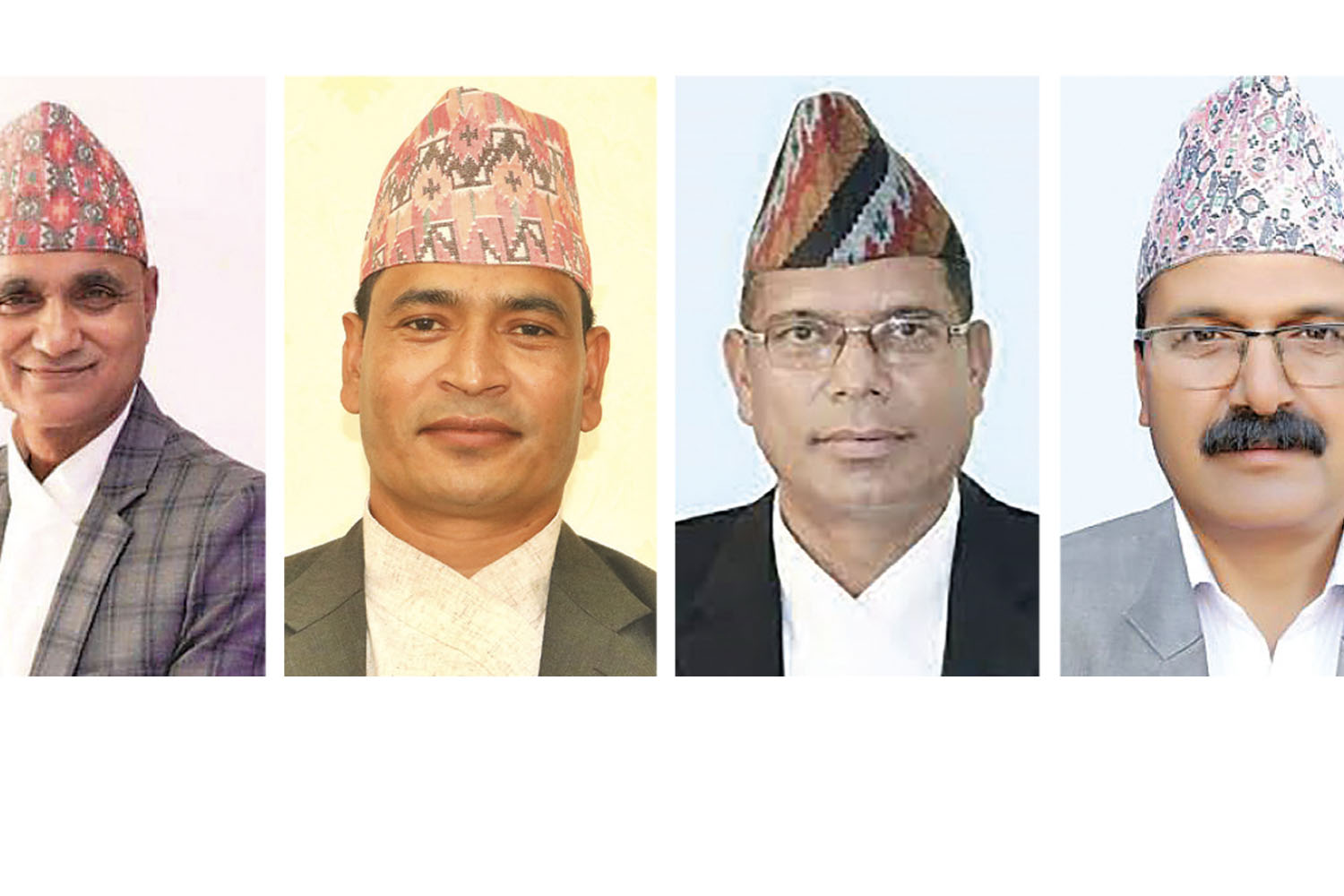
In Karnali Province, Mahendra Bahadur Shahi of CPN (Maoist Centre) was chief minister from February 2018 to November 2021, Jeevan Bahadur Shahi of Nepali Congress from November 2021 to January 2023, Raj Kumar Sharma of the Maoist Centre from January 2023 to April 2024, and currently Yamlal Kandel of the CPN-UML has been serving in the post since April 2024.
Kamal Lamsal, an associate professor at Mid-Western University, said the tendency of each new government to disregard programs initiated by its predecessor has caused many once-prominent projects to fail. “The absence of essential laws, weak budget enforcement, and a lack of institutional mechanisms within the provincial government have all contributed to keeping these major and popular initiatives confined to paper,” he said.
Ongoing Challenges and Future Prospects
In the ‘Digital Karnali’ campaign, for example, the provincial Financial Comptroller’s Office reports around Rs130 million has remained unspent despite allocations over the years. Infrastructure bottleneck is another major challenge. In a province where only 67.5 percent of households have access to electricity, launching high-tech or digital programs amounts to wishful thinking.
The weak coordination between the provincial government and the local units and data shortfall also stymie the project from being successful. Without local governments providing timely data or oversight, provincial schemes cannot properly be tracked or evaluated.
“The data simply does not exist,” admitted spokesperson for the Office of Chief Minister and Council of Ministers Surendra Bahadur Shahi. “Even though about Rs6 billion has been spent under the Chief Minister’s Employment Programme, we do not know how many people at which local units were employed, or for how long.”
The current Minister for Land Management, Agriculture and Co-operatives Binod Kumar Shah defended the government’s performance. “We are gradually taking forward and continuing the programs initiated by previous governments, but only after reviewing their impact and delivery mechanisms.” He acknowledged that several schemes required realignment rather than outright abandonment.