
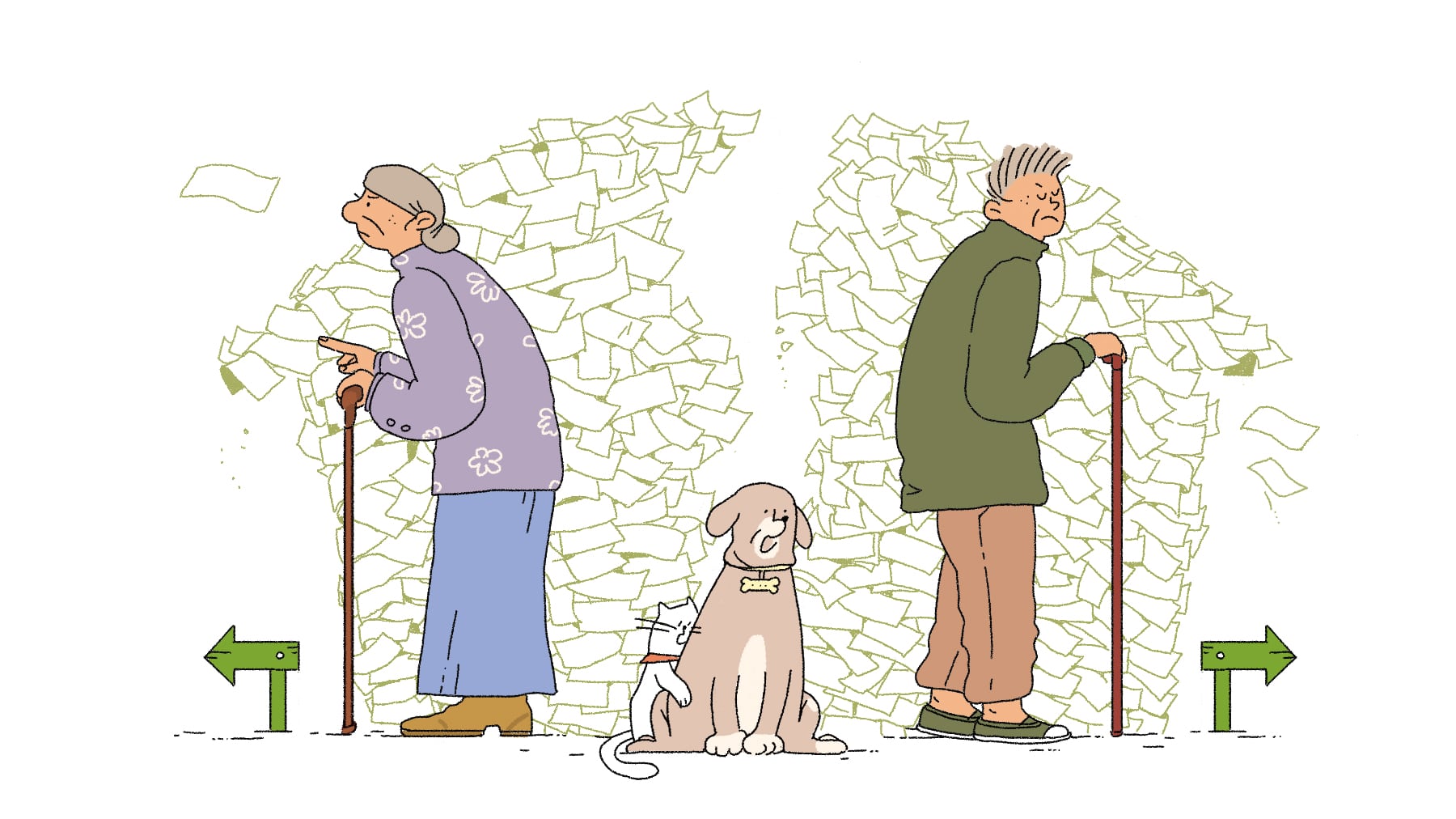
The Rise of the Split Pension System
The split pension system, which allows divorced former spouses to share a portion of the old-age pension, has seen a significant increase in recipients. This system was introduced in 1999 to ensure that homemakers who cared for children and managed households could receive a certain level of income even after divorce. Even if they were unable to join the national pension system due to lack of employment, their contributions to the household during the marriage are recognized, allowing them to share the old-age pension received by their former spouse.
Increasing Numbers and Trends
In recent years, the number of split pension recipients has surpassed 100,000. This surge is largely attributed to the rise in “gray divorces” (divorces among older couples) since the 2010s. According to statistics released by the National Pension Service up to July this year, the number of split pension recipients reached 100,621. In 2010, there were only 4,632 recipients, but the figure first exceeded 10,000 in 2014 (11,900) and surpassed 20,000 in 2017 (25,302). Since 2019, the number has risen by approximately 10,000 annually, reaching 91,294 last year.
Legal Perspectives on Pension Division
Shin Dong-hyun, a lawyer at the law firm Seon-Gyeol, highlighted the growing importance of pension division during gray divorces. He stated, “As gray divorces often occur around the time pension payments begin, pension division has recently become a major issue when dividing assets during such divorces.” He added, “While pensions are typically split 50-50, in cases where the male spouse has significantly more assets and the female spouse has limited means of livelihood, the female spouse may receive the majority of the pension.” The pension division ratio is determined through mutual agreement or court proceedings.
Demographics of Recipients
Notably, as current old-age pension recipients were born before the 1960s—a generation when women’s economic participation was limited—most split pension beneficiaries are women. An analysis by Rep. Kim Mi-ae (People Power Party) of data from the National Pension Service revealed that 87.8% of split pension recipients are women, and their average monthly payments are nearly double those of men. Women aged 60–64 received an average of 313,901 Korean won per month, compared to 160,277 Korean won for men in the same age group. This indicates that women not only constitute the majority of recipients but also receive higher amounts.
Importance of the Split Pension System
Rep. Kim Mi-ae emphasized the crucial role of the split pension system in supplementing the post-retirement income of divorced and elderly women who have lower national pension benefits due to career interruptions, caregiving, or household responsibilities. She suggested, “Efforts should be made to further increase the actual receipt rate to ensure the split pension functions as a fair recognition of contributions to asset formation and maintenance between spouses, serving as a legitimate post-retirement income right.”
Conclusion
The split pension system has evolved into a vital mechanism for ensuring financial stability for many divorced individuals, particularly women. As the number of recipients continues to grow, it highlights the need for continued support and awareness of this important aspect of retirement planning. The system not only recognizes the contributions of homemakers but also provides a necessary safety net for those who may otherwise face financial hardship in their later years.