
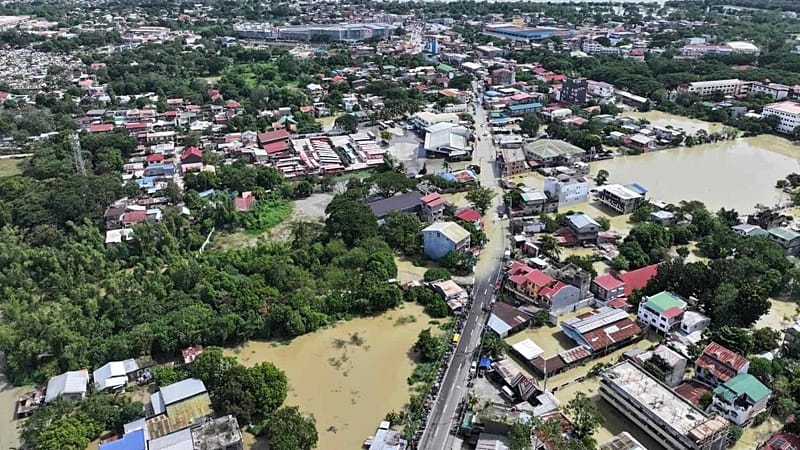
Super Typhoon Fung-wong, classified as a Category 5 storm, made landfall in Aurora province on Sunday night. The powerful storm brought winds of up to 185 kilometers per hour and heavy rainfall that caused widespread flooding in villages. The intense weather conditions led to the toppling of power lines and triggered landslides, further complicating recovery efforts.
Entire towns experienced power outages, and hundreds of flights were canceled as the country prepared for additional damage following the recent impact of Typhoon Kalmaegi, which had already caused significant destruction last week. The situation has raised concerns about the resilience of infrastructure and the ability of local communities to cope with repeated natural disasters.
President Ferdinand Marcos Jr. declared a state of emergency in response to the devastation caused by the storm. Roads were washed out, and homes were swept away, leaving many residents without shelter or access to essential services. The declaration of a state of emergency is a critical step in mobilizing resources and coordinating relief efforts across affected regions.
By Monday, the storm had weakened over the South China Sea, but meteorologists warned that storm surges and strong winds could still pose a threat to coastal areas. This ongoing risk highlights the importance of continued vigilance and preparedness, even as the immediate danger of the typhoon subsides.
Rescue operations are ongoing as authorities work to assess the full scale of the damage. Teams are navigating through flooded streets and damaged infrastructure to reach those in need of assistance. The focus remains on providing food, water, medical aid, and temporary shelter to displaced families.
Key challenges include:
- Access to affected areas: Many roads and bridges have been damaged, making it difficult for rescue teams to reach remote communities.
- Power restoration: The loss of electricity has disrupted communication and daily life for thousands of people.
- Health risks: Flooding increases the likelihood of waterborne diseases, requiring urgent public health interventions.
The government and international organizations are collaborating to provide support, but the scale of the disaster underscores the need for long-term planning and investment in disaster resilience. Communities are now working to rebuild while also preparing for future storms.
As the situation continues to evolve, the priority remains on ensuring the safety and well-being of all affected individuals. The resilience of the population, combined with coordinated relief efforts, will play a crucial role in overcoming the challenges posed by Super Typhoon Fung-wong.