
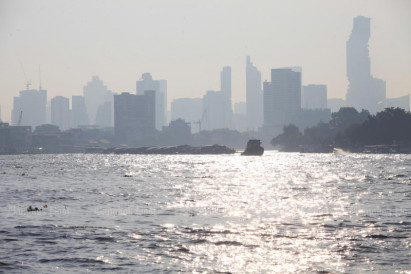
Air Quality Concerns in Bangkok and Surrounding Provinces
Ultrafine dust has been detected at unsafe levels in Bangkok and 20 other provinces over the past 24 hours, as reported by the Geo-Informatics and Space Technology Development Agency. This issue highlights growing concerns about air quality in the region, particularly during specific times of the year when environmental conditions contribute to pollution accumulation.
According to the latest data released at 10 a.m., the concentration of particulate matter with a diameter of 2.5 micrometres or smaller (PM2.5) in Bangkok ranged between 32.2 and 41.9 microgrammes per cubic metre (µg/m³) over the last day. The government’s safe threshold for PM2.5 is set at 25 µg/m³, meaning that the current levels exceed this limit across multiple areas.
In the capital city, the highest level of pollution was recorded in Don Muang district, reaching 41.9 µg/m³, while the lowest was observed in Nong Chok district. This variation shows how localized factors can influence air quality within the same city.
Twenty provinces outside of Bangkok also experienced unsafe PM2.5 levels, with concentrations ranging from 25.1 to 39.5 µg/m³. Among these, Nonthaburi had the highest reading. Other provinces affected include:
- Pathum Thani
- Ayutthaya
- Ang Thong
- Sing Buri
- Nakhon Pathom
- Samut Prakan
- Samut Sakhon
- Saraburi
- Suphan Buri
- Lop Buri
- Ratchaburi
- Kanchanaburi
- Maha Sarakham
- Chai Nat
- Chachoengsao
- Chon Buri
- Phetchaburi
- Uthai Thani
- Prachuap Khiri Khan
Dr. Amporn Benjaponpitak, director-general of the Department of Health, highlighted that from November 1, 2024, to May 31, 2025, the average PM2.5 levels in Thailand were 30 µg/m³, representing a three percent increase compared to the previous year. This trend underscores the need for continued monitoring and intervention strategies to mitigate air pollution.
The director also pointed out that severe air pollution in Greater Bangkok typically occurs from December to February due to a combination of weather conditions and agricultural practices such as field burning. These factors contribute to the stagnation of pollutants in the atmosphere, worsening air quality during these months.
The Meteorological Department has forecasted that air movement will remain stagnant until November 16, which could lead to prolonged exposure to high levels of PM2.5. This prediction emphasizes the importance of public awareness and precautionary measures, especially for vulnerable populations such as children, the elderly, and those with respiratory conditions.
As the situation continues to evolve, it remains crucial for authorities to implement effective policies and communicate clearly with the public to ensure safety and health. Monitoring efforts and long-term solutions are essential to address the underlying causes of air pollution and reduce its impact on communities.