
Escalating Tensions Between Thailand and Cambodia
The relationship between Thailand and Cambodia, two neighboring countries in Southeast Asia, has been marked by a long-standing border dispute that continues to cause friction. Recent clashes have once again highlighted the fragile state of their relations, raising concerns about the stability of the region.
A fresh round of violence occurred this week along their contested border, with Thai and Cambodian troops engaging in shooting incidents. This comes just days after a Thai soldier lost a foot due to a landmine while on patrol near the frontier. The Thai government has accused Cambodia of planting new landmines in the area, although Phnom Penh denies these claims. In response, Bangkok announced it would suspend the terms of a truce agreed upon at the end of July.
This ceasefire, brokered by Malaysia, China, and the United States, was intended to bring peace following five days of intense cross-border fighting involving ground troops, artillery, and jets. The conflict resulted in at least 48 deaths and displaced around 300,000 civilians.
Why Tensions Remain High
The truce, known as the Kuala Lumpur Peace Accords, was signed during the ASEAN summit in Malaysia, with US President Donald Trump present. Trump had previously pressured both nations by threatening to delay trade talks unless they ceased hostilities. However, despite the agreement, tensions have remained high.
Tita Sanglee, a Thailand expert at the ISEAS-Yusof Ishak Institute in Singapore, noted that the deal did not address the underlying territorial disputes. She stated, “The peace deal was always on shaky ground, shaped largely by external interests and marked only by performative trust-building.” According to her, nothing substantive was done to resolve the core issues.
Is the Conflict Spreading?
Recent incidents suggest that the conflict may be expanding. A Cambodian man was reportedly killed, and three others were injured in Wednesday’s shooting near Prey Chan village in Cambodia’s northwestern province of Banteay Meanchey. This area was previously the site of a confrontation in September between Thai security personnel and Cambodian villagers.
Cambodian Prime Minister Hun Manet claimed the latest incident was due to “numerous provocative actions” by Thai forces aimed at instigating confrontations. Meanwhile, Bangkok alleged that Cambodian soldiers fired into a district in Thailand’s eastern province of Sa Kaeo, prompting Thai forces to fire warning shots in response.
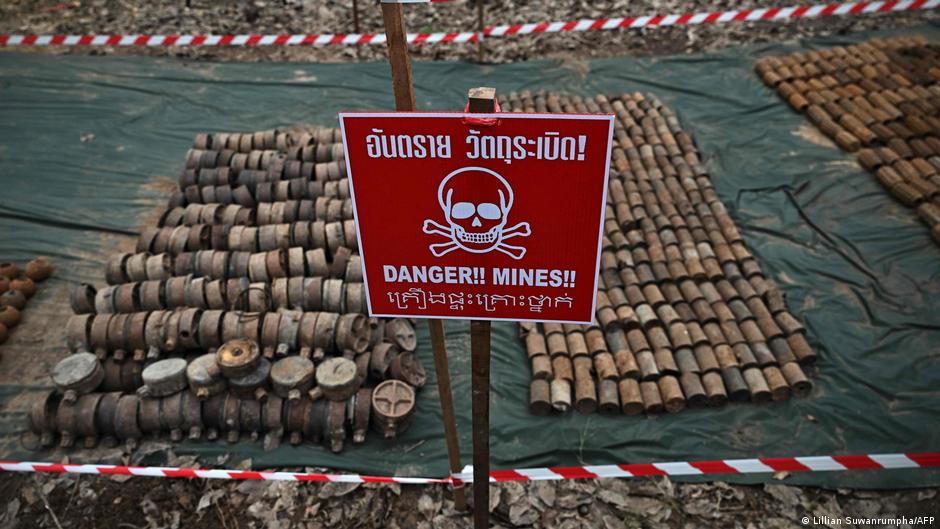
Thitinan Pongsudhirak, professor of international relations at Chulalongkorn University in Bangkok, stated that the shooting indicates the conflict is spreading. He believes the ceasefire was weak from the start and is now effectively over. Ou Virak, founder of Future Forum, a Phnom Penh-based think tank, echoed this sentiment, saying the underlying grievances are unlikely to subside.
He pointed out that Thailand’s upcoming general election and rising nationalistic fervor in Cambodia will make it challenging for both sides to reduce tensions. “The best outcome would likely be a continuation of the status quo for the next three or four months,” he said.
What is the Border Dispute About?
The border dispute between Thailand and Cambodia dates back decades. The two countries share an 800-kilometer (500-mile) border across sparsely populated regions. Their competing territorial claims stem from a 1907 map drawn during French colonial rule, which Thailand argues is inaccurate.
There are also several temples near the border that both countries claim, including the historic Preah Vihear temple, a 1,000-year-old Hindu site built by the Khmer Empire. Both nations laid claim to the temple, and the case went to court. In 1962, the International Court of Justice ruled that the temple was on Cambodian territory, a decision that still causes resentment among many Thais.
In 2008, the dispute reignited when UNESCO sought to declare the site a World Heritage Site. In 2011, Thai and Cambodian soldiers exchanged fire over the issue. However, the border remained largely peaceful until the clashes in July.
Need for Clear Demarcation of the Border
For lasting peace, Ou Virak emphasized that Thailand and Cambodia need to re-demarcate and accept the border. He stated, “There’s hardly any agreed formula for a lasting peace. There needs to be an independent, either regional or international, mechanism accepted for that lasting peace to happen.”
Thitinan Pongsudhirak noted the deep animosity between the neighbors. He called for political leadership in both countries to urge their people to stand down and avoid further conflict. “Thailand and Cambodia should not go in this direction,” he added.