
Political Turmoil in Madhesh Pradesh
Madhesh Pradesh, a province in Nepal, has witnessed yet another government collapse, marking the third administration to fall since the 2022 provincial elections. The instability highlights the ongoing challenges faced by the region’s political landscape.
A Brief History of Leadership Changes
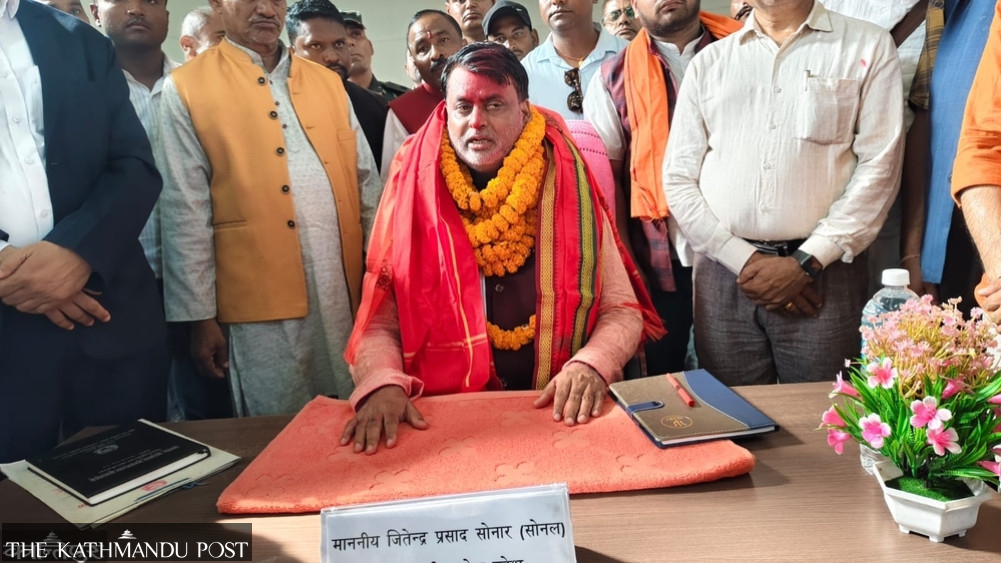
Saroj Kumar Yadav took office as chief minister in January 2023 and served for 146 days before his government was toppled. Satish Kumar Singh then assumed the role, serving for 130 days. His tenure ended when the political dynamics shifted against him. Following Singh’s resignation on October 15, Jitendra Sonal became the new chief minister. However, Sonal’s government also fell after failing to secure a majority in the provincial assembly.
The Fall of Sonal’s Government
Sonal announced his resignation on Saturday evening, recognizing that he would lose the upcoming vote of confidence. His resignation came after the Janamat Party, which had supported him, split, causing its votes to be divided. In the 107-member Provincial Assembly, at least 54 seats are required for a majority government. Former chief minister Singh and Tribhuwan Shah were absent from the Provincial Assembly meeting, further pushing Sonal’s government to the brink.
Composition of the Ruling Coalition
The ruling coalition in the Madhesh Provincial Assembly includes:- 8 seats from the Loktantrik Samajbadi Party (LSP)- 18 seats from the Janata Samajbadi Party (JSP) Nepal- 13 seats from the Janamat Party- 9 seats from the CPN (Maoist Centre)- 7 seats from the CPN (Unified Socialist)
Despite this, the Nagarik Unmukti Party had decided to support Sonal with a vote of confidence. However, Bimala Ansari, a Sanghiya Samajbadi Party lawmaker who had assured Sonal of support, was absent on Saturday.
Defections and Disruptions
Assembly members Rahabar Ansari and Mala Karna from the Maoist Centre rebelled against the party’s policy and announced they would not vote. Ansari even appeared at the meeting with “black soot” on his face, indicating his dissent. On the day of the confidence vote, after CPN (Maoist Centre)’s Ansari and Karna defied the party’s decision, the Sonal government found itself cornered.
Resignation Before the Vote
Realizing he did not have a majority on his side, Sonal resigned even before the process for the vote of confidence began. On October 15, Sonal was appointed chief minister with the support of 56 lawmakers from five parties: the Janata Samajbadi Party, the Janamat Party, the Maoist Centre, the Loktantrik Samajbadi Party (LSP), and the CPN (Unified Socialist).
Constitutional Provisions for New Leadership
According to Article 168(3) of the constitution, the provincial head will now invite the leader of the largest party in the assembly to form a new government. Under the provision, the provincial parliamentary party leader of the CPN-UML is set to be appointed the chief minister.
The constitutional provision stipulates that if a chief minister appointed under Article 168(2) fails to get a vote of confidence, the leader of the party with the most members is invited to lead the government. Should the next chief minister also fail, Article 168(5) allows any assembly member who can demonstrate majority support to be appointed.
Ongoing Political Instability
Sonal’s resignation underscores the persistent political instability in Madhesh Province, where shifting alliances and fractured mandates have led to repeated changes in government since the introduction of the federal system in 2015. The frequent turnover in leadership reflects the challenges of maintaining stable governance in a politically fragmented environment.