
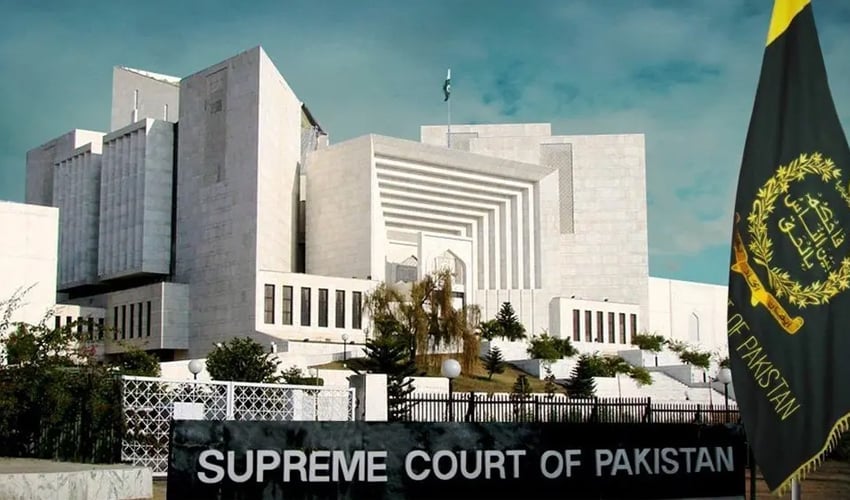
Supreme Court of Pakistan Delists Hearing on 26th Amendment Appeals
The Registrar Office of the Supreme Court of Pakistan has announced the delisting of the hearing for appeals related to the 26th Amendment. This decision comes as a significant development in the ongoing legal discourse surrounding the constitutional changes introduced in the country.
An eight-member Constitutional Bench, led by Justice Amin-ud-Din Khan, was scheduled to hear several petitions on November 10. The cases included those filed by notable individuals and organizations such as former Chief Justice of Pakistan Jawad S. Khawaja, Pakistan Tehrik-e-Insaf, Jamaat-e-Islami, Sunni Ittehad Council, and the Chairperson of Tehreek-i-Tahaffuz Ayeen-i-Pakistan, Mustafa Nawaz Khokhar. Additionally, various Bar Councils and Associations were also part of the list of petitioners.
However, the Registrar Office has informed key legal figures including the Attorney General for Pakistan, law officers, Advocates General, Prosecutor Generals, Advocates-on-Record, and the litigant Public that the cases previously scheduled for November 10 will not be heard. This is due to the non-availability of the bench, which has created uncertainty regarding the timeline for these important legal proceedings.
Key Details of the Scheduled Cases
- Former Chief Justice of Pakistan Jawad S. Khawaja: His appeal against the 26th Amendment is one of the most anticipated cases.
- Pakistan Tehrik-e-Insaf (PTI): As a major political party, their involvement highlights the broader implications of the amendment.
- Jamaat-e-Islami: This religious organization’s participation underscores the diverse perspectives involved in the legal challenge.
- Sunni Ittehad Council: Representing a significant segment of the Muslim community, their case adds another layer of complexity.
- Mustafa Nawaz Khokhar: As the Chairperson of Tehreek-i-Tahaffuz Ayeen-i-Pakistan, his role is crucial in advocating for the rights of the people.
- Bar Councils and Associations: These entities represent the legal community and their involvement signals the importance of the issue.
Impact of the Decision
The decision to delist the hearing has raised concerns among legal experts and the public alike. The non-availability of the bench may lead to delays in the judicial process, affecting the timely resolution of these critical cases. It also raises questions about the efficiency and preparedness of the judiciary in handling high-profile matters.
Furthermore, the absence of a scheduled hearing could impact the perception of justice and the rule of law in the country. Legal professionals and citizens are closely watching how the situation unfolds and what steps the court will take to address the backlog of cases.
Next Steps
While the immediate future of these cases remains uncertain, it is expected that the Registrar Office will provide further updates on the rescheduling of hearings. The legal community is likely to engage in discussions about the implications of this decision and the need for a transparent and efficient judicial process.
In the meantime, all parties involved will need to prepare for potential changes in the timeline and ensure that their arguments are well-researched and presented when the opportunity arises.