
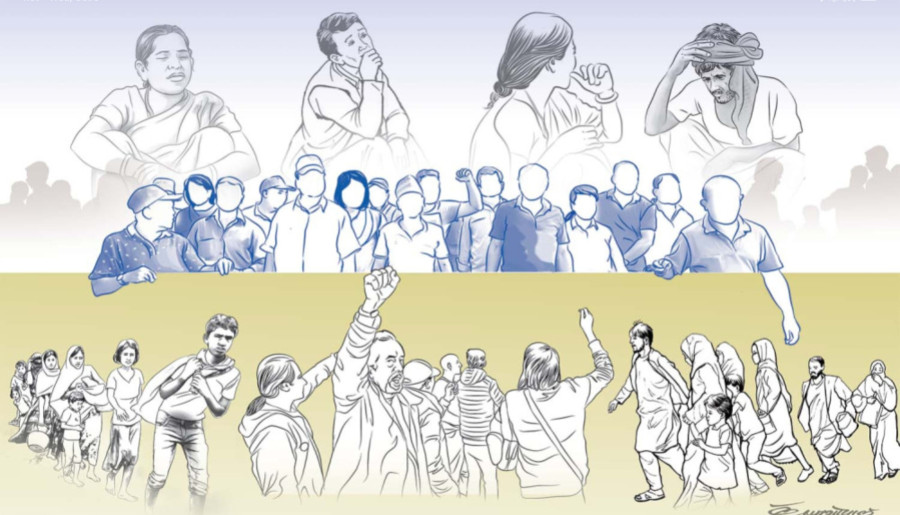
The Gen Z Movement and Its Impact on Social Justice
Nepal has witnessed a series of events that have sparked intense debate, particularly around the violent campaigns of September 8 and 9. These protests, often associated with Gen Z, led to the rapid downfall of the coalition government within just 28 hours. While some view this as a significant victory for the people, especially the downtrodden, it is crucial to critically assess whether these actions truly advanced social justice or merely created more chaos.
The aftermath of these protests has left many questioning the long-term impact of the Gen Z movement. While there are moments of hope, such as the preservation of national integrity and the democratic system, the constitution remains in a state of stagnation. This raises concerns about the sustainability of democracy in Nepal, as the movement’s contributions appear limited.
The Silence on Caste Discrimination
One of the most alarming aspects of the Gen Z movement is its silence on caste discrimination. Activists from marginalized communities have expressed frustration over the lack of attention given to Dalit issues. Many claim that the protests were against casteism, Brahmanism, and caste discrimination. However, the reality seems different. Instead of advancing the cause of the Dalits, the movement may have inadvertently complicated their struggle for equality.
Gen Z activists have not addressed the persistent challenges faced by Dalits in Nepal. For instance, the mayor of Kathmandu, Balen Shah, who is seen as a leader of the movement, has not shown concern for the plight of Dalit residents in his city. Many Dalits are forced to fake their family names to rent properties, highlighting a deep-rooted issue that remains unaddressed.
The Ineffectiveness of the Gen Z Government
Ironically, the Sushila Karki government, supported by Gen Z, is largely controlled by individuals beyond their sixties. This has led to a lack of political experience, resulting in the government struggling to fulfill its promises. Many Gen Z activists are now expressing dissatisfaction with the current administration.
Despite having a Dalit minister after a long hiatus, the government has not made significant strides in addressing caste-based discrimination. The Minister for Agriculture, Madan Pariyar, has not spoken out against caste-based humiliation or introduced policies to tackle this issue. This raises questions about the motivations behind his appointment and whether he lacks the courage to address these critical matters.
Caste Discrimination as a National Issue
Some argue that now is not the time to focus on caste and ethnicity. They believe the current government should prioritize holding elections and improving governance. However, this perspective overlooks the fundamental role of caste hierarchy in perpetuating issues such as poor governance and corruption.
Caste discrimination is deeply embedded in Nepali society, affecting various aspects of life. It is impossible to achieve good governance when individuals are either highly respected or excluded based on their birth. The inability to run businesses due to caste barriers further exacerbates these issues.
The Need for Social Transformation
Social transformation cannot occur without addressing the root causes of inequality. Until there is social justice and caste/ethnic equality, the cycle of violence and counter-violence will continue. Many Dalit youths participated in the Gen Z movement, driven by a desire for change and recognition. Their involvement highlights the need for systemic reforms that address historical injustices.
Other marginalized groups, including Madheshis, Tharus, Janajatis, women, and religious minorities, also face similar challenges. Issues of inequality and injustice lie at the heart of violent uprisings, regardless of the banners or slogans used.
Conclusion
Dalits are among the most oppressed and excluded groups in Nepali society. Political parties and government bodies have been unfair to them, and until these systematic issues are resolved, there can be no peace or progress in the country. It is essential for politically active youths to recognize and address these realities, rather than focusing solely on short-term gains. The path to true justice and equality requires sustained effort and a commitment to tackling the deep-seated issues that have plagued Nepali society for generations.