The Escalating Homelessness Crisis in England
A recent report has revealed a staggering 20 per cent increase in rough sleeping across England over the past two years, with nearly 300,000 people now facing the most severe forms of homelessness. This alarming rise has placed immense pressure on both local authorities and national government, as the crisis continues to worsen.
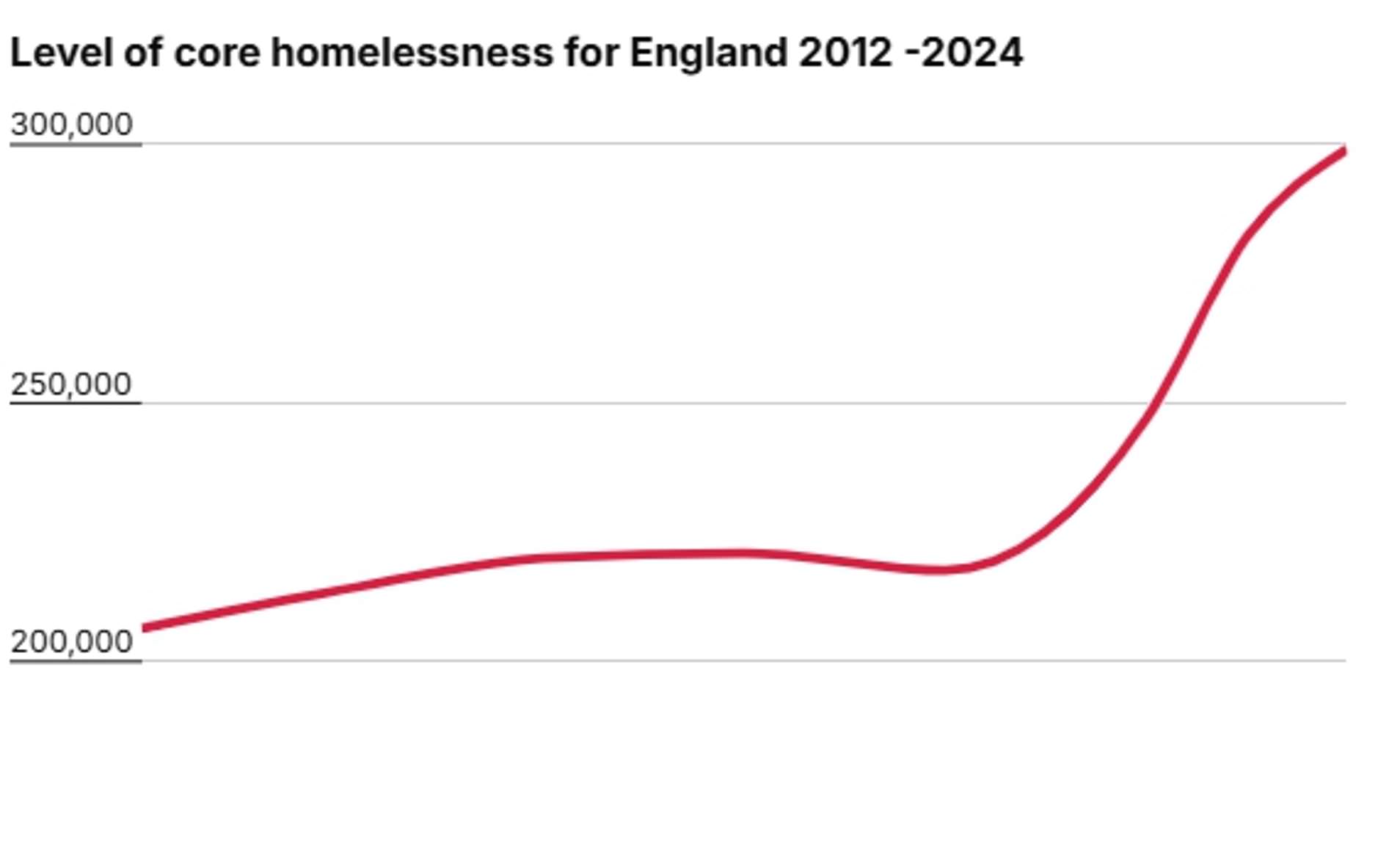
The report, led by Heriot-Watt University, highlights that homelessness levels reached 299,100 in 2024, marking a 21 per cent increase since 2022 and a 45 per cent rise since 2012. This surge has been attributed to several factors, including Labour’s early prisoner release scheme and an increase in migrants being released from asylum seeker accommodation.
Factors Contributing to the Crisis
One of the primary causes cited is Labour’s early prisoner release scheme, which allows certain inmates to be released after serving 40 per cent of their sentence. This initiative, aimed at reducing prison overcrowding, has inadvertently contributed to the rising number of individuals experiencing homelessness. Additionally, the Home Office’s decision to halve the number of days most people granted asylum can stay in government accommodation has left many migrants without stable housing.
The study also points to a 70 per cent increase in the number of people approaching councils for homelessness assistance, with London and the north of England being the hardest hit. Homelessness resulting from evictions from UK asylum accommodation rose by 37% in the last year, influenced by the acceleration of Home Office decisions on claims. Similarly, homelessness resulting from discharge from hospitals, prisons, and other institutions increased by 22%, likely due to the early prison release scheme.
Impact on Local Authorities
Local authorities are struggling to manage the growing demand for temporary accommodation, with many councils facing financial strain. The situation has become so dire that some have resorted to hiring security to prevent rough sleepers from returning to areas like Park Lane, where encampments have become common. In May, TfL secured a court order to remove a large encampment opposite the Hilton by Hyde Park Corner, highlighting the scale of the problem.
Homelessness charity Crisis has warned that individuals are increasingly forced to move between unsuitable temporary accommodation or face sleeping on the streets, in tents, and in squats. Tent encampments have become a common sight in some of London’s most desirable spots, including Westminster and Park Lane.
Calls for Government Action
Crisis chief executive Matt Downie has called for a rapid response from the government, emphasizing that no one should be forced to live in unsafe conditions. He highlighted the need for immediate action as winter approaches, with pressure on councils expected to grow. The charity has welcomed the government’s £39 billion commitment for social and affordable housing but warned that councils are being pushed into effective bankruptcy due to the rising cost of temporary accommodation.
Downie urged ministers to focus on preventing homelessness in the first place, suggesting that unfreezing the amount of housing benefit that private renters can claim would help stop thousands of households from losing their homes. He also emphasized the importance of fixing gaps in support services to ensure that people do not end up homeless after leaving institutions like prisons and hospitals.
New Initiatives and Challenges
In response to the crisis, Crisis has announced it will become a landlord for the first time in its 60-year history, citing a catastrophic scenario where it can no longer access social housing to get people off the streets. Professor Beth Watts-Cobbe from Heriot-Watt University expressed deep concern over the situation, noting that the lack of affordable housing and insufficient welfare support is driving the crisis.
Future Outlook
The crisis has sparked renewed calls for action, with various questions surrounding the effectiveness of current policies. Will Labour’s £233 million homelessness funding be enough to curb London’s devastating rough sleeping crisis? Why has homelessness skyrocketed across London, pushing councils to the brink of bankruptcy? How are rough sleepers benefiting from the Labour government’s planned repeal of the historic Vagrancy Act intended to tackle homelessness at its core?
As the situation continues to evolve, the need for comprehensive and sustainable solutions has never been more urgent. With winter approaching, the pressure on local authorities and the government to address this pressing issue is mounting.