
Hungary Gains Exemption from US Sanctions on Russian Oil and Gas
Hungarian Prime Minister Viktor Orban has made significant progress in securing an exemption for his country from US sanctions on imports of Russian oil and gas. This move is particularly important for Hungary, a landlocked nation that relies heavily on Russian energy supplies.
Orban confirmed during a press conference with Hungarian media outlets that Hungary received full exemption from the sanctions for Russian oil and gas delivered through the Druzhba and TurkStream pipelines. He emphasized that Hungary’s situation is unique compared to other European countries, as it lacks access to ports and depends on pipeline infrastructure for its energy needs.
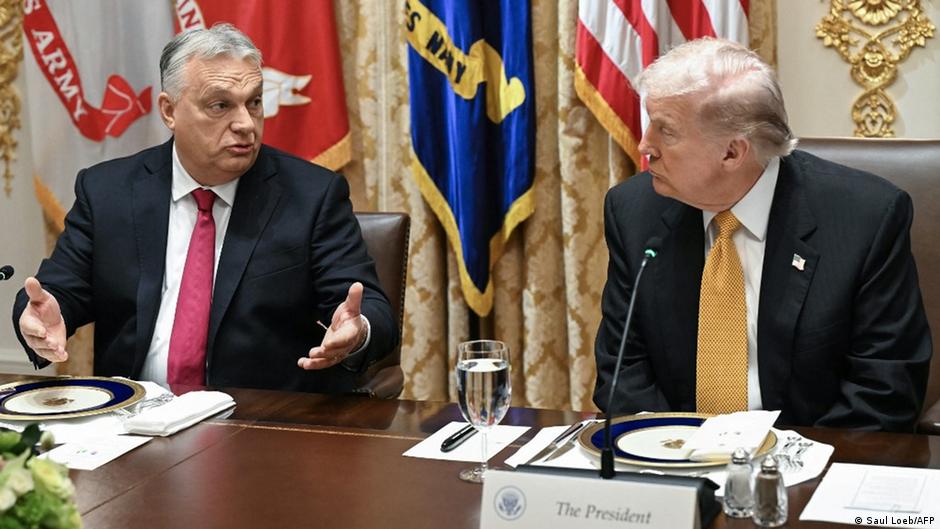
A White House official, speaking on condition of anonymity, revealed that the exemption would last for one year. This development comes after Orban met with US President Donald Trump at the White House, where much of the discussion focused on Hungary’s request for relief from the sanctions.
Strategic Importance of Pipeline Infrastructure
Orban highlighted the physical reality of Hungary’s reliance on Russian oil and gas, stating that the pipelines are not a matter of ideology or politics but a necessity due to the country’s geographical constraints. He warned Trump about the potential consequences for Hungary’s economy and people if they were unable to access Russian energy.
Trump acknowledged the challenges Hungary faces in sourcing oil and gas from alternative regions, noting that the country does not have the advantage of having sea access. During a public meeting with Orban, Trump mentioned he was considering granting Hungary a waiver from the Russian oil sanctions.
Trump’s Call for Respect for Hungary
In addition to discussing energy issues, Trump addressed the need for European Union leaders to show more respect to Orban. The Hungarian leader has often clashed with EU officials over migration policies, and Trump praised Orban for his stance on immigration.
“Europe should respect Hungary and this leader very, very strongly because he’s been right on immigration,” Trump said.
This call for respect reflects the growing influence of Orban within the EU and his alignment with certain conservative policies. However, his relationship with Trump has also faced challenges, particularly regarding the issue of Russian oil.
Energy Dependence and Economic Risks
Hungary’s reliance on Russian energy has been a point of contention, especially given the ongoing conflict in Ukraine. Despite pressure from the US and other European nations to reduce dependence on Russian oil and gas, Hungary has continued to rely on these sources since the start of the war in 2022.
According to International Monetary Fund data, Hungary sourced 74% of its gas and 86% of its oil from Russia in 2024. The Fund warned that a cutoff of Russian natural gas alone could lead to output losses exceeding 4% of Hungary’s GDP.
This heavy dependence has put Hungary at odds with the European Commission, which aims to phase out all EU imports of Russian gas and liquefied natural gas by the end of 2027. Hungary’s resistance to these plans has deepened the rift between the country and Brussels.
New Developments in Energy Cooperation
In a separate development, Hungary’s Foreign Minister Peter Szijjarto announced plans to purchase nuclear fuel rods from the United States. These rods will be used in two Russian-built nuclear power plants, signaling a shift in Hungary’s energy strategy.
This move highlights the complex web of energy relationships that Hungary maintains with both Russia and the US. While the country continues to rely on Russian energy, it is also exploring new partnerships to diversify its energy sources.
Conclusion
The recent meeting between Orban and Trump underscores the strategic importance of energy policy in international relations. Hungary’s exemption from US sanctions on Russian oil and gas is a significant victory for the country, but it also highlights the broader tensions between energy security, geopolitical alliances, and economic stability. As Hungary navigates these challenges, its relationship with both the US and the EU will continue to evolve.