
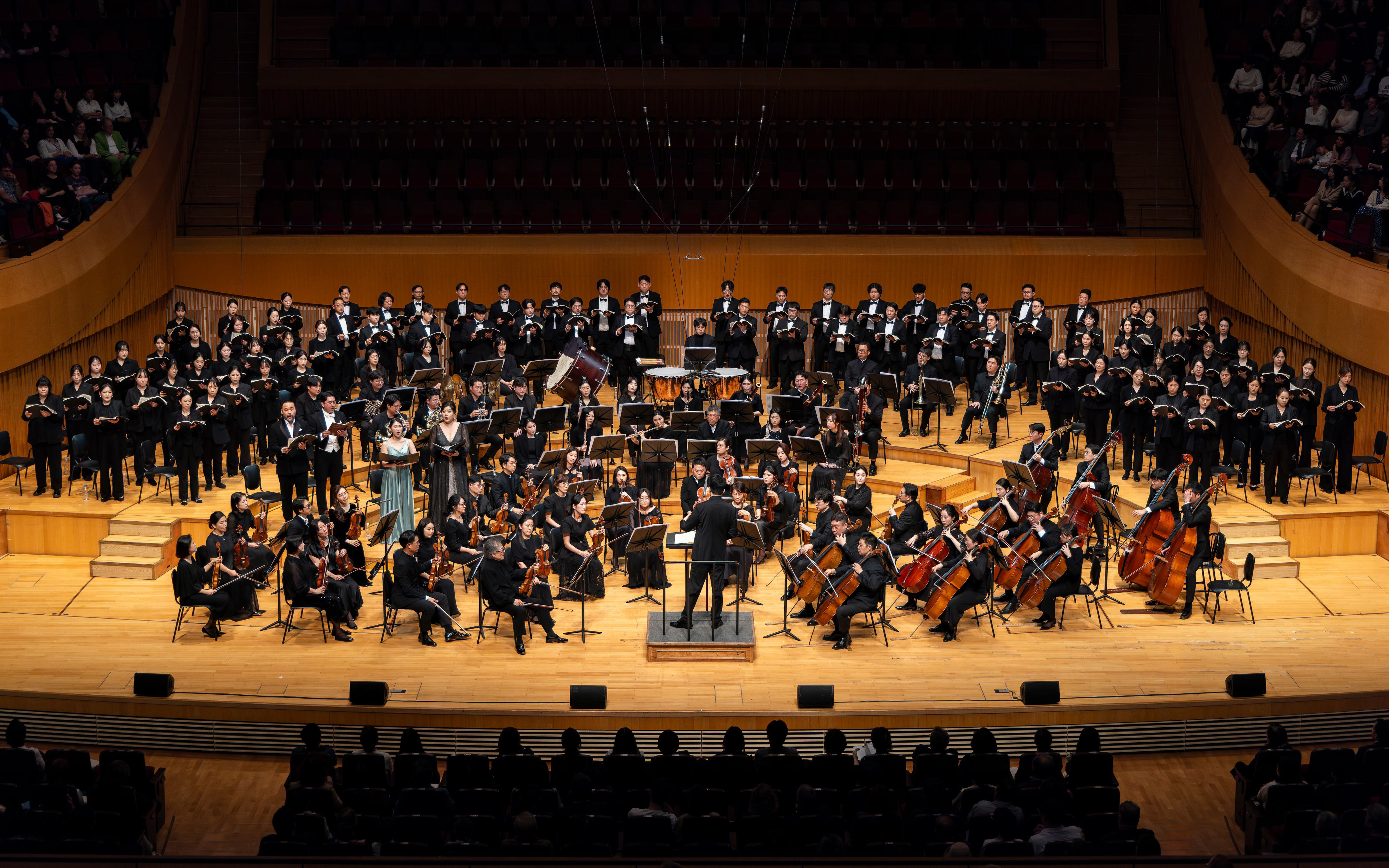
The power of music has always been a unifying force, capable of bridging divides and bringing people together. This sentiment was beautifully encapsulated in the fourth movement of Ludwig van Beethoven’s Symphony No. 9, known as the “Choral Symphony,” which echoed through the Lotte Concert Hall in Songpa-gu, Seoul, on the evening of the 23rd of last month. The piece, set to Friedrich Schiller’s “Ode to Joy,” featured the harmonious voices of approximately 80 chorus members from the Korean Chamber Orchestra (KCO) and the Neue Oper Chor.
This concert was organized by the Korean-German Network (ADeKo) to mark significant historical events: the 80th anniversary of Korea’s liberation and the 35th anniversary of German reunification. The stage was a celebration of both nations’ milestones, featuring performers with deep ties to Germany. Germany, a country that has produced legendary musicians like Beethoven, Bach, Brahms, and Mahler, is often seen as a dream destination for artists. German musicians who have taught local performers shared the value of harmony with their Korean students while also reflecting on Germany’s modern history—its division and eventual reunification.
The event also brought together second-generation immigrants, children of miners and nurses who had moved to Germany for better opportunities, and those who had studied abroad. These individuals experienced firsthand the impact of East-West German reunification on society. Kim Min, the music director of the KCO, shared his memories of Germany: “During a time when the afterglow of reunification still lingered in society, musicians from East and West Germany came together on a single stage, embodying the spirit of ‘togetherness.’ I realized that music could be more than an art—it could be a language that binds society.”
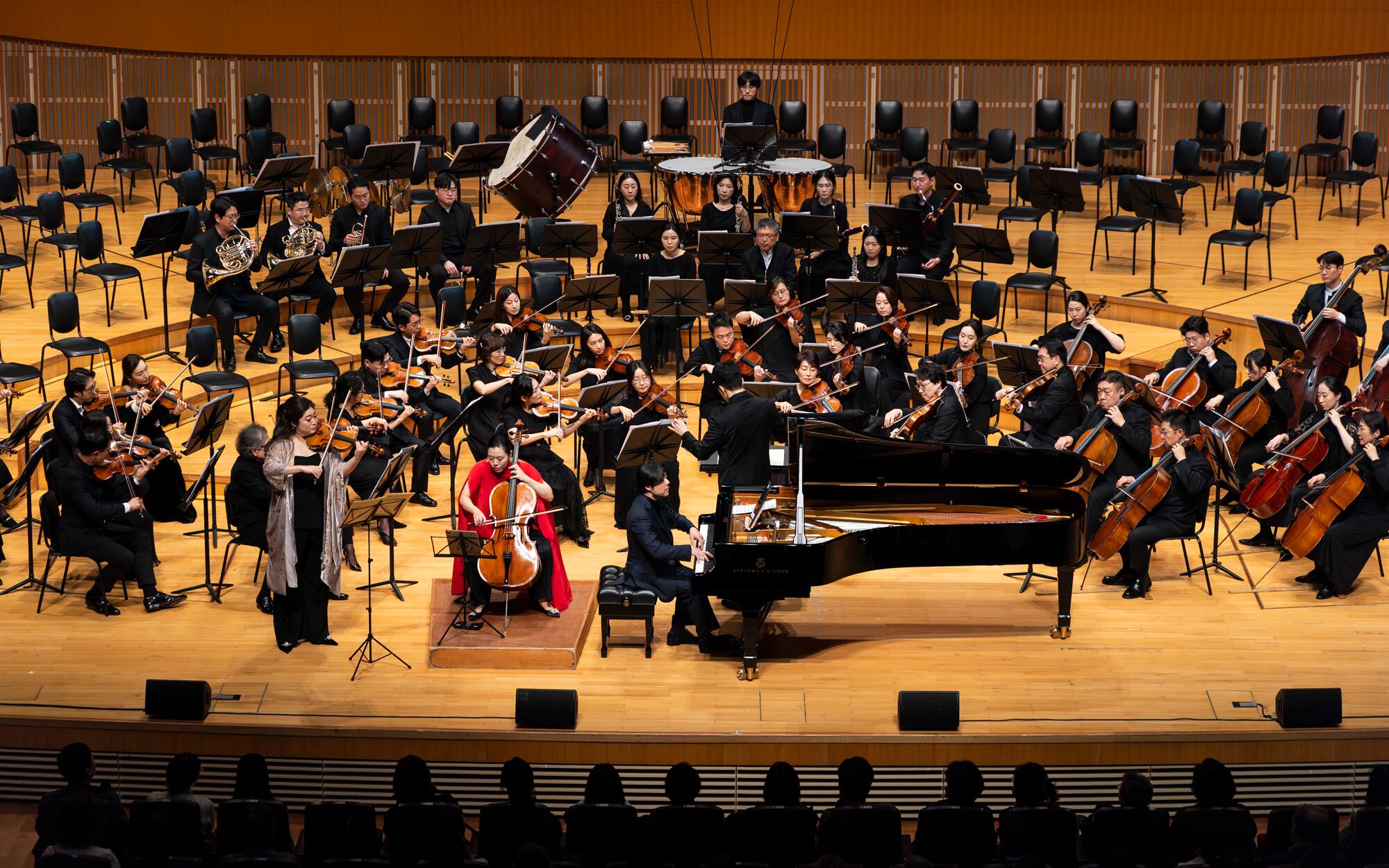
Two compositions inspired by Beethoven’s vision of harmony were performed at the concert. The first was Op. 56 in D Major for Piano, Violin, and Cello, commonly known as the Triple Concerto. This unique work features the violin, viola, and piano collaborating with the orchestra. To perform it effectively, the soloists must prioritize mutual consideration and harmony over individual display, maintaining eye contact and attentively listening to each other’s performances.
Following this, Beethoven’s Symphony No. 9 was performed. It is the first instrumental piece to include human vocals in its preserved score. Despite being composed during Beethoven’s lifetime, when he had lost his hearing, the orchestra and chorus filled the concert hall with large-scale harmonies that evoked deep emotion. As a symbol of peace and solidarity, the symphony has served as the anthem of the European Union since 1985.
Pianist Park Jong-hwa, a professor at Seoul National University College of Music and the organizer of the concert, explained the selection of the pieces: “We wanted to explore what questions our era should ask through the historical events of Korea and Germany. Through Beethoven, we aimed to question the meaning of human existence and ethics in the face of international chaos and the crisis of artificial intelligence.” He added, “In a world filled with noise from social media and strong leaders, the ability to listen and consider one another seems to have been lost. We hoped to reflect on what we truly need to hear and revive that lost sense.”