
Rising Bear Attacks Disrupt Tourism in Northeastern Japan
MORIOKA, Japan – A growing number of bear attacks in northeastern Japan is causing concern among locals and tourists alike. This has led to a decline in visitors during the peak season for fall foliage, which is usually a major draw for tourism in the region.
In the Tohoku region, hotel bookings at hot spring resorts have seen a significant drop. Public access to certain areas is often restricted after bear sightings, and local governments are urging visitors to remain cautious about potential encounters with bears. With no signs that tourist numbers will return to previous levels, businesses that depend on this lucrative period before winter are facing an uncertain future.
In the Gembi area of Ichinoseki, Iwate Prefecture, a man was found dead outside his home in late October after being attacked by a bear. More than 10 kilometers away, the Gembikei gorge—a state-designated scenic spot—is currently at its peak for viewing autumn leaves. The manager of a tourist facility that sells glassware noted that fewer people are visiting the area, partly due to the bear attack. “If they heard ‘Gembi’ in the news, they would probably guess it happened in this neighborhood,” he said.
Further north in the prefecture, in Kitakami, a male hotel worker was attacked and killed by a bear while cleaning an open-air bath in mid-October. Motoyugeto, a Japanese-style hot spring inn located about 7 km from the hotel, has experienced around 20 percent of its bookings being canceled following the attack. On some days, the number of bath use-only visitors has dropped by as much as 70 percent. “This, coming at a peak period, hits us pretty hard,” said inn representative Hironori Takahashi.
Some hot spring businesses in the prefecture have closed their open-air bath sections out of an abundance of caution. With a record five people killed in bear attacks in Iwate since April—of the 13 dead in such incidents nationally over the same span, as of Wednesday—some people have started avoiding the area altogether.
Eri Aoki, a 30-year-old Tokyo resident and company employee, said she scrapped her plan to visit a hot spring resort in the prefecture in early November. “It’s scary that bears have shown up in residential areas. I will revisit the plan once bears go into hibernation in winter,” she said.
Increased Precautions in Akita and Miyagi
In Akita, the capital city of the neighboring prefecture of the same name, bears were repeatedly spotted in and around Senshu Park, a well-known fall foliage spot. This prompted the municipal government to close the park in late October. After two bears were captured, the park reopened on Tuesday, only to be closed again several hours later after another bear was spotted. Four people have died in bear attacks in the prefecture since April.
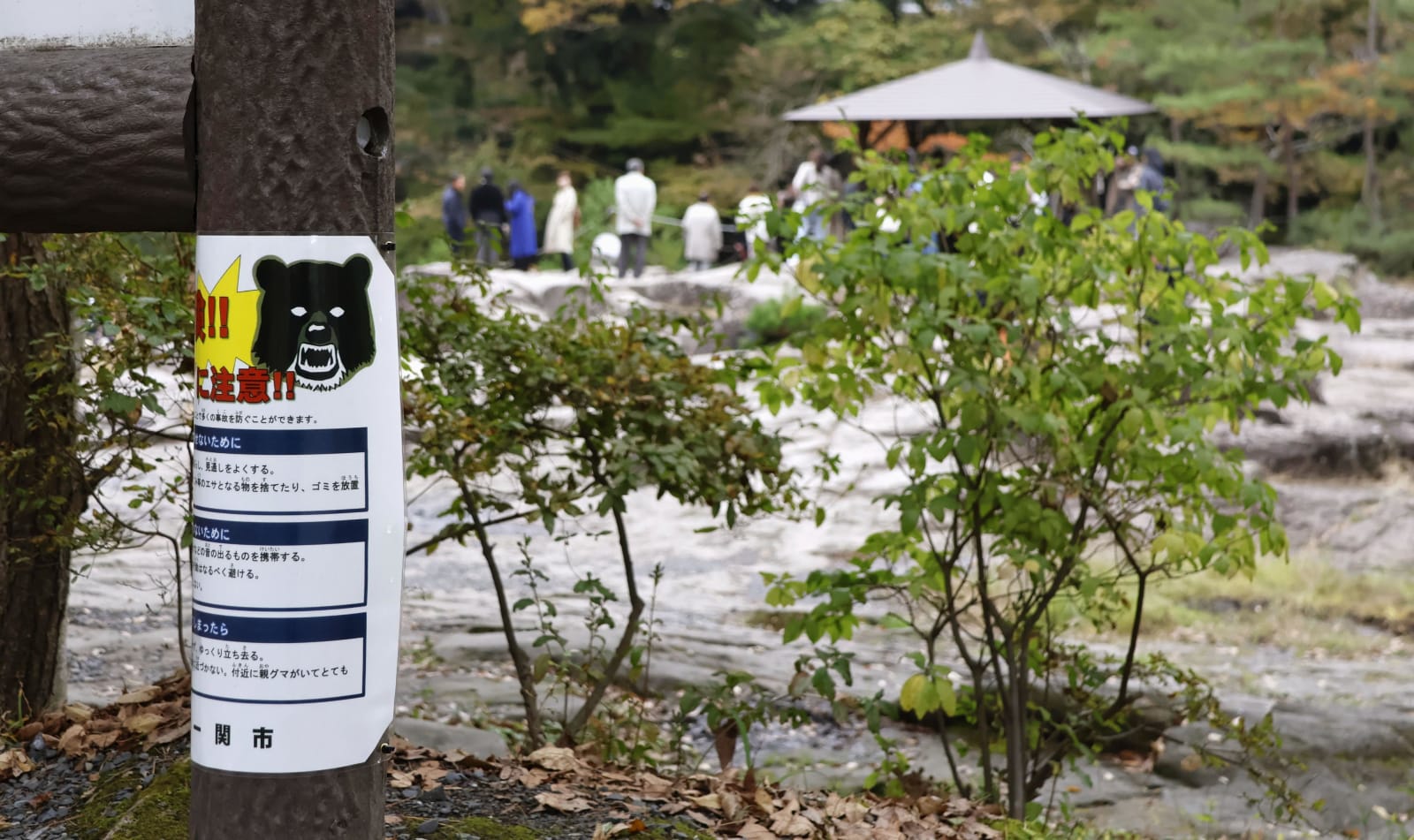
In the Tohoku region, Miyagi Prefecture also experienced a deadly bear attack in early October. Despite this, a number of foreign tourists still visit the Narukokyo gorge in a mountainous area near Miyagi’s border with Yamagata Prefecture. The Osaki municipal government has put up “Beware of Bears” signs in four languages at the gorge, including English and Korean, while increasing security patrols. “We intend to raise awareness among all visitors, regardless of nationality, about bear risks,” a city official said.
Impact on Local Businesses and Visitor Confidence
The ongoing issue of bear attacks is not only affecting public spaces but also significantly impacting local businesses. Hotels, restaurants, and tourist attractions are feeling the pressure as fewer visitors choose to come to the region. In response, many establishments have taken measures to ensure visitor safety, such as closing open-air baths or increasing security presence.
Local governments are also working to educate both residents and tourists about the risks associated with bear encounters. This includes issuing warnings, providing multilingual signage, and increasing patrols in high-risk areas. These efforts aim to maintain a balance between preserving the natural beauty of the region and ensuring the safety of those who visit.
As the situation continues to evolve, it remains to be seen how long the effects of the bear attacks will last. For now, the focus is on mitigating the impact on tourism and rebuilding confidence among visitors. The hope is that with continued efforts, the region can recover and once again thrive as a popular destination for fall foliage and cultural experiences.