
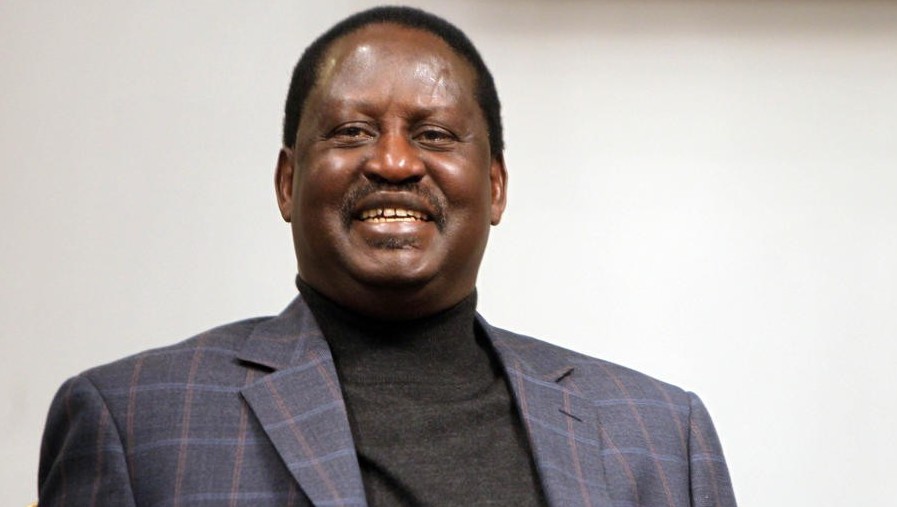
A Legacy of Democracy and Resilience
Raila Odinga was a towering figure in Kenya’s political landscape. His recent passing marks the end of a life that profoundly shaped Kenya’s democratic journey. As a five-time presidential candidate, he became a symbol of resistance against authoritarian rule and a champion for democratic values. His death has prompted reflection on the state of democracy in Kenya and its neighbors.
Odinga’s commitment to democracy serves as a reminder of the ongoing challenges facing Kenya’s democratic trajectory. It also highlights the concerning trend of democratic backsliding in neighboring countries such as Tanzania and Uganda. While Kenya has made strides in maintaining its democratic institutions, the situation in these neighboring nations is increasingly troubling.
Early Life and Political Awakening
Born into a prominent left-leaning political family, Odinga received his education in mechanical engineering in East Germany. However, it was during the 1980s, as a young lecturer at the University of Nairobi, that he began his political activism. His early efforts for greater political and democratic freedoms led to his detention following a 1982 military coup attempt. This experience forced him into exile in Uganda and later Norway.
Upon returning to Kenya, Odinga became a key player in the “Young Turks,” a group that organized political demonstrations and challenged government crackdowns. His work helped lay the groundwork for Kenya’s transition to multi-party politics.
Pivotal Role in Kenyan Democracy
One of Odinga’s most significant contributions was his role in the repeal of Section 2A of Kenya’s constitution, which ended single-party rule and restored multi-party politics. This event marked a turning point in Kenya’s democratic history, setting the country on a path toward greater political openness.
With newfound freedom, Odinga shifted from activism to electoral politics. He initially joined the Forum for the Restoration of Democracy (FORD) and later formed the National Democratic Party (NDP). His political career saw him serve in parliament for nearly two decades and hold senior ministerial positions in various Kenyan governments.
Despite running for president multiple times, Odinga never secured the presidency. However, his influence remained strong, and he continued to advocate for democratic reforms.
Leadership and Reforms
During his tenure as Prime Minister from 2008 to 2013, Odinga spearheaded several important reforms. He advocated for government decentralization, aiming to improve services and resources for Kenyan citizens. His efforts culminated in the adoption of Kenya’s 2010 constitution, which reorganized the country into 47 regional counties with elected governors and assembly members.
The new constitution also established a stronger bill of rights and political freedoms, principles that Odinga regarded as essential for maintaining and strengthening Kenya’s democracy.
Challenges and Resilience
Odinga’s political journey was not without turbulence. The 2007-2008 post-election violence in Kenya was a dark chapter, resulting in over 1,200 deaths and the displacement of hundreds of thousands. Although not responsible for the violence, Odinga agreed to relinquish his claim to the presidency and served as Prime Minister until 2013.
Despite his presidential defeats and judicial losses, Odinga remained deeply committed to Kenya’s political system, constitutional rule, and multiparty democracy. He traveled abroad to lead election monitoring missions for the Carter Center and African Union, advocating for fair and transparent elections in countries like Mozambique and Lesotho.
Advocacy for Power Sharing
Odinga challenged the “winner takes all” convention, arguing that it was deeply flawed and advocated for greater power sharing. Although some critics questioned his shifting alliances, he believed that coalitions and alliances were necessary to reduce political conflicts.
Kenya’s last presidential and parliamentary elections in August 2022 were among Africa’s best and most transparent. Despite losing, Odinga did not abandon his belief in multiparty democracy, transparent elections, or election observation.
Democratic Backsliding in Neighboring Countries
In contrast to Kenya’s progress, neighboring countries like Tanzania and Uganda are experiencing alarming democratic backsliding. In Tanzania, the October 2025 presidential and parliamentary elections were marred by unfair practices, with the main opposition party barred from participation and its leader jailed. The aftermath of the election resulted in numerous deaths and tarnished the country’s democratic credentials.
Similarly, in Uganda, where elections are slated for January 2026, the prospects for impartial elections are bleak. Violence has plagued previous elections, and opposition candidates have faced harassment, detention, and beatings. The current president, Africa’s second-longest-serving head of state, has been in power for four decades, raising concerns about the fairness of future elections.
A Lasting Legacy
Raila Odinga believed in democracy, elections, and the right of citizens to select their leaders—even when he lost. He also believed in presidential term limits, working hard to enshrine them in Kenya’s 1992 and 2010 constitutions. For him, politics and democracy were not about one-party rule, lifelong presidential leadership, or personal enrichment.
Although not a perfect politician, Odinga’s commitment to fundamental democratic principles should be remembered and serve as a standard for other politicians and political leaders across East Africa. For Raila, democracy meant democracy.