
Britain’s National Security Requires More Than Just the Military
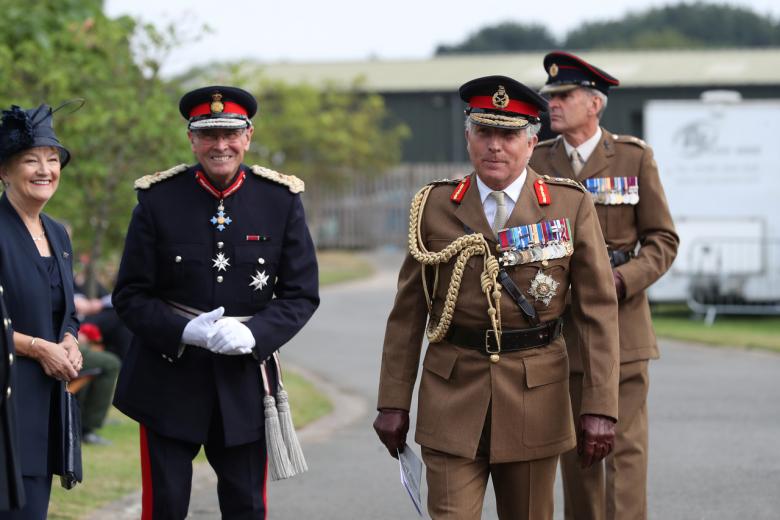
Britain’s national security is not solely the responsibility of the military, according to the new Chief of the Armed Forces, Sir Richard Knighton. He emphasized that it also requires the “support of a society that understands” what is at stake in an increasingly “dangerous world.” This statement comes amid growing concerns about the country’s preparedness to face modern threats.
The new Chief of Defence Staff confirmed that British troops and equipment have been deployed to Belgium following a series of drone incursions believed to be carried out by Russia. These incidents have raised alarms across Europe, with several airports and military bases affected. For example, Belgium’s main airport, Zavantem, was temporarily closed after drones were spotted nearby. Similar sightings have been reported in other locations, including a military base, and this has occurred across several European countries such as Germany, Denmark, Norway, and Sweden.
Sir Richard told the BBC that his Belgian counterpart had requested assistance in dealing with these incursions. While it has not been confirmed that the drones originated from Russia, he noted that it was “plausible” they had been ordered by the Kremlin. The situation has caused significant disruption, with around 3,000 Brussels Airlines passengers affected. The airline reported that cancelling or diverting dozens of flights led to “considerable costs.”
A Growing Concern for National Security
Sir Richard, who took over as head of the UK military in September, warned of an “increasingly uncertain world.” He cited Russia’s invasion of Ukraine as evidence that European nations are no longer as safe as they once were. In an article published in the Sunday Telegraph, he stated: “This conflict reminds us that peace is never guaranteed. It (the UK) must be defended, and sometimes at great cost.”
He highlighted the diverse roles of the armed forces, including deterring aggression on NATO’s eastern flank, supporting hurricane relief efforts in the Caribbean, and protecting critical undersea cables at home. However, he stressed that defense is not just the responsibility of the military. “It is a national endeavour. It requires investment, innovation, and the support of a society that understands the stakes,” he said.
His comments were echoed by Conservative leader Kemi Badenoch, who expressed concern about the loss of national identity and purpose. She told the newspaper that the country was “losing a sense of who we are and what we’re fighting for.” Ms. Badenoch pointed to a “slow erosion of pride in our schools, our institutions, even parts of our media where the story of Britain is too often told through shame,” which she believes is affecting national morale.
She added that only ten per cent of those aged between 18 and 28 would be prepared to go to war for the country. “A nation is only a nation when people are prepared to defend it. And it is both tragic and concerning that many people in Britain today no longer feel that call,” she said.
Government Plans for Increased Defence Spending
In response to these challenges, the government has announced plans to increase defence spending to 2.5 per cent of GDP from April 2027, with an ambition to reach 3 per cent in the next parliament. This move reflects the growing recognition of the need for greater investment in national security.
However, there are ongoing debates about whether these figures are sufficient to meet NATO’s targets and address rising global threats. Questions remain about whether political wrangling could leave Britain vulnerable in a time of increasing uncertainty.
- Will the focus on political issues hinder the necessary investments in military capabilities?
- Could reluctance to boost military spending make the UK less secure on the international stage?
- Is the current level of funding enough to ensure national security amidst shrinking forces and low morale?
These questions highlight the urgent need for a unified approach to national security, one that involves not just the military but the entire society.