
A New Era of Hope for Soroti District
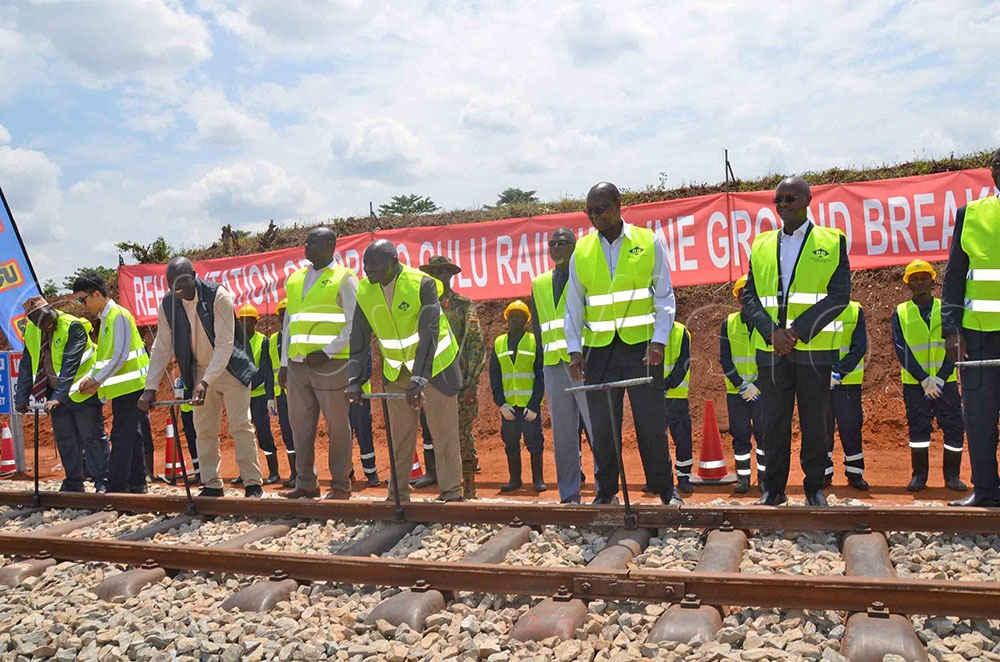
As the Forum for Democratic Change (FDC) presidential candidate, Nathan Nandala Mafabi, made his way through Soroti District on the 42nd day of his campaign trail, it marked his 69th district visited so far. The people of Soroti were filled with excitement and happiness as they witnessed the revival of the Tororo–Gulu railway, a long-dormant line that is now showing signs of being brought back to life.
For over two decades, this railway had been silent, but now, the residents are seeing tangible progress. The promise of trains moving again through their town brings a deep sense of hope, as promised by the Government of Uganda.
Margaret Apio, a farmer from Dokolo village, shared her excitement about the potential benefits of the railway. “I can’t wait to see the trains moving again. We have suffered with transport costs for years. When we send maize or groundnuts to Kampala or Gulu by truck, the costs are high, and sometimes the roads are so bad that our produce gets damaged. But with this railway, everything will be faster and cheaper,” she said.
The rehabilitation of the Tororo–Gulu metre-gauge railway (MGR) began in March 2020 after a contractor was hired in February that year. The total project cost is estimated at sh192.5 billion (€47.6 million), with the European Union contributing €21.5 million and the Government of Uganda providing €26.1 million.
As of early 2025, physical works were over 44.45% complete, and overall progress stood at 62.5% of the contract value, according to the Uganda Railways Corporation. The government expects the line to be fully operational by February 2026, marking a major milestone in Uganda’s transport recovery efforts.
Michael Okello, an orange farmer at Atumukiliok trading centre, Gweri subcounty, Soroti district, expressed hope that the new railway would bring a market for his oranges, which often ripen and go to waste due to a lack of buyers. “Buyers always say the roads are bad, and yet these roads are perishable, more so after harvesting them. Then, when you try to take them to the market yourself, they go bad on the road before reaching the market, and it’s also expensive to hire a truck, but the railway will be affordable, we hope so,” Okello highlighted.
Okello noted that the excitement in the district is already visible. “You should see the faces of people when they talk about the railway. Everyone is asking when it will start. We just want to see that first train move; we have schoolchildren who have never seen a train; it will also help them learn about something they know.”
The 375-kilometre railway line passes through several districts, including Tororo, Mbale, Soroti, Lira, and Gulu before connecting to the Gulu Logistics Hub, which is designed to handle goods for both national and international trade.
Once completed, it will facilitate the transport of agricultural produce, cement, minerals, oil and gas materials, and other industrial products sectors that together earn Uganda at least $500 million annually.
Beyond the numbers, the human impact is what excites Soroti’s residents the most. Peter Edeu, a businessman in Soroti city, hopes to increase profits from his hardware store as he plans to buy wholesale from manufacturers in Tororo district. “Sometimes you load goods on a truck, and it takes two days to reach because of traffic and broken bridges. But by train, in one night, I will be able to receive my supplies. When movement becomes easy, ideas begin to move too,” he said.
Edeu believes the railway will also attract new investors to Soroti and help young people find jobs in logistics, storage, and small-scale industries.
According to government plans, the rehabilitated line will restore freight transport, reduce over-reliance on roads, and link Uganda’s eastern and northern regions to key export markets, including South Sudan and the Democratic Republic of Congo. It will also reconnect to the port of Mombasa, strengthening Uganda’s position as a regional logistics hub.
The project’s impact is expected to ripple across the economy, easing the movement of goods from Uganda’s heartland to international markets. It is also seen as a vital step in supporting the government’s industrialisation and export strategies.
Although the railway is not yet operational for commercial or passenger services, the supply of track materials is over 82.78% complete, and the government is procuring new locomotives to ensure immediate operations upon completion.
There are also calls from communities and traders to reintroduce passenger services once freight operations are stable.