
U.S. Forces Korea’s Softer Tone in Response to North Korean Missile Test
The U.S. Forces Korea (USFK) issued a statement on the 8th, urging North Korea to avoid further destabilizing actions following the previous day’s short-range ballistic missile test. This marked a noticeable shift in tone compared to its response to a similar provocation last month, which was more forceful and critical.
In its latest statement, the USFK said, “We are aware of North Korea’s ballistic missile launch and its efforts to secure long-range missile capabilities,” and added, “The United States urges North Korea to refrain from additional destabilizing actions.” This language is significantly less confrontational than the one used after North Korea’s hypersonic launch vehicle test on the 22nd of last month. At that time, the USFK had condemned the action as a violation of international norms, stating, “We demand an immediate halt to violations of UN Security Council resolutions and condemn actions that cause instability.”
The current statement lacks any direct reference to UN Security Council resolutions or explicit condemnation of North Korea’s actions. Additionally, the phrase “the ROK-U.S. alliance is ironclad” has been omitted, which was previously a common expression in USFK statements. Instead, the wording now reads, “prepared to defend our homeland and allies,” replacing the earlier mention of “two homelands.”
Shift in Focus and Strategic Considerations
This change in rhetoric is seen as a reflection of the broader strategic considerations under U.S. President Donald Trump’s administration, which has shown openness to dialogue with North Korea. A military source noted that the use of stronger language such as “UN Security Council resolution violations” or “condemnation” would have been difficult given Trump’s emphasis on diplomatic engagement.
Another official suggested that the omission of phrases like “the ROK-U.S. alliance is ironclad” could signal some disappointment with South Korea’s responses during recent discussions on alliance modernization. The South Korea-U.S. Security Consultative Meeting (SCM) had addressed these issues, and the lack of strong language may indicate a perceived gap between U.S. expectations and South Korea’s actions.
Implications for Regional Security
Despite the softened tone, the USFK’s statement still underscores the importance of maintaining stability in the region. It highlights the U.S. commitment to defending both its own territory and its allies, including South Korea. However, the shift in language has raised concerns among some analysts about whether South Korea’s defense priorities are being downplayed in favor of focusing on U.S. mainland security.
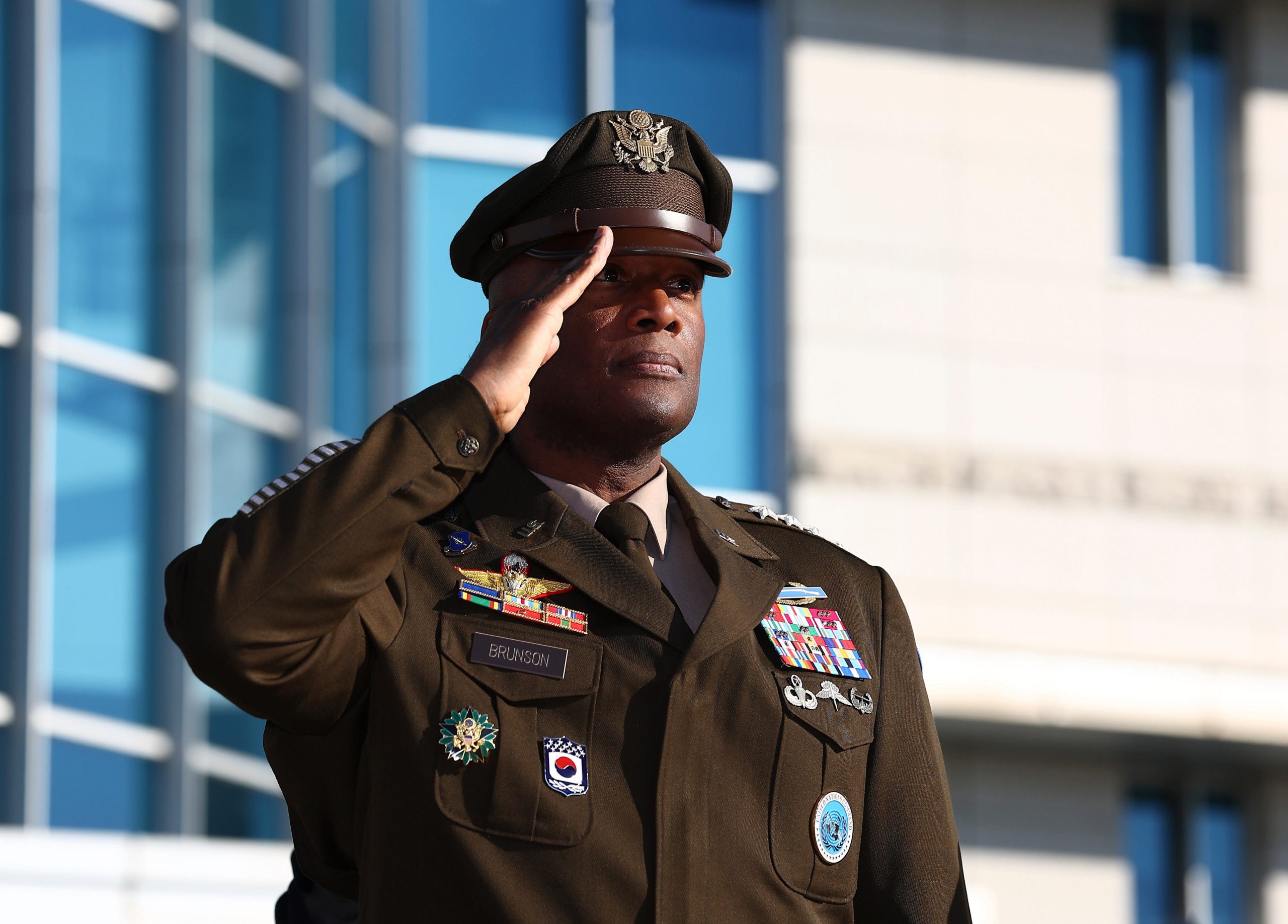
U.S. Forces Korea Commander Xavier Brunson has often emphasized that South Korean territory is also a “homeland,” reinforcing the idea of dual responsibility. Yet, the latest statement appears to reflect a different prioritization, possibly influenced by the broader diplomatic approach of the Trump administration.
Broader Context and Future Outlook
The evolving stance of the USFK comes amid ongoing tensions on the Korean Peninsula and the complex interplay of regional alliances. As North Korea continues to develop its missile capabilities, the U.S. faces the challenge of balancing firmness with the possibility of dialogue.
While the current statement avoids direct confrontation, it does not signal a complete withdrawal of pressure. Instead, it suggests a recalibration of messaging, aimed at fostering conditions for potential negotiations while maintaining a level of deterrence.
As the situation unfolds, the role of the U.S.-South Korea alliance remains central to regional security. The way both nations navigate this delicate balance will likely shape future interactions with North Korea and the broader geopolitical landscape.