
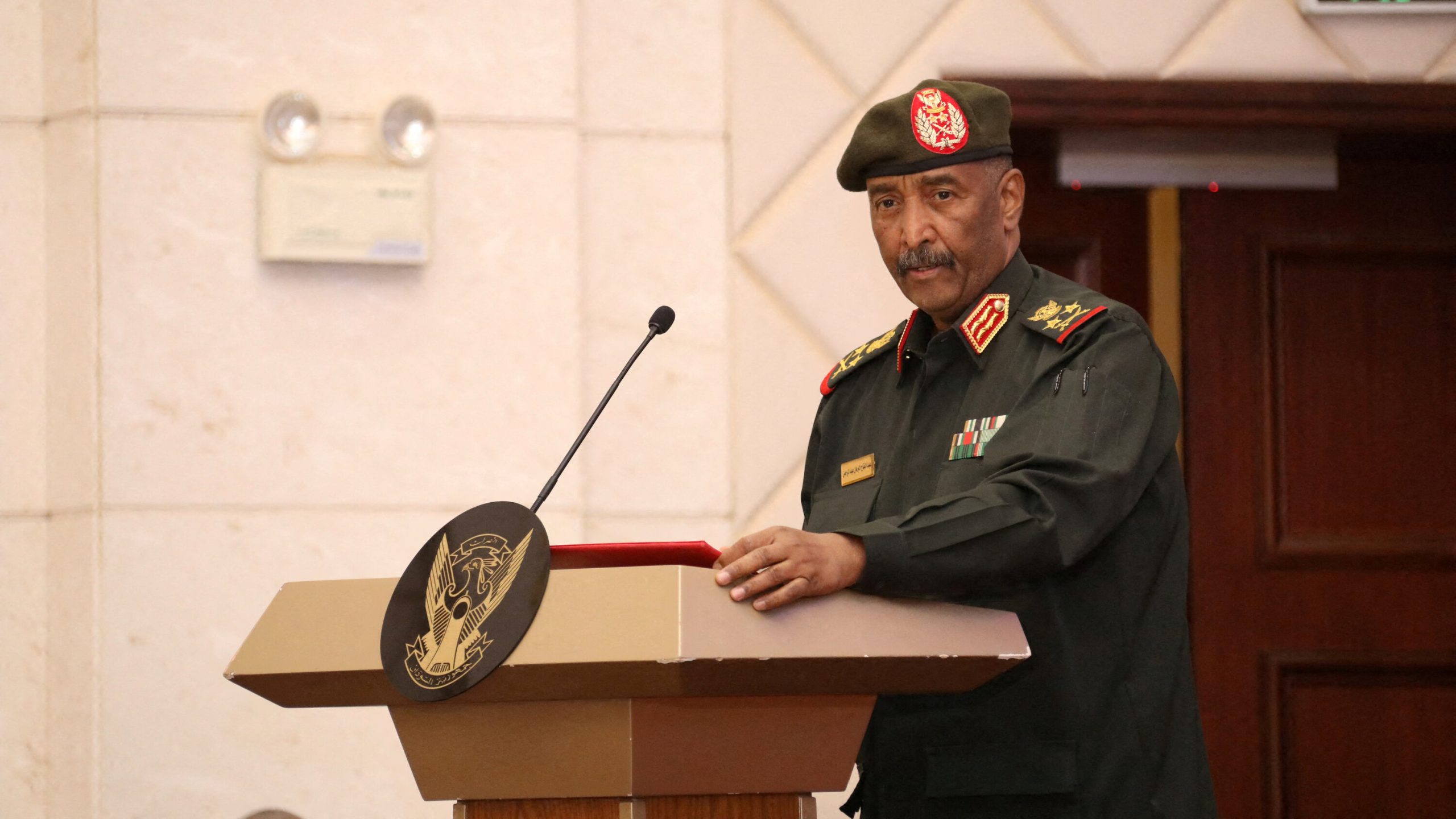
Sudan’s Army Chief Visits Displaced Population in Al-Dabbah
On November 8, 2025, Sudan’s army chief, Abdel Fattah al-Burhan, visited the Al-Affad camp located east of Al-Dabbah city in the Northern State. The visit was aimed at assessing the conditions of people who had been displaced due to the Rapid Support Forces’ (RSF) takeover of El Fasher.
The camp, which has become a refuge for thousands of displaced individuals from El Fasher, was inspected by Burhan during a visit that lasted approximately 35 minutes. During his visit, he toured field medical clinics and listened to the concerns of the displaced population. He also pledged to ensure the provision of essential medical and food supplies to those in need.
Burhan met with the emergency and crisis committee of the Al-Dabbah locality, which is currently operating within the camp. This meeting allowed him to gain a firsthand understanding of the challenges faced by the displaced community and the efforts being made to provide basic services and aid.
In addition to this, sources reported that Burhan met with the governor of North Darfur, members of the state security committee, and the commander of the 6th Division at the 73rd Infantry Brigade headquarters in Al-Dabbah. These officials had reportedly arrived in the area days prior to the meeting.
A statement from the Al-Dabbah locality highlighted that Burhan took the time to inspect the conditions of the displaced individuals who had recently sought refuge in the area, fleeing the “scourges of war.” The statement noted that he received a briefing from the crisis committee regarding the overall situation in the camp and the ongoing efforts to support the displaced population.
Displacement Crisis in Northern State
According to the Minister of Social Development, Mutasim Ahmed Saleh, the number of displaced people who have fled from El Fasher to the Northern State has reached 50,000. This figure underscores the severity of the displacement crisis caused by the conflict in the region.
An estimated 81,000 people fled El Fasher after the RSF seized control of the city. While some of these individuals were displaced to other areas in North Darfur, such as Tawila, Mellit, and Garni, many others embarked on a long journey to Al-Dabbah, seeking safety and assistance.
The situation remains dire, with the displaced population facing significant challenges in accessing basic necessities such as food, water, and medical care. The presence of the army chief in the region signals an effort to address these issues and provide much-needed relief.
Ongoing Challenges and Humanitarian Response
The humanitarian response to the crisis has been complex, with various local and international organizations working to provide aid to the affected communities. However, the scale of the displacement and the ongoing conflict have made it difficult to meet the needs of all those impacted.
Efforts to improve communication and coordination among different stakeholders are crucial in ensuring that aid reaches those who need it most. Satellite phones have played a key role in maintaining communication in areas where traditional infrastructure has been disrupted.
In addition to the immediate humanitarian response, there are ongoing political discussions aimed at finding a lasting solution to the conflict. These talks involve various actors, including regional and international partners, who are working to facilitate dialogue and promote peace in the region.
Conclusion
The visit by Sudan’s army chief to the Al-Affad camp highlights the urgent need for continued support and intervention in the region. As the displacement crisis continues to unfold, it is essential that all parties involved work together to ensure the well-being of the affected population.
With the situation evolving rapidly, the focus must remain on providing immediate relief while also laying the groundwork for long-term stability and recovery. The challenges ahead are significant, but with coordinated efforts and sustained commitment, there is hope for a better future for those displaced by the conflict.