
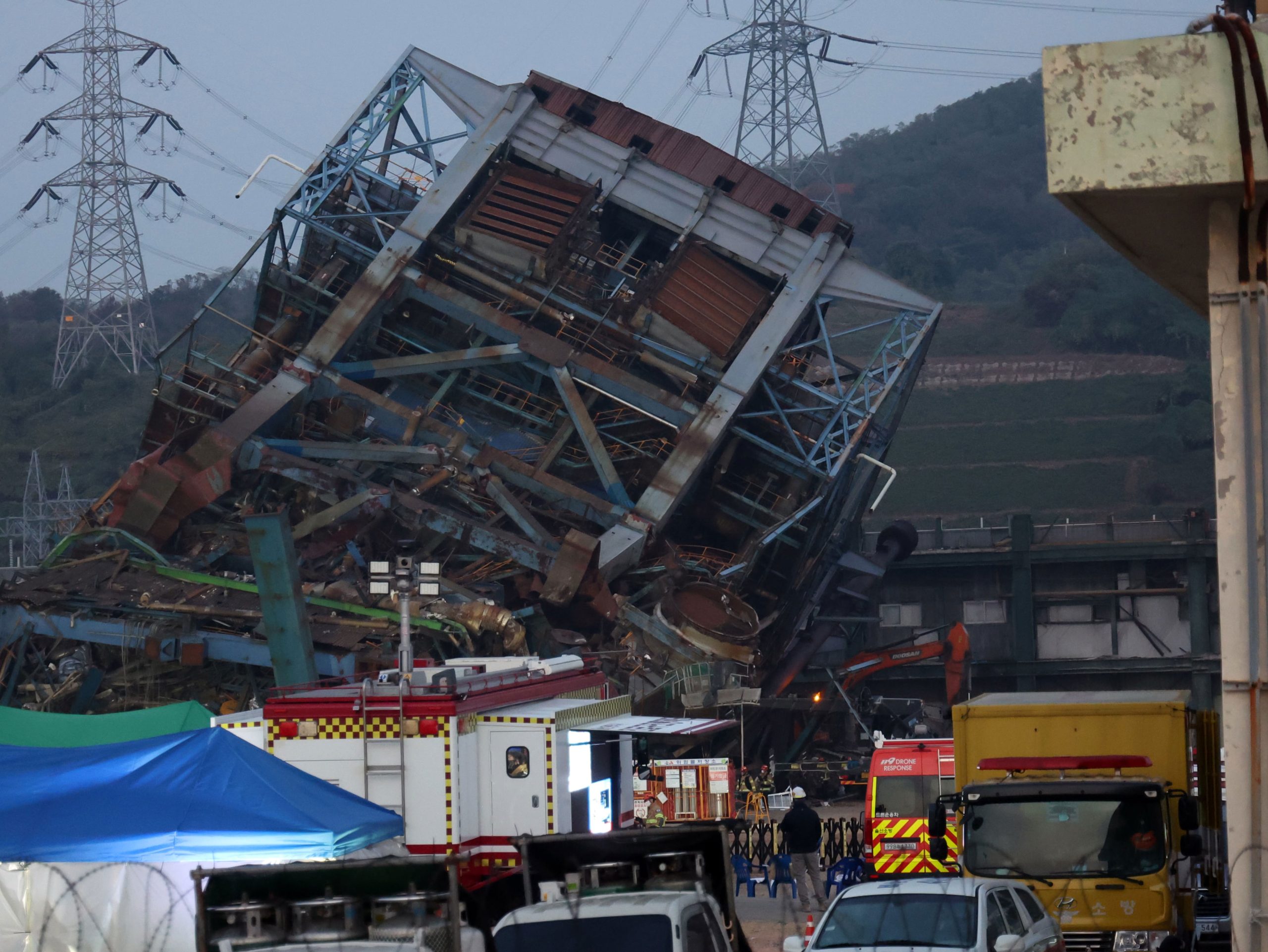
The ongoing search for individuals who were buried at the Ulsan Thermal Power Plant following the collapse of Boiler Tower No. 5 has seen a temporary halt in rescue operations due to safety concerns. The search resumed on the morning of the 9th, but with significant restrictions.
Due to the risk of a secondary collapse of Boiler Tower No. 5 and potential instability in adjacent structures such as Towers No. 4 and 6, the use of drones has become the primary method for conducting searches. This decision was made after fire authorities suspended all manual rescue efforts around 5:25 p.m. the previous day. The suspension was triggered by an alarm from a tilt sensor installed on the collapsed tower, which indicated possible structural instability.
In response to the detected danger, rescue personnel and equipment were quickly evacuated from the site. A situation assessment meeting was held at 7 a.m. on the 9th, involving structural safety experts. The conclusion was that internal searches posed a significant risk. This determination was based on several factors, including overnight rainfall, current wind conditions, and the progress of vulnerability work on Towers No. 4 and 6. This work, which involves cutting columns and steel structures to facilitate controlled demolition, had already advanced significantly before the accident, increasing the likelihood of further collapses.
As a result, drone-based searches were reintroduced starting at 8:10 a.m. on the 9th. A source from the fire authorities stated that even if future vulnerability work begins, drone operations will continue to be a key component of the search strategy.
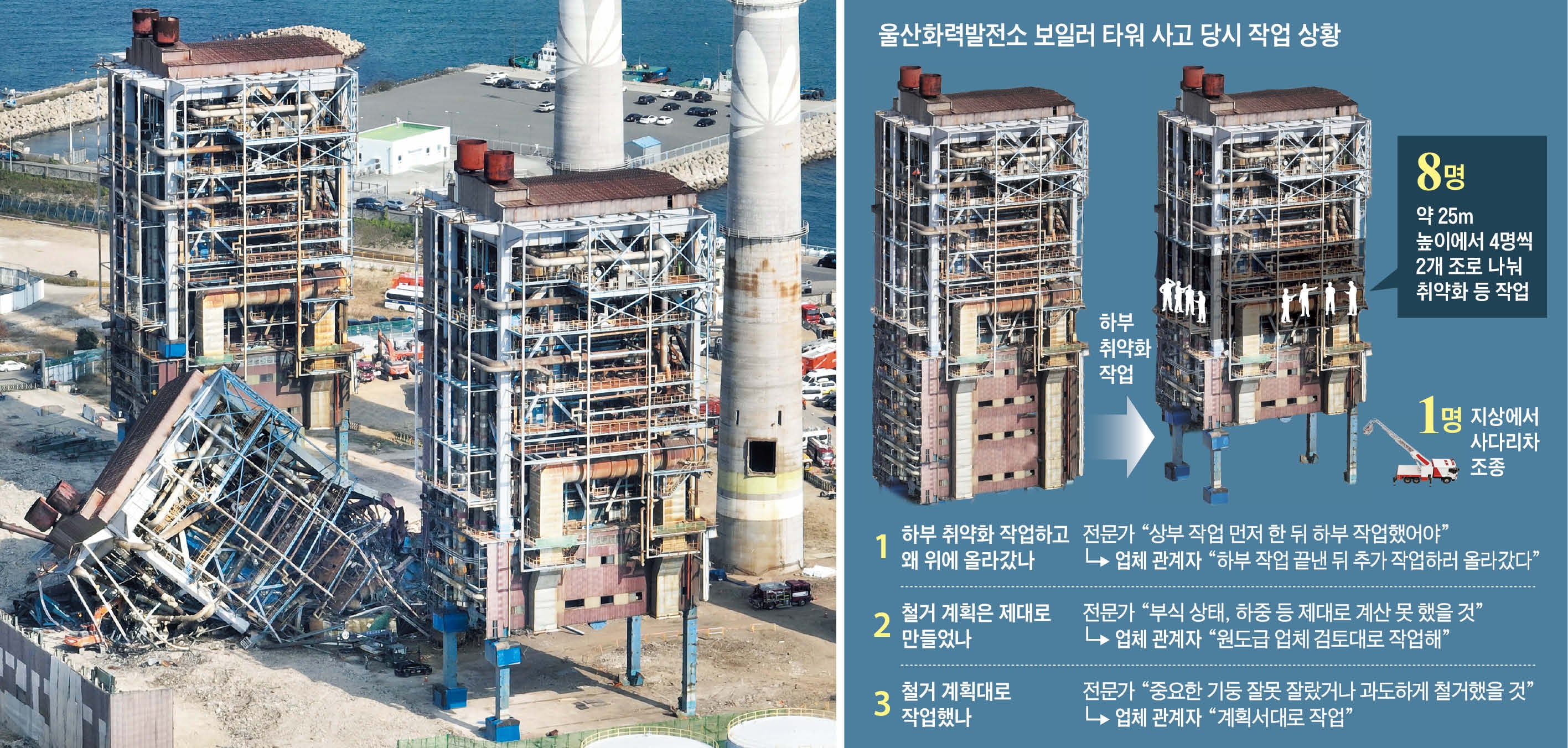
Pre-demolition efforts for the planned detonation of Towers No. 4 and 6 are also expected to intensify from this day forward. For the detonation to proceed safely, the vulnerability work on Tower No. 6, which is currently 75% complete, must be finalized. On-site teams are working to ensure that during the detonation, the towers do not collapse toward Boiler Tower No. 5 or the large chimney. Personnel may be deployed as early as the 9th.
In addition, a ‘purging’ operation is being carried out to empty the LNG pipeline near the site by injecting nitrogen. This step is critical to prevent secondary accidents, such as explosions, that could result from the tower detonation.
This incident, which occurred on the 6th, resulted in seven workers being buried. Tragically, three have been confirmed dead, two are presumed dead, and two remain missing. Currently, five individuals, including the two missing, are still believed to be trapped at the collapse site.