
Rising Dissatisfaction Among Prosecutors
A growing sense of dissatisfaction has emerged among prosecutors in response to the leadership’s decision to abandon the appeal in the first-instance ruling of the “Daejang-dong development corruption” case. This decision has sparked internal criticism, with some officials being labeled as “collaborators” within the prosecution community.
Key Figures in the Controversy
Acting Prosecutor General Noh Man-seok has become a focal point of this controversy. He was promoted to the position of Seoul High Prosecutors’ Office deputy chief in June 2022, during the first year of the Yoon Suk-yeol administration. Following a change in government, he was appointed as the Supreme Prosecutors’ Office deputy chief (high prosecutors’ office chief-level) and has served as acting prosecutor general since last July.
In August, during a ceremony for new prosecutors, Noh drew criticism for remarks interpreted as “divisive.” He stated, “Those who caused accidents have left, and the shame remains with those who stayed.” Later, he explained, “Amid discussions on prosecution reform, I meant that we should focus on doing our given tasks.” However, his acceptance of the National Assembly’s resolution to abolish the prosecution office—stating, “We respect the legislature’s decision”—sparked backlash.
This context has led prosecutors to label Noh as a “collaborator who failed to uphold both the prosecution’s organization and its duty.”
Park Cheol-woo’s Role
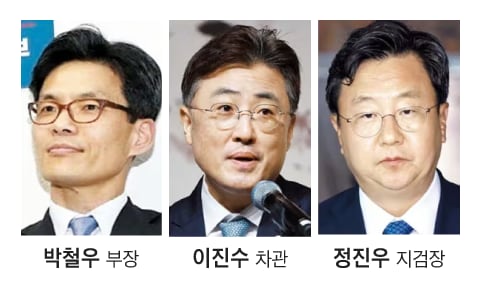
Park Cheol-woo, who directly ordered the Seoul Central District Prosecutors’ Office investigation team to reconsider the case just before the appeal deadline on the 8th, also faced criticism. Park served as Ministry of Justice spokesperson and deputy chief of the Seoul Central District Prosecutors’ Office during the Moon Jae-in administration. After being relegated to a minor post under the Yoon Suk-yeol administration, he was later promoted to head the Supreme Prosecutors’ Office’s Anti-Corruption Division following the current administration’s inauguration.
Criticism of Other Officials
Prosecutors also criticized Vice Minister Lee Jin-soo and Chief Jeong Jin-woo, calling their decision “cowardly and incomprehensible.” The internal criticism reflects a broader discontent with the leadership’s approach to handling high-profile cases and the perceived lack of commitment to upholding the prosecution’s duties.
Impact on Internal Dynamics
The decision to abandon the appeal has not only raised questions about the leadership’s integrity but also highlighted the internal divisions within the prosecution. The term “four collaborators” underscores the frustration among prosecutors who feel that key figures have compromised the mission of the organization.
This situation is likely to have long-term implications for the prosecution’s credibility and effectiveness. As the debate continues, the actions of these leaders will be closely scrutinized by both the public and the legal community.
Conclusion
The controversy surrounding the Daejang-dong development corruption case highlights the complex dynamics within the prosecution. The decisions made by key figures have not only drawn criticism but also raised important questions about the direction and integrity of the organization. As the situation unfolds, it remains to be seen how these internal disputes will affect the future of the prosecution and its role in the justice system.