
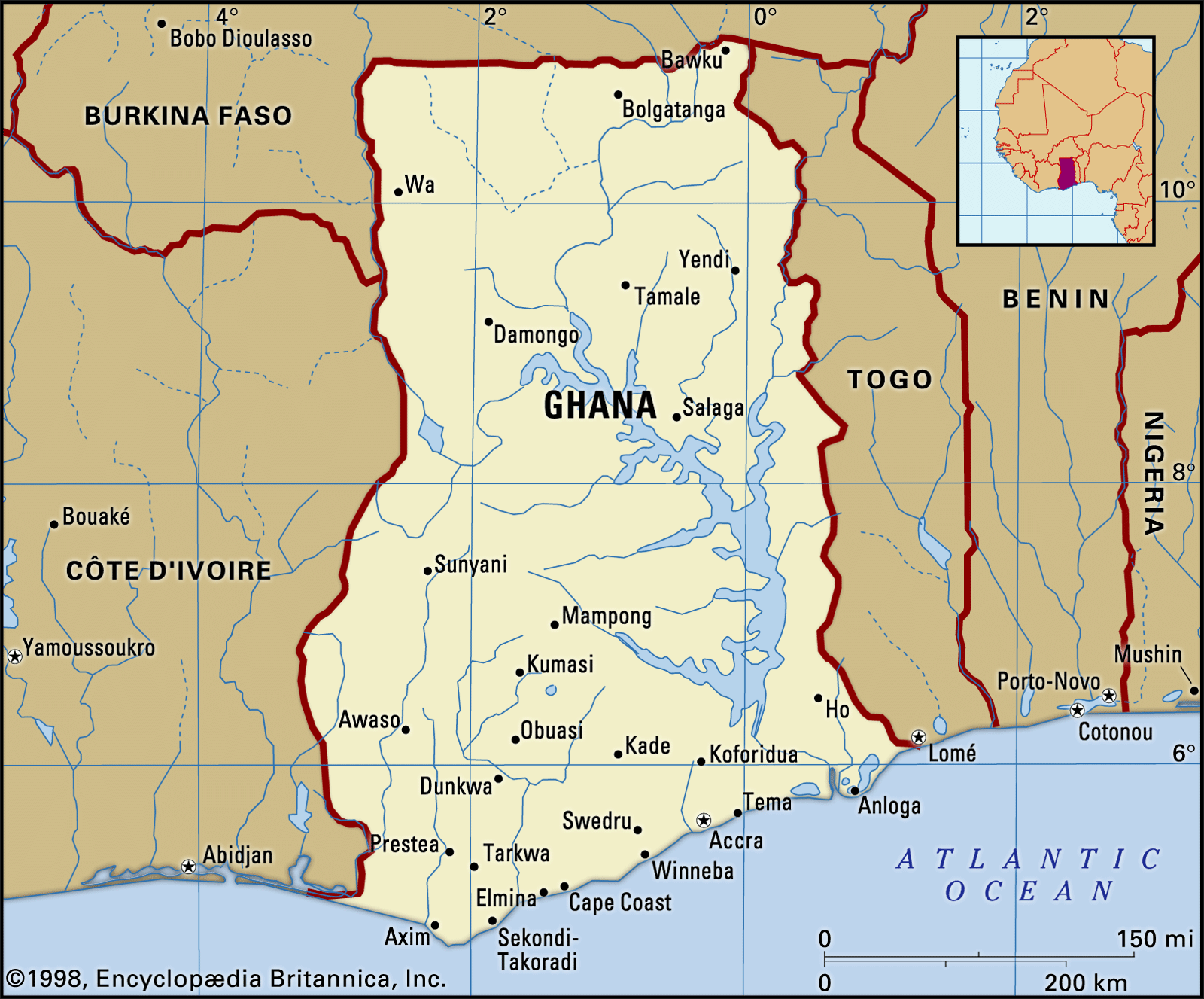
Ghana Takes Bold Steps to Combat Illicit Financial Flows and Terrorism Financing
The Government of Ghana has introduced a series of strengthened policy and institutional measures aimed at curbing illicit financial flows and countering terrorism financing. This initiative reflects the country’s commitment to addressing critical challenges that threaten economic development and regional stability.
At the 2025 FATF/GIABA Joint Experts Meeting in Accra, Deputy Finance Minister Thomas Nyarko Ampem, representing Finance Minister Dr. Cassiel Ato Forson, emphasized that Ghana is taking decisive steps to disrupt criminal financial networks. These networks not only undermine economic progress but also pose serious threats to the region’s security.
The three-day meeting brought together policymakers, financial intelligence specialists, security agencies, and international partners. The primary goal was to review compliance frameworks and enhance collaboration across West Africa. Deputy Minister Ampem highlighted the growing impact of illicit financial flows, money laundering, and terror financing in the sub-region. He pointed out that criminal networks exploit weak border controls, informal cash channels, and emerging digital financial systems.
“These are not just financial crimes. They are moral injustices that rob our countries of development, deny our youth opportunity, and fuel cycles of insecurity,” he said. “The cost of inaction is simply too high.”
Ghana has already implemented several key measures to address these issues:
- Passage of the Anti-Money Laundering Act
- Establishment and empowerment of the Financial Intelligence Centre (FIC)
- Roll-out of the National AML/CFT/CPF Policy (2025-2029)
- Targeted risk assessmentsfor virtual assets, non-profit organisations, and environmental crime-linked transactions
Additionally, a unified national response mechanism has been established, bringing together multiple key institutions including the Ministry of Finance, FIC, Bank of Ghana, Economic and Organised Crime Office, Ghana Revenue Authority, and security services. This mechanism ensures intelligence sharing and joint operations to tackle financial crimes effectively.
Deputy Minister Ampem also called for greater African representation in global financial governance. He stressed that the continent must shift from being mere policy takers to decision-makers in shaping standards that affect its economies. “Africa loses over $80 billion annually to illicit financial flows. We must be decision-makers in the global fight for financial integrity,” he said.
The Joint Experts Meeting will continue with working sessions focusing on enforcement collaboration, digital finance risks, and strategies for strengthening compliance in member states. Participants are expected to release a communiqué outlining priority actions for the next implementation cycle.
Key Initiatives and Collaborations
Ghana’s efforts are part of a broader regional and global strategy to combat financial crimes. The country has recognized the importance of international cooperation and has taken active steps to align with global standards. By enhancing its domestic policies and institutional capacities, Ghana aims to set a precedent for other nations in the region.
Some of the key initiatives include:
- Strengthening legal frameworks: The passage of the Anti-Money Laundering Act is a significant step towards creating a robust legal environment to detect and prevent financial crimes.
- Empowering financial intelligence units: The establishment of the Financial Intelligence Centre has enhanced the country’s ability to monitor and analyze suspicious financial activities.
- Developing comprehensive policies: The National AML/CFT/CPF Policy outlines a strategic approach to combating money laundering, terrorist financing, and other related crimes.
- Conducting targeted risk assessments: These assessments help identify vulnerabilities in specific sectors such as virtual assets, non-profit organizations, and environmental crime-linked transactions.
Future Directions and Global Engagement
As the meeting progresses, the focus will remain on fostering stronger collaboration among stakeholders. The discussions will explore ways to improve enforcement mechanisms, address the risks associated with digital finance, and develop strategies for better compliance in member states.
Deputy Minister Ampem’s call for greater African representation in global financial governance underscores the need for the continent to have a more prominent voice in shaping international financial policies. This shift is essential to ensure that the unique challenges and needs of African countries are adequately addressed.
Ghana’s proactive approach serves as a model for other nations facing similar challenges. By investing in strong institutions, effective policies, and international partnerships, the country is positioning itself as a leader in the fight against illicit financial flows and terrorism financing.
The outcomes of the 2025 FATF/GIABA Joint Experts Meeting are expected to provide valuable insights and actionable recommendations for the global community. As the discussions continue, the emphasis will remain on building a more secure and transparent financial system for all.