
A Call for Apology and Justice
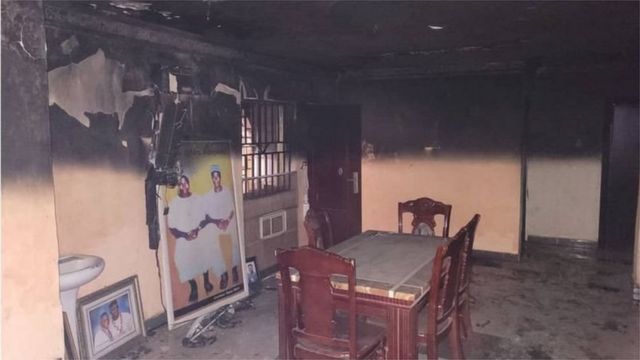
Professor Wole Soyinka, a Nobel Laureate, has called on the Federal Government to issue an apology to Yoruba nation activist Chief Sunday Adeyemo, commonly known as Igboho. This plea comes in response to the unlawful and criminal invasion of Igboho’s Ibadan residence on July 1, 2021, by a joint team from the Department of State Services (DSS) and the Nigerian Army.
The raid took place during the administration of former President Muhammadu Buhari. It was carried out under allegations that Igboho was stockpiling arms and ammunition. The incident led to the tragic deaths of two of his aides and the arrest of 13 supporters.
In a video shared by Igboho’s media aide, Olayomi Koiki, Soyinka expressed his concerns about the government’s actions. He emphasized that Igboho should not be treated as a criminal. Instead, Soyinka urged the government to recognize the errors in their approach and offer a formal apology.
Soyinka’s comments were made during an interview where he addressed several pressing issues, including the invasion of Igboho’s residence, the arrest of Nnamdi Kanu, the leader of the Indigenous People of Biafra (IPOB), and the ongoing insecurity challenges in Nigeria.
A Critical Perspective on Government Actions
According to the video, which was viewed by journalists, Soyinka stated:
“My advice is not so much to Igboho but to the government — that they should stop pursuing this person as a criminal because you (government) have begun by acting in a criminal fashion against him.”
He continued:
“Because if and when Igboho comes to trial, I guarantee you that the government will be very embarrassed. It’s not in the interest of the government. I think they should just tell Igboho, ‘we made a mistake; we should not have acted this way; you are no longer wanted — go back to your home,’ and in fact escort him to his home quietly and let him resume his normal life.”
Soyinka also highlighted the importance of language in describing Igboho’s situation. He noted that some media outlets refer to Igboho as being “in hiding.” However, he clarified that Igboho may have gone “underground” to protect himself and continue his declared struggle.
Understanding Igboho’s Mission
Soyinka explained that he is not referring to the secessionist aspect of Igboho’s activities. Instead, he is focusing on what Igboho came out to do: protecting and defending his people. According to Soyinka, Igboho aims to make aggressors aware that they are not lords of the nation or any section of it beyond what they are constitutionally entitled to.
He added:
“I think the government, in its known interest, if you bring Igboho to trial, he’s going to get mud in your face, clearly. As far as I’m concerned, it is up to Igboho to decide. He knows what the circumstances were. He knows what happened before his people were killed and he’s the only one who can decide for himself. I cannot advise him.”
Addressing Ongoing Issues
Soyinka’s remarks reflect a broader concern about the treatment of activists and the need for justice in Nigeria. His call for the government to acknowledge its mistakes and take responsibility is a significant step toward addressing the underlying issues that have led to such conflicts.
As the nation continues to grapple with security challenges and political tensions, voices like Soyinka’s serve as a reminder of the importance of dialogue, understanding, and accountability.