
EU Countries Under Migratory Pressure and the New Solidarity Mechanism
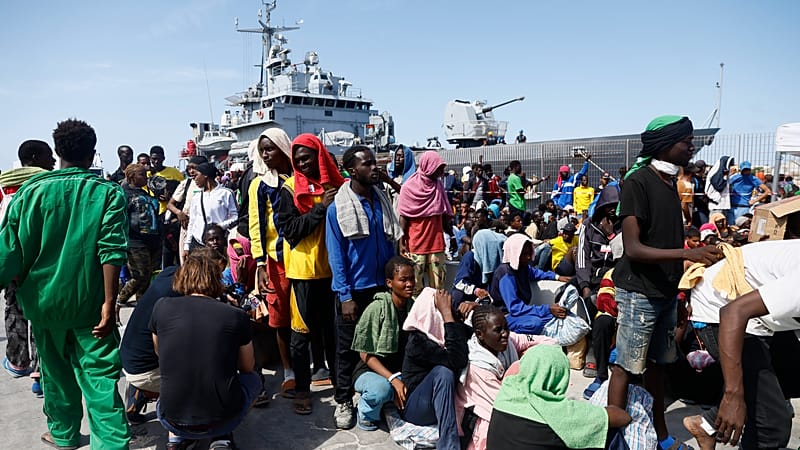
Spain, Italy, Greece, and Cyprus have been identified as facing significant migratory pressure by the European Commission in its first Annual Asylum and Migration Report. This report, released on Tuesday, highlights the disproportionate number of migrant arrivals these countries experienced last year, including those rescued at sea.
As a result of this pressure, these four nations will benefit from the solidarity of other EU member states starting in 2026. The solidarity could involve relocating asylum seekers or providing financial support. Alongside this assessment, the Commission has proposed the Annual Solidarity Pool—a mechanism to determine the total number of asylum seekers to be relocated and the amount each country should contribute financially or through relocation.
The details of the solidarity pool are not publicly available. Instead, they will be discussed among the EU’s 27 member states, with a decision expected by the end of the year. Each country, except those under migratory pressure, must contribute based on its population and GDP. They can choose from three options to meet their obligations: relocating a certain number of asylum seekers, paying €20,000 per person not relocated, or financing operational support for countries under migratory pressure.
The final decision will be made through a qualified majority vote. The minimum size of the solidarity pool is legally set at 30,000 relocations and €600 million in financial contributions.
Countries at Risk of Migratory Pressure
In addition to the four countries under migratory pressure, the report identifies 12 states as “at risk of migratory pressure”: Belgium, Bulgaria, Germany, Estonia, Ireland, France, Croatia, Latvia, Lithuania, the Netherlands, Poland, and Finland. These countries are required to provide solidarity but will be reevaluated to avoid disproportionate obligations in the future.
A third group of countries has been classified as “facing a significant migratory situation”: Bulgaria, Czechia, Estonia, Croatia, Austria, and Poland. These nations are still required to contribute to solidarity efforts but can request an exemption from their quotas. Such exemptions must be certified by the Commission and approved by other member states.
The Pact on Migration and Asylum
The report and the solidarity pool form the foundation of the “mandatory solidarity” system outlined in the Pact on Migration and Asylum, a major reform of migration policy adopted in 2024. However, some EU countries are resisting the implementation of this system.
Hungary’s Prime Minister Viktor Orbán, Poland’s Prime Minister Donald Tusk, and Slovakia’s Prime Minister Robert Fico have publicly stated that they will not comply with the rules of the pact. Tusk recently tweeted that Poland will neither accept migrants nor pay for the initiative. Budapest and Warsaw have also failed to submit their implementation plans for the pact to the Commission, according to European Commissioner for Home Affairs Magnus Brunner.
Failing to contribute to the solidarity mechanism could constitute a breach of EU law, leading to infringement procedures against non-compliant countries once the regulation takes effect in June 2026. The first evaluation of the new migration rules is scheduled for July next year.
Exemptions and Challenges
The only legal way to avoid the solidarity share is to apply for an exemption, which is available only to countries considered to be “facing a significant migratory situation.” If approved, these countries are no longer required to accept asylum seekers or make financial contributions. Their share will not be redistributed among other member states.
Despite these measures, the Commission notes that the overall migratory situation in the EU has improved, with a 35% decrease in illegal border crossings during the reporting period (July 2024–June 2025). However, challenges remain, including irregular arrivals, unauthorized movements within the EU, and the weaponization of migration by Russia and Belarus.