
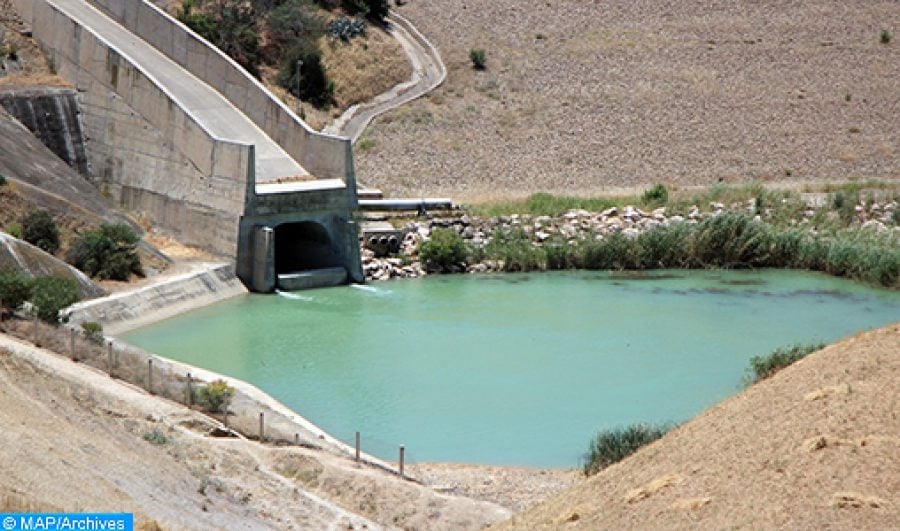
Morocco’s Water Reserves Continue to Decline
Morocco’s water reserves have shown a continued decline this week, with the national dam filling levels stabilizing at 31 percent. This figure is close to last year’s level, according to data from the Directorate of Water Engineering under the Ministry of Equipment and Water. The country’s reservoirs currently hold approximately 5.2 billion cubic meters of water out of a total capacity of 16.7 billion.
Despite a slight national gain of less than two percentage points compared to 2024, the increase remains uneven across the nine main river basins in the country. Some basins have experienced strong recovery, while others have seen significant drops in their water levels.
Regional Variations in Water Levels
One of the basins that has shown improvement is the Bouregreg, where filling rates reached 63.5 percent. However, other basins have faced sharp declines. For instance, the Ziz–Guir–Ghris basin fell from 97 percent to 47.7 percent year-on-year. Similarly, the Oum Er-Rbia basin remains critically low at just 9 percent.
The Sebou basin now accounts for about 43 percent of Morocco’s total stored water, with a filling rate of 40.6 percent. This level is almost unchanged from last year, indicating little progress in addressing the overall water scarcity issue.
Concerns Over Agricultural Basins
Continued deficits in major agricultural basins such as Oum Er-Rbia, Souss-Massa, and Moulouya are raising concerns about irrigation and drinking water supplies. These areas are crucial for the country’s agricultural output, and their low water levels could have serious implications for food security and local communities.
The Directorate of Meteorology has reported that weather changes are expected midweek, with light scattered rain and cooler temperatures forecast across northern Morocco. While these developments may provide some relief, they are unlikely to significantly impact the overall water shortage situation.
Key Water Basins and Their Current Status
Here is a breakdown of the key water basins and their current status:
- Bouregreg: Filling rates reached 63.5 percent, showing strong recovery.
- Ziz–Guir–Ghris: Filling rates dropped from 97 percent to 47.7 percent year-on-year.
- Oum Er-Rbia: Remains critically low at 9 percent.
- Sebou: Accounts for about 43 percent of Morocco’s total stored water, with a filling rate of 40.6 percent.
- Souss-Massa: Faces ongoing deficits, affecting irrigation and water supply.
- Moulouya: Also experiencing significant water shortages, impacting agricultural activities.
Outlook and Challenges
The continued low levels of water reserves in many parts of Morocco highlight the challenges the country faces in managing its water resources. With climate change and increasing demand for water, the need for sustainable water management practices has never been more urgent.
Efforts to improve water storage and distribution, along with investments in infrastructure and conservation measures, will be critical in addressing the current crisis and preparing for future challenges.