
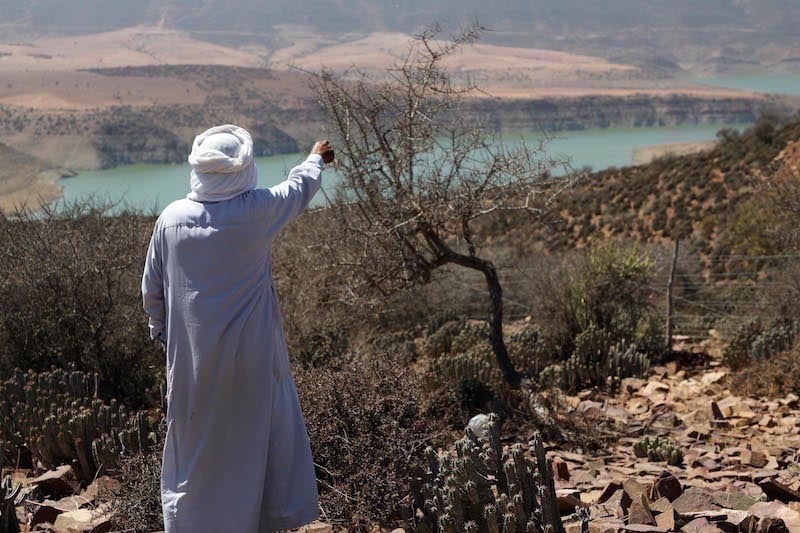
The Struggle of Morocco’s Desert Communities
Morocco’s desert communities are facing an uphill battle against the combined forces of climate change and government neglect, according to a recent report by the Carnegie Endowment for International Peace. The study, titled “Between Marginalization and Climate Change: The Resilience of Morocco’s Ait Khabbash,” highlights the challenges faced by the Ait Khabbash people in the Draa-Tafilalet region, one of the most arid parts of the country.
This region is home to Amazigh pastoralist families who have traditionally lived as nomadic herders, moving with their livestock in search of water and grazing land. However, the increasing intensity of droughts and the depletion of water sources have made this way of life increasingly unsustainable.
Climate Change and Water Scarcity
The report emphasizes that these communities are experiencing the harshest impacts of climate change, yet they receive minimal support from national policies. Locals note that where water was once accessible at a depth of eight meters, it now lies over 100 meters below ground. This drastic shift has forced many families to abandon their nomadic lifestyles and settle permanently in towns such as Merzouga and Ouarzazate.
With mobility restricted due to closed borders and the loss of pastures, many have turned to tourism as a new source of income. They have established guesthouses, organized camel treks, and created desert camps that attract visitors from both within Morocco and abroad. This informal tourism industry has helped keep families together and provided employment opportunities for young people without requiring them to leave the region.
Informal Tourism and Lack of Support
Despite its benefits, this homegrown tourism sector often operates informally, meaning it is not registered with the state. As a result, these small businesses do not qualify for financial aid during crises, such as the sudden collapse of tourism during the COVID-19 pandemic.
The Carnegie report also criticizes Morocco’s climate policies for focusing on large-scale projects, such as solar plants and dams, while neglecting smaller, more vulnerable communities. These policies have exacerbated inequalities by prioritizing industrial agriculture and urban centers over the needs of local populations.
Negative Impacts of Large Projects
Projects like the Mansour Eddahbi dams, which were intended to store water, have had unintended consequences. Instead of alleviating drought conditions, they have disrupted natural water flows, worsening the situation downstream. This has left desert communities even more vulnerable to the effects of climate change.
Despite these challenges, the people of the desert continue to adapt using traditional knowledge and community cooperation. Many rely on ancient water systems and family networks to manage scarce resources. However, the report stresses that resilience alone is not enough to address the growing crisis.
The Need for State Support
Without meaningful state support, improved infrastructure, and policies that involve local voices, Morocco’s desert communities will continue to bear the brunt of a climate crisis they did not create. The Carnegie Endowment for International Peace calls for a more inclusive approach to climate policy that recognizes the unique challenges faced by these marginalized groups.
The report serves as a wake-up call for policymakers and stakeholders to take action before the situation worsens further. It highlights the urgent need for a shift in priorities to ensure that no community is left behind in the fight against climate change.