
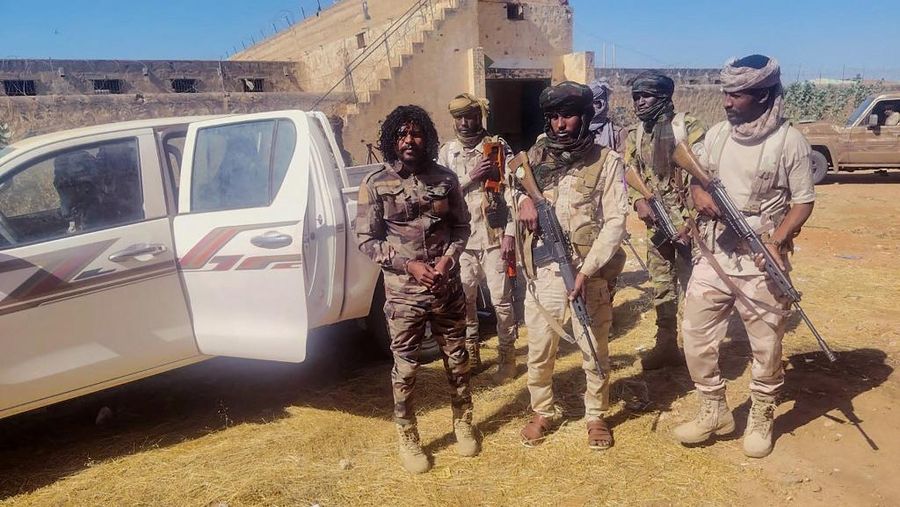
Sudan’s Rapid Support Forces Agree to Humanitarian Ceasefire Proposal
The Rapid Support Forces (RSF), a paramilitary group in Sudan, have announced their acceptance of a proposal for a humanitarian ceasefire. This proposal was drafted by the U.S.-led initiative known as the Quad, which includes Egypt, Saudi Arabia, and the United Arab Emirates (UAE). The RSF stated that their decision was made in response to the aspirations and interests of the Sudanese people.
“In response to the aspirations and interests of the Sudanese people, the Rapid Support Forces affirms its agreement to enter into the humanitarian truce proposed by the Quad countries,” the RSF said in a statement.
This announcement comes amid widespread atrocities following the RSF’s takeover of El Fasher in Sudan’s western Darfur region 18 months ago. Since April 2023, Sudan has been engulfed in a deadly proxy war between the RSF and the Sudanese Armed Forces (SAF). The conflict has led to significant displacement and suffering among civilians.
After the RSF captured an SAF base two weeks ago, more than 80,000 civilians have fled the escalating violence in El Fasher and surrounding areas. There are growing reports of “executions, sexual violence, humiliation, extortion, and attacks,” according to Deputy UN Spokesperson Farhan Haq, who spoke to reporters on Wednesday.
Earlier, the SAF welcomed the Quad proposal but emphasized that the first step should be the complete withdrawal of the RSF from areas they have seized in recent fighting. Additionally, the SAF called for compliance with terms of previous peace plans, including the surrendering of arms.
The RSF statement also called for “immediately commencing discussions on the arrangements for a cessation of hostilities and the fundamental principles guiding the political process in Sudan.” This wording suggests that significant obstacles remain in the way of an implementable agreement.
In Washington, the State Department expressed continued efforts by the United States and other Quad members to pursue peace. A spokesperson for the State Department stated:
“We urge both sides to move forward in response to the US-led effort to conclude a humanitarian truce, given the immediate urgency of de-escalating the violence and ending the suffering of the Sudanese people.”
Key Points of the Conflict
- Humanitarian Crisis: The conflict has led to massive displacement, with over 80,000 civilians fleeing El Fasher and surrounding areas.
- Atrocities Reported: Accounts of executions, sexual violence, and other forms of brutality have increased.
- Peace Efforts: Both the RSF and SAF have responded to the Quad proposal, though each has specific conditions for participation.
- International Involvement: The U.S., along with Egypt, Saudi Arabia, and the UAE, is actively working to mediate a ceasefire.
Challenges Ahead
Despite the RSF’s acceptance of the ceasefire proposal, there are still major challenges to achieving a lasting peace. The RSF’s statement indicates that discussions on the arrangements for a cessation of hostilities and the political process in Sudan will need to begin immediately. However, the complexity of the conflict and the deep-seated mistrust between the warring parties suggest that progress will be slow.
The international community, particularly the Quad members, continues to push for a resolution. The U.S. State Department has reiterated its call for both sides to respond positively to the humanitarian truce. This is critical not only for the immediate safety of civilians but also for the long-term stability of Sudan.
The Role of External Actors
External actors, including the UAE, have played a significant role in the conflict. Reports indicate that the UAE has supplied arms to various factions, contributing to the escalation of violence. This has raised concerns about the potential for genocidal brutality in regions like Darfur.
The situation in Sudan remains dire, with ongoing violence and a lack of effective governance. The international community must continue to support efforts aimed at bringing peace to the region. This includes not only diplomatic initiatives but also humanitarian aid to those affected by the conflict.
As the conflict continues, the need for a comprehensive and sustainable solution becomes increasingly urgent. The humanitarian truce proposed by the Quad could be a crucial first step, but it will require cooperation and commitment from all parties involved.