
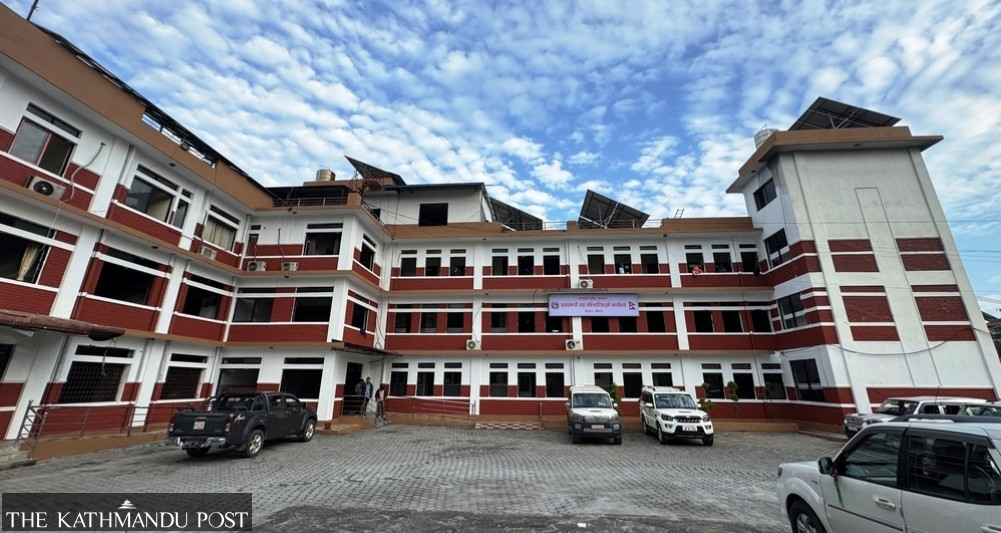
Government Cuts Administrative Spending to Fund Reconstruction
In a significant move to address the damage caused by recent protests, the Gandaki Province government has announced major cuts in administrative expenses. These reductions are aimed at freeing up approximately Rs2 billion for the reconstruction of public infrastructure that was damaged during the Gen Z protests in September.
The decision was made during a Cabinet meeting held on October 28. The government plans to partially or completely suspend spending under several recurrent budget headings. This includes vehicle purchases, official travel, hospitality, and furniture procurement. According to Minister for Economic Affairs Takaraj Gurung, the government will cut 80 percent of the computer software purchase budget, 50 percent each from monitoring and evaluation, travel, and publications, 25 percent each from hospitality and miscellaneous headings, and 20 percent each from fuel and vehicle maintenance.
“We expect to save around Rs2 billion through these reductions,” Minister Gurung told the Post. “The protests caused roughly the same amount in damage. The idea is to rebuild the destroyed structures using internal savings rather than asking for additional funds.”
Targeted Reductions and Specific Measures
The government has also planned to slash by half the funds allocated under the maintenance heading of ministries whose property was not damaged. Gurung clarified that the ministries of Physical Infrastructure, Health, and Agriculture were not directly affected by the protest. “No new vehicles will be purchased except for those destroyed during the unrest. Similarly, except for essential health equipment, no new machinery or furniture will be procured this fiscal year,” he added.
The Gandaki government’s total budget for the current fiscal year 2025-26 stands at Rs31.97 billion, with Rs12.63 billion allocated for recurrent expenses and Rs19.09 billion for capital expenditure. So far, the province has spent only 8.31 percent of the total allocation in the first quarter, according to the Office of the Provincial Treasury Comptroller. In the same period last year, spending had reached 9.55 percent.
Suresh Subedi, head of the comptroller’s office, said that by mid-October, recurrent expenditure reached Rs1.12 billion while capital spending stood at Rs1.52 billion. “The pace of capital expenditure remains slow, but the government appears focused on reallocating available resources for immediate reconstruction,” Subedi said.
Previous Restructuring and Financial Impact
Earlier in July, the Gandaki government had also implemented administrative restructuring by dissolving nine offices, merging 32 others into 17, and cutting 185 staff positions. Gurung said that move alone was expected to save around Rs500 million. “Combining the two measures, we will have about Rs2.5 billion available to fund rebuilding efforts,” he claimed.
Minister Gurung emphasized that the cuts would not affect development works directly tied to public welfare. “We are reducing non-essential spending, not development budgets. This is an opportunity to make the government leaner, more efficient, and closer to the people,” he said.
Ongoing Efforts and Future Outlook
The government’s strategy reflects a commitment to prioritizing essential services while addressing the financial impact of the protests. By reevaluating its spending patterns and focusing on efficiency, the Gandaki Province aims to ensure that resources are directed towards critical areas such as infrastructure repair and public welfare.
With the ongoing efforts to reallocate funds and streamline operations, the province is working towards a more sustainable and effective governance model. These measures are expected to not only aid in the recovery process but also set a precedent for responsible fiscal management in the future.