
The Struggle of the Interim Government
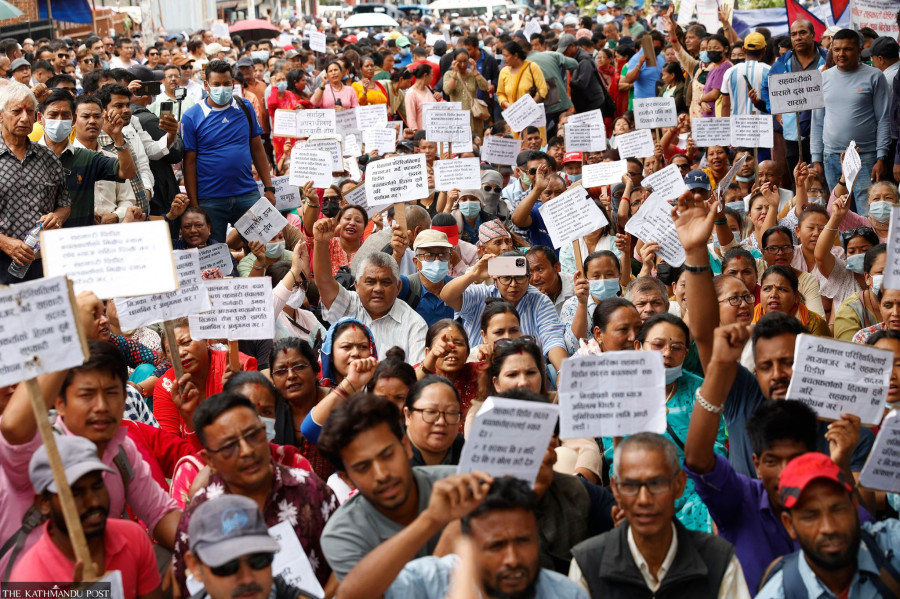
In Kathmandu, on November 7, the month-old interim government led by Prime Minister Sushila Karki is facing significant challenges in managing its primary responsibility: organizing the parliamentary elections scheduled for March 5. This task is being complicated by ongoing and planned street protests over various issues, raising concerns about whether a suitable environment for the polls can be created amidst political unrest and administrative distractions.
Various groups, including victims of cooperatives and anti-cable car activists, are preparing new demonstrations, adding to the uncertainty surrounding the election process. Former Chief Justice Karki, who became Prime Minister following the Gen Z movement on September 8 and 9, has a clear mandate to hold the parliamentary elections on March 5. However, critics argue that the government is straying from its main objective, even as it attempts to create a conducive environment for the polls.
Two months after its formation, major political parties, especially the CPN-UML led by former Prime Minister KP Sharma Oli, remain skeptical about whether the government has ensured a proper environment for the snap elections. While political parties continue to claim that the government has not provided a suitable election climate, the government dismisses these claims. Amid this tension, various groups are preparing to take to the streets to push their demands, stating they will launch protests if their concerns are not addressed.
Protests and Demands
The National Federation of Cooperative Victims held a press conference on Tuesday, warning of an agitation starting on November 13. Accusing previous governments of failing to implement past agreements, the federation claimed the interim government has also ignored the voices of cooperative victims. Federation President Kushluv KC warned that they would proceed with protests if the government does not address their longstanding grievances.
KC argued that the current government must fulfill the demands of their movement, which became a national issue after the Gen Z protests. He emphasized that while the government may choose not to address politically motivated issues, it must immediately respond to the grievances of around 1.4 million cooperative victims. “The individuals involved in the embezzlement of cooperative funds enjoy political protection,” said KC. “If the citizens’ government formed after the Gen-Z movement also fails to take action and return the victims’ savings, we have no hope that any post-election government will do so either.”
He further stated that although they have been carrying out phase-wise protests for the past two years, previous governments only signed agreements but never implemented them. KC warned that if the current government also fails to act, they will be compelled to resort to violent agitation.
Additional Protests and Demands
Likewise, the ‘No Cable Car to Pathibhara Temple’ group, which has been protesting against a cable car project in the eastern hill district of Taplejung citing heritage and indigenous Limbu concerns, has announced a new phase of protests. The group’s leader, Prem Yakten, said they had already met Home Minister Om Prakash Aryal to inform him of local concerns over the project and were now seeking an appointment with the prime minister.
“If the discussions with the prime minister do not go well, we are preparing to launch a new phase of protests from November 29,” Yakten said. He added that since the current administration is a citizens’ government formed after a popular uprising, they believe the government understands their demands and expects them to be addressed.
Earlier this week, the government asked for a two-week grace period to address the demands of local residents of the Bancharedanda landfill on the Dhading-Nuwakot border, after they blocked Kathmandu Valley’s garbage disposal for several days.
Political Tensions and Election Concerns
On one hand, various groups that had been staging phase-wise protests with different demands during the terms of the previous government are now stepping up pressure on the election-focused government to address their issues. On the other hand, Sudan Gurung, one of the leaders of the Gen Z movement instrumental in forming the current government, demanded on Thursday via social media that Home Minister Aryal resign. He also warned that if their demands are not addressed, they would disrupt the election environment.
Meanwhile, the group led by Durga Prasain, who is now a self-proclaimed monarchist but was once aligned with both the CPN (Maoist Centre) and later the CPN-UML, has announced a protest for November 23. Prasai is notorious for making provocative statements. However, the government claims that Prasain will participate in the upcoming elections.
According to sources, the government is preparing to hold formal talks with Prasain within a few days, once he returns home from his medical checkup in India, and request him to take part in the election either as an independent candidate or through a political party.
Balancing Responsibilities
The election-focused government has been taking steps typical of an elected administration, such as transferring the head of the state-run power utility, Nepal Electricity Authority, and recalling ambassadors from 11 different countries. At the same time, various groups are mobilizing for street protests.
As the weapons and ammunition lost during September Gen Z protests still not fully recovered, questions remain over whether a truly peaceful environment for elections can be established.
However, Minister for Information and Communications Jagadish Kharel, who is also the government spokesperson, claims that these developments will not disrupt the election environment. Kharel says that although the Karki-led administration was formed with the mandate to conduct elections, it still has to carry out its day-to-day responsibilities.
Kharel further explains that a democratic system ensures the right of citizens to take to the streets to voice their demands. “The government is not in favour of ignoring public dissent, and it will address grievances through dialogue while ensuring that the elections are held on schedule,” Kharel emphasized.