

The Legacy of the Tiger in Korean Culture
As a child, I often visited my grandmother’s house during school breaks. One of the most memorable sights was a map of the Korean Peninsula that depicted a tiger stretching its back and roaring with both paws raised. This image hung on the wall, and I would lie down with my arms under my head, gazing at the powerful tiger. The spirit of this magnificent creature seemed to flow through the land like a single body. I imagined riding on its back and racing through the Baekdudaegan mountain range. These days, seeing the tiger Duppy from the Netflix animated filmK-Pop Demon Hunterssoaring across the Pacific fills me with joy and wonder. I feel a mix of anticipation and concern about how far the spirit of the Korean tiger will reach. Don’t we all share this sentiment?
A Journey Through Time
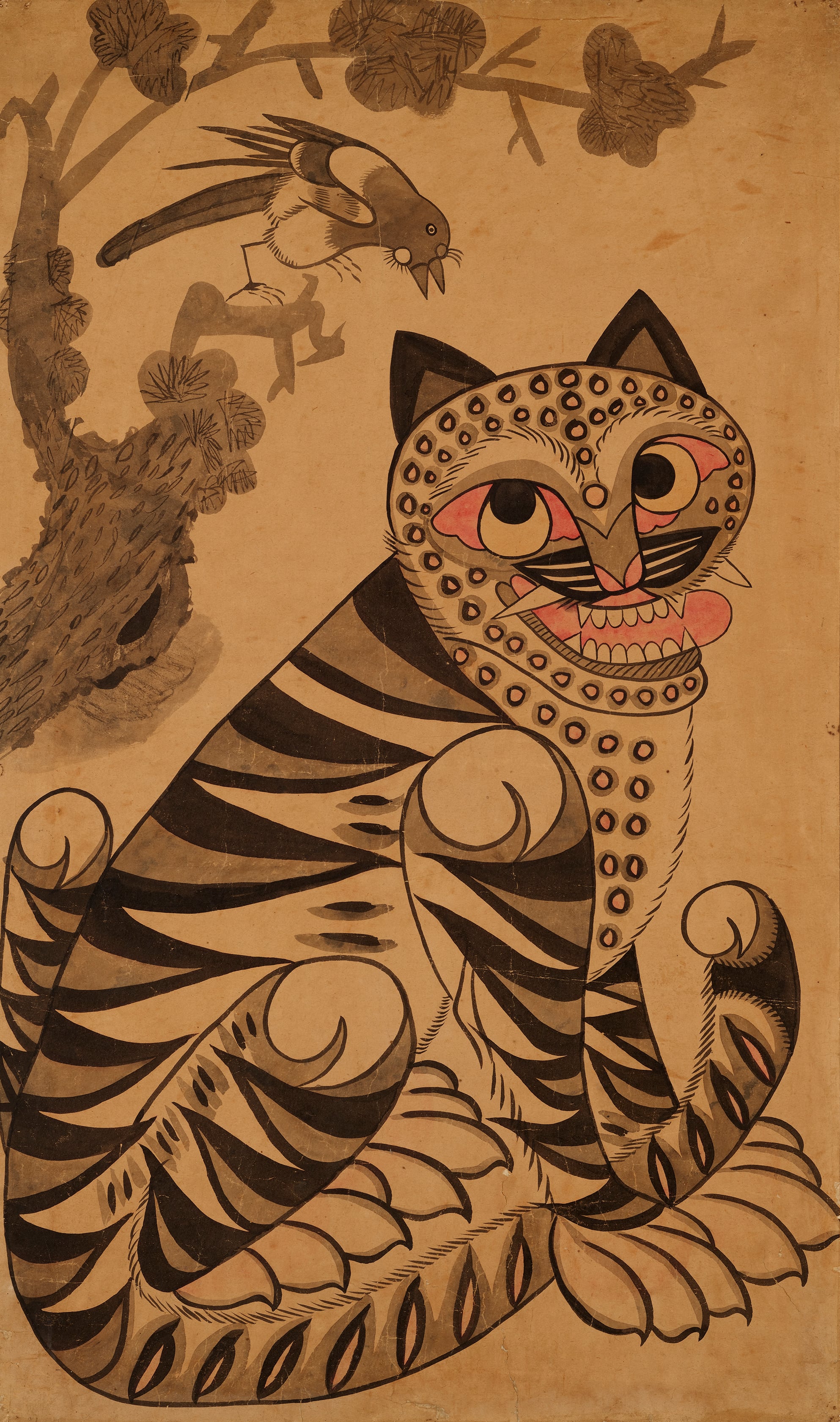
Yesterday, I climbed the hill in Itaewon to see the Joseon-era tigers, which are considered the origin of the modern Hyeondae tiger. The Leeum Museum of Art’sMagpie and Tigerexhibition brought together various representations of tigers: fearsome ones, playful ones, curious ones, and even corrupt officials depicted as tigers. The first piece that caught my eye was the 1592Tiger and Magpie Painting. The tiger stood firmly in the center of the vertical canvas, slightly turning its head and glaring with large, round eyes as if probing the other’s thoughts. Upon closer inspection, a baby tiger peeked out from behind its tail. This must be a mother tiger on guard to protect her cub. The young tiger, fascinated by the chattering magpies, naively gazed up at the tree. The overall harmony of the painting was heartwarming. The tiger didn’t bare its teeth but observed the world with curious eyes—a scene that lingers in my mind.
The Hour of the Tiger
Perhaps the reason ancient people called the hours from 3 a.m. to 5 a.m. “In-si,” the hour of the tiger, was because this time of day was filled with the unknown. Before dawn, when the world is silent in darkness and awaits light, this hour itself is like a curious tiger. Now, we open the tiger’s hour step by step, our large and wise eyes shining.
The Symbolism of the Tiger
The tiger has long been a symbol of strength, power, and resilience in Korean culture. From ancient paintings to modern interpretations, the tiger continues to inspire and captivate. TheTiger and Magpie Paintingis a perfect example of how the tiger has been portrayed throughout history. It represents not just the physical might of the animal but also its emotional depth and connection to nature.
The Tiger in Modern Media
In recent years, the tiger has found new life in modern media. Shows likeK-Pop Demon Huntershave introduced the tiger to a global audience, blending traditional symbolism with contemporary storytelling. This fusion allows the tiger to remain relevant while honoring its cultural roots.
Reflections on the Past and Future
As I reflect on my childhood memories and the tiger’s journey through time, I am reminded of the enduring power of symbols. The tiger, whether in a painting or an animated film, continues to evoke emotions and spark imagination. It serves as a reminder of the rich cultural heritage that shapes our understanding of the world.
Conclusion
The tiger’s legacy is deeply embedded in Korean culture, and its presence in both historical and modern contexts highlights its significance. From the ancientTiger and Magpie Paintingto the animated Duppy, the tiger remains a powerful symbol of strength, curiosity, and resilience. As we continue to explore and reinterpret these symbols, we honor the past while embracing the future.