
A New Era for New York City
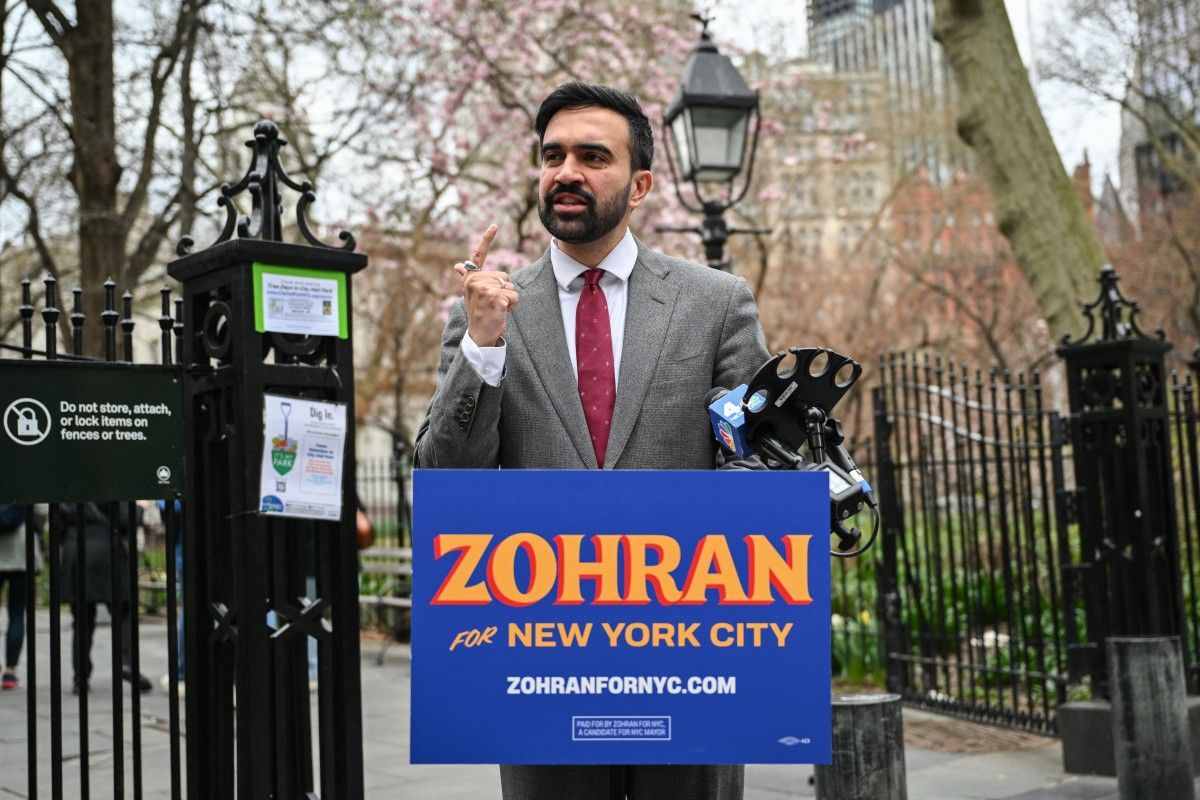
New York City, often seen as the epitome of capitalism, has just elected a left-leaning, anti-establishment Democrat as its new mayor. Zohran Mamdani, a former New York State Assemblyman, has made history as the city’s first Muslim mayor, the youngest in over a century, and the first person of African birth to win the office.
This victory has sent shockwaves through both America and the long, winding story of East Africa’s immigrants and exiles. Mamdani’s election is steeped in irony and history. He was born in Kampala in 1991, when his father, Mahmood Mamdani, one of Africa’s most renowned scholars, had finally regained Ugandan citizenship. That citizenship had been stripped from him twice—first in 1972 when dictator Idi Amin expelled Asians from Uganda, and again in the early 1980s after Mahmood criticized President Milton Obote’s government.
Many would have stayed away, but he fought, returned home, rebuilt his life, and taught a new generation to question power. It was a lesson his son carried into the heart of American politics. His mother, Mira Nair, captured that same spirit in her 1991 film Mississippi Masala, which explored love and racism in the Deep South through the eyes of Ugandan Asian exiles. Decades later, her son would turn that story into a political triumph.
A Political Journey
Before this stunning victory, Zohran served as an Assemblyman for Astoria, a working-class and immigrant neighborhood in Queens. There, he built a reputation as a sharp, principled social democrat, championing affordable housing, fare-free public transport, and stronger tenant protections. His platform would have been dismissed a decade ago as utopian. Yet in 2025, in a city synonymous with Wall Street and luxury real estate, he won by over one million votes, more than half the total.
His intelligence, warmth, and charisma didn’t hurt either. But what truly defined him was his willingness to be bold. There is a striking irony in all this. The man who most dislikes Mamdani, President Donald Trump, is in many ways his mirror opposite. Both broke their parties’ molds. Trump embraced a populist, racially charged politics unseen in America for generations. He attacked institutions, mocked the rule of law, and made the idea of dictatorship fashionable again with his supporters. It was audacity of the darkest kind. Yet it worked.
Mamdani’s audacity lies at the other end of the moral spectrum. He dared to be a social democrat in the beating heart of global capitalism.
East African Influence
Yet his story also continues East Africa’s interrupted histories. When Uganda’s military ruler Idi Amin expelled some 80,000 Asians in 1972, he could never have imagined that half a century later, the children of those exiles would be leading cities and reshaping power in the world’s oldest democracies.
Across the West, the children of East African migrants are emerging as leaders. Britain’s former Prime Minister Rishi Sunak was born in the UK to Indian parents who migrated from Kenya and Tanzania. In the United States, Somali-American Abdirahman Muse recently became mayor of St Louis Park, Minnesota, a suburb once notorious for its exclusionary racist housing laws. Kenyan-born Lucy Gichuhi became Australia’s first African-born senator in 2017.
The most famous of them all remains Barack Obama, son of a Kenyan economist, easily the most consequential political figure of African descent in modern history.
A Pattern of Leadership
This pattern reflects the strange alchemy of exile, where displacement is transformed into imagination. The numbers tell the same story. According to the United Nations, more than 2.5 million East Africans now live abroad, double the number at the turn of the millennium. In the United States alone, 45 per cent of Somali and Kenyan immigrants hold university degrees, well above the national immigrant average of 34 per cent.
In Britain, data from the Office for National Statistics shows that East African-born residents have among the highest rates of civic and political participation of any African-origin group. Migration robbed these families of land, but it gave them something more valuable: Mobility, exposure, and the determination to belong anywhere.
They arrived in the West not as settlers but in flight, armed with stories of failed states, corruption, and lost dreams. For many, the motivation was clear. They had seen what unaccountable power looks like and were determined never to let it happen again.
That may explain why, unlike many migrant groups that lean almost exclusively towards business or the professions, East Africans often end up in politics, public service, or civic leadership. Their parents fled Idi Amin, Tanzania’s socialist nationalisations, or economic collapse. Their children are remaking the very systems that once seemed untouchable.
None has embodied that arc as vividly as Zohran Mamdani. The city that invented modern capitalism has now chosen a man who openly challenges it. The town that symbolises wealth inequality has elected someone who campaigns against billionaires.
A Moment of Reflection
For East Africa, this should be a moment of reflection. These are the happy results of bad things: expulsions, coups, failed governments, poverty, and lost opportunity. The region’s misfortunes scattered its people, but those people have gone on to help change the world.
When Zohran Mamdani walked onstage to claim victory, his words were measured but defiant: “We don’t accept the world as it is. We build the world as it should be.” His father could have said it in a Makerere lecture hall or by his mother behind a film camera. Nearly forty years ago, Uganda expelled a scholar for speaking his mind. Today, his son runs the most powerful city on earth because he spoke his mind too.