
The Geopolitical Implications of EU Enlargement
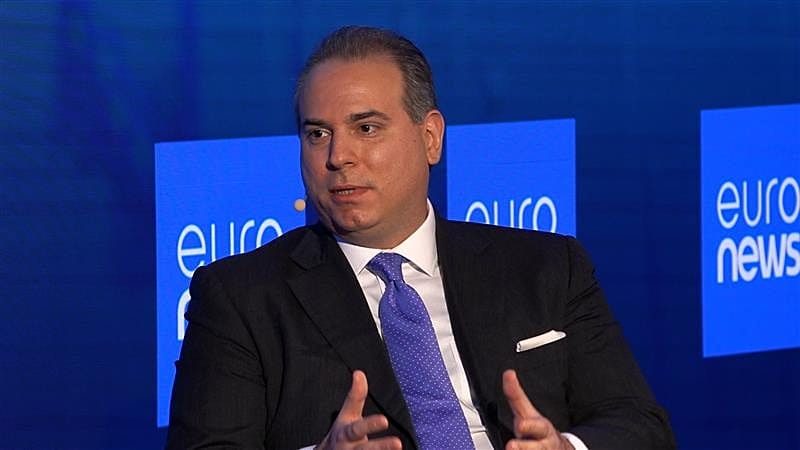
The European Union faces a significant geopolitical challenge if it fails to expand, according to Montenegro’s Deputy Prime Minister, Filip Ivanović. During an interview with Euronews at the enlargement summit in Brussels, Ivanović emphasized that without enlargement, the very concept of the EU would lose its credibility. He stated, “If enlargement does not happen — not just with Montenegro but also with other candidate countries — then the very concept of the European Union loses its credibility: It’s not European, and it’s not a union anymore.”
For Montenegro, the consequences of not moving forward with EU accession would be devastating. Ivanović explained, “It would be a horrible signal to all other candidate countries because then they would understand that whatever they do is in vain.” This sentiment reflects the broader concerns among candidate countries, who rely on the EU’s commitment to expansion as a key motivator for their reform efforts.
The Russian invasion of Ukraine in 2022 has reinvigorated the EU’s enlargement process, particularly for countries on its eastern and southeastern borders. Montenegro, recognized as one of the nine EU candidate countries, is currently the most advanced in implementing the necessary constitutional, judicial, and economic reforms required for EU membership.



Montenegro’s Ambitions for EU Membership
Ivanović reiterated Montenegro’s goal of concluding accession talks by 2026, which would pave the way for the country to officially join the EU by January 2028. He described this as the “28 by 28” initiative, aiming for 28 member states by 2028. This timeline reflects the government’s commitment to aligning with the EU’s standards and expectations.
The European Commission recently released its annual report on the progress of candidate countries, highlighting Montenegro’s positive trajectory. The report noted that Montenegro is on track to meet its milestones if it maintains the pace of reforms. This recognition underscores the country’s dedication to fulfilling the requirements for EU membership.
Challenges in the Enlargement Process
While the process of EU enlargement is technically complex, it also requires the unanimous support of all member states at various stages. Ukraine’s application for membership, for example, is currently stalled due to Hungary’s Viktor Orbán, who has used his veto power to block several EU foreign policy decisions. This situation has raised questions about how the EU can maintain effective decision-making processes in an enlarged Union that could include up to 30 or more countries.
EU officials have considered the possibility of accepting new members without granting them full voting rights. However, Ivanović expressed a clear stance on this matter, stating, “What we are aiming at is full-fledged membership.” He acknowledged the concerns surrounding the integration of new members but emphasized Montenegro’s long-standing alignment with the EU’s common foreign and security policy.
Probation Periods and Reforms
Another concern among EU officials is the potential risk of new members rolling back on fundamental EU values such as the rule of law, media freedom, and respect for human rights. To address this, some officials have proposed putting new countries on a probation period before confirming their membership.
Ivanović responded to this idea by highlighting Montenegro’s ongoing efforts. “We’ve been on trial for the past 13 years, and we’ll be on trial until we close all negotiation chapters,” he said. He added, “So once we close the negotiation chapters, as far as I’m concerned, the trial is over.” This statement reflects Montenegro’s determination to meet all the criteria for full membership and demonstrate its commitment to EU values.