
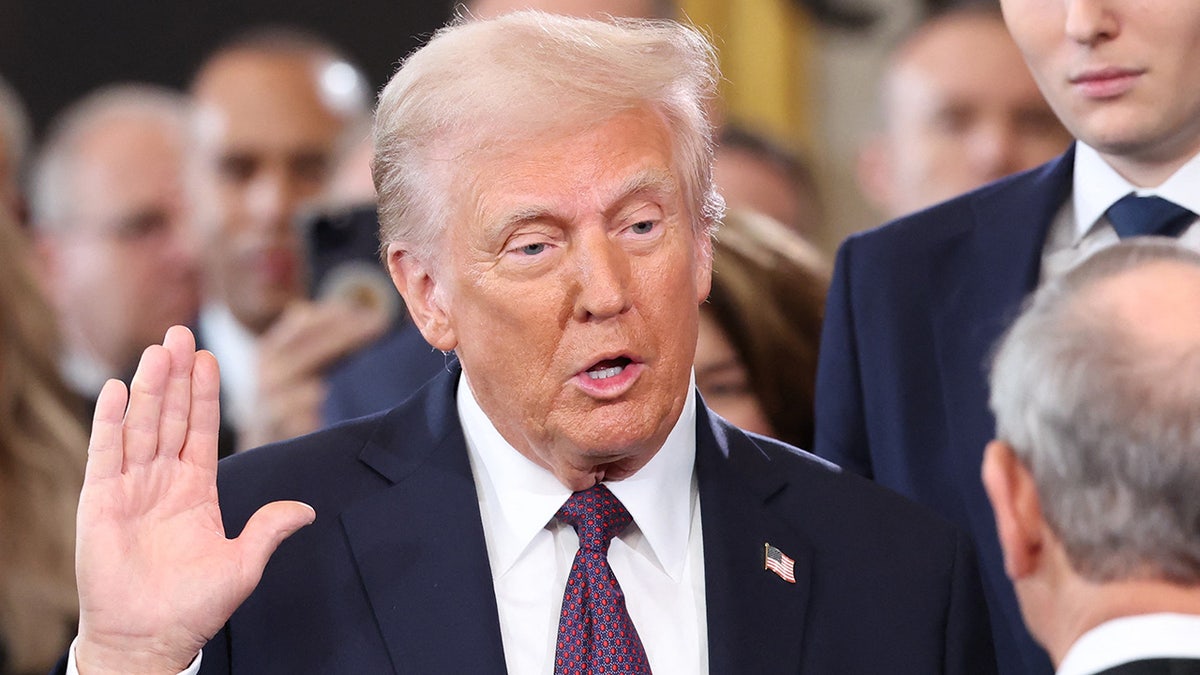
US President Trump Hosts Central Asian Leaders in Historic Summit
On November 7, US President Donald Trump hosted the leaders of five Central Asian countries for the first time, marking a significant shift in the region’s diplomatic landscape. This meeting took place just months after these leaders had engaged in separate summits with Russian President Vladimir Putin and Chinese President Xi Jinping.
The United States has been increasing its engagement with Central Asia, a resource-rich region where traditional influence from Moscow has come under scrutiny following Russia’s invasion of Ukraine. At the same time, China continues to play a major role in the region’s development.
The Significance of Rare Earths
One of the central topics of discussion during the “C5+1” meeting was the importance of critical minerals, particularly rare earth elements. Trump emphasized that these resources hold “incredible importance and unbelievable potential.”
“We’re strengthening our economic partnerships, improving our security cooperation, and expanding our overall bonds,” Trump stated before a dinner with the leaders of Kazakhstan, Kyrgyzstan, Tajikistan, Turkmenistan, and Uzbekistan.
Following the summit, Trump announced a significant trade and economic deal with Uzbekistan. According to the president, Tashkent will invest nearly $35 billion over three years and more than $100 billion over a decade in key U.S. sectors such as aviation, critical minerals, agriculture, and IT.
The U.S. and the European Union are increasingly interested in Central Asia’s vast but largely untapped natural resources. This interest is driven by the need to diversify supply chains for rare earths and reduce reliance on Beijing.
Natural Resources and Challenges
Central Asia is home to some of the world’s most valuable natural resources. Kazakhstan is the largest producer of uranium, while Uzbekistan boasts significant gold reserves. Turkmenistan is rich in natural gas, and Kyrgyzstan and Tajikistan are opening up new mineral deposits.
However, exploiting these resources remains challenging due to the region’s harsh and remote terrains and the economic limitations of the impoverished states.
Covering an area almost as large as the European Union, Central Asia is landlocked and dominated by deserts and mountains. It is strategically located between countries with complex relationships with the West, including Russia to the north, China to the east, and Iran and Afghanistan to the south.
Praise for Trump
Trump’s counterparts were quick to offer praise for their host. Kazakh President Kassym-Jomart Tokayev called him “a great leader, statesman, sent by heaven to bring (back) common sense and traditions that we all share and value.”
Uzbek President Shavkat Mirziyoyev also expressed admiration, stating, “Before that, none of the presidents of the United States of America ever treated Central Asia as you do.” He added, “In Uzbekistan, we call you the president of the world.”
The five landlocked countries, which gained independence from the Soviet Union in 1991, have shown a united front in diplomacy. China, which shares borders with Kazakhstan, Kyrgyzstan, and Tajikistan, has positioned itself as a key commercial partner for the region through large infrastructure investments.
While the ex-Soviet republics still view Moscow as a strategic partner, they have grown wary of Russia’s actions in Ukraine.
Abraham Accords and Regional Diplomacy
One of the most notable announcements of the day was Kazakhstan’s decision to join the Abraham Accords, a peace initiative between Israel and mainly Muslim nations. This move makes Kazakhstan the first country to join since the United Arab Emirates, Bahrain, Morocco, and Sudan signed the accords in 2020.
Kazakhstan has maintained diplomatic ties with Israel for decades, but U.S. Vice President JD Vance described the country’s decision as a boost to the initiative’s “momentum.”
Several Middle Eastern states, including Saudi Arabia, have not yet joined the accords.
Human Rights Concerns
Despite the diplomatic achievements, human rights organizations have raised concerns about the state of civil freedoms in the region. While Central Asia has opened up to tourism and foreign investment, groups like Human Rights Watch have highlighted the growing efforts by governments to suppress dissent, silence the media, and retaliate against critics.
“The summit is taking place while all participating governments have increased efforts to stifle dissent, silence the media, and retaliate against critics at home and abroad,” the organization stated ahead of the talks.