
Tragic Collapse at Ulsan Thermal Power Plant
A devastating incident occurred at the Korea East-West Power Ulsan Thermal Power Plant on the 6th, when a boiler tower collapse left nine workers trapped. Three of them have since lost their lives, with the remaining six still unaccounted for as of the 7th. The accident has raised serious concerns about safety protocols in industrial settings and sparked an extensive rescue operation.
Rescue Efforts and Casualties
Two of the nine workers were rescued immediately after the incident. However, among the remaining seven, Kim, a 44-year-old worker, and two others were confirmed dead on the 7th. Fire authorities have identified the locations of two of the remaining four workers, but they are presumed dead. The other two remain missing as of 11 p.m. on the 7th.
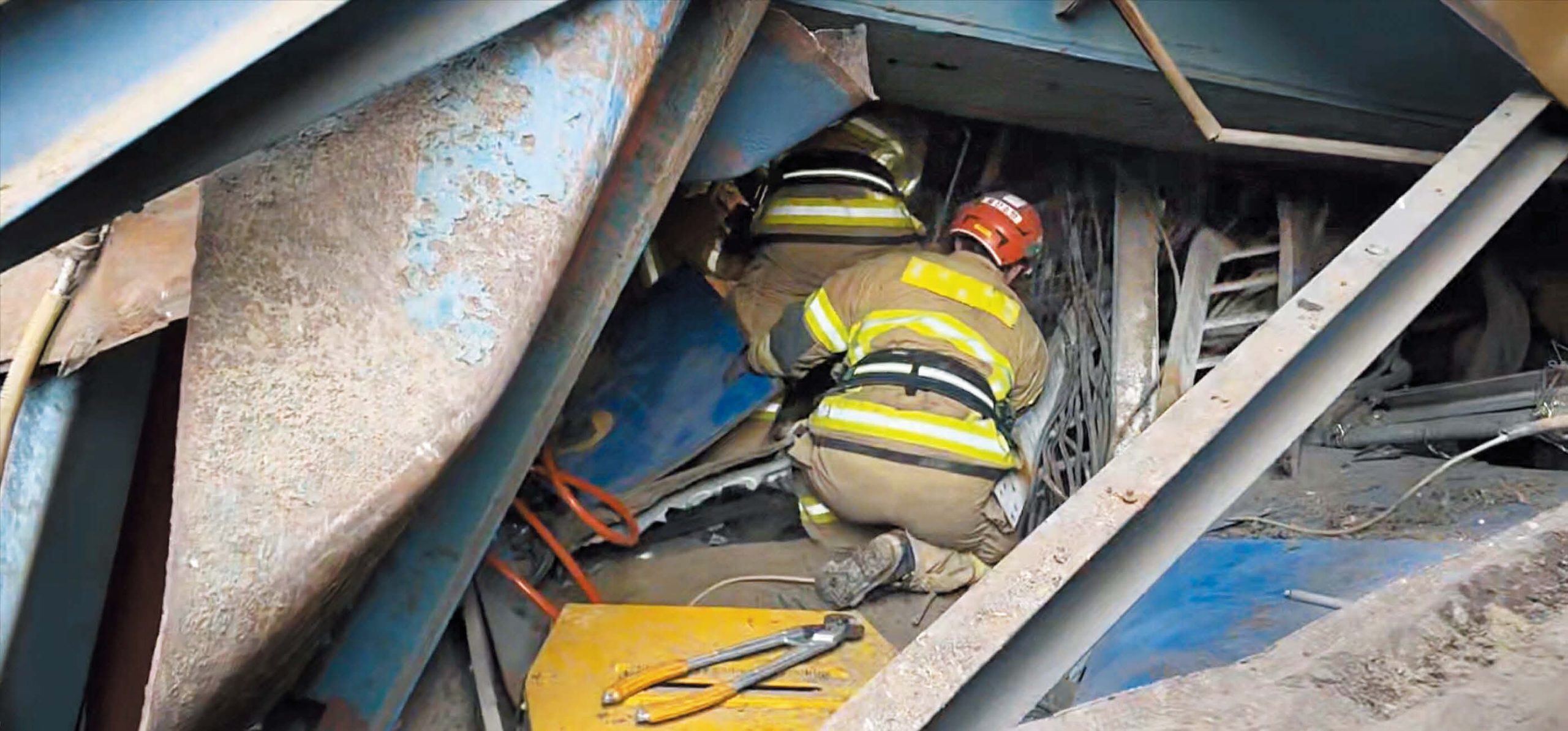
Kim was found around 3:14 p.m. the previous day, still conscious but with most of his body pinned under debris. Rescuers worked tirelessly to free him, cutting through the wreckage piece by piece. Medical staff maintained communication via video call, administering painkillers and covering him with blankets to preserve his body heat. After 13 hours of rescue efforts, only the debris crushing one of his arms remained. Kim eventually lost consciousness, and despite CPR being performed, he died during extraction at 4:53 a.m. that day.
Fire authorities explained that amputation was not attempted due to concerns over severe blood loss from the crushed arm. This tragic outcome highlights the immense challenges faced by rescuers in such high-risk environments.
Additional Victims and Ongoing Rescue Operations
In addition to Kim, an unidentified man was found the previous day. On the morning of the 7th, three more individuals—Lee, 61 years old; Jeong, 49 years old; and another unidentified man—were discovered. While Lee and Jeong were rescued, they later succumbed to their injuries. The two unidentified individuals are still being extracted, but authorities suspect they are deceased.
Rescue teams are working diligently to create access paths by cutting through reinforcement bars and manually removing gravel and soil. Endoscopic cameras are being used to locate victims, but the risk of further collapse has significantly slowed operations. The complexity of the site and the urgency of the situation have made this one of the most challenging rescue missions in recent memory.
Government Response and Investigation
In response to the tragedy, the government has established a Central Accident Control Headquarters, with the Minister of Climate, Energy and Environment serving as head. This initiative aims to investigate the cause of the accident and ensure that appropriate measures are taken to prevent similar incidents in the future.
The incident has prompted widespread concern about workplace safety, particularly in high-risk industries such as power generation. As the search continues for the remaining missing workers, the focus remains on bringing closure to their families and understanding the factors that led to this catastrophic event.
Challenges in Rescue Operations
The rescue efforts are hindered by several factors, including the unstable structure of the collapsed tower and the difficulty in accessing trapped workers. Each minute counts in these situations, and the physical and emotional toll on both rescuers and the affected families is immense.
Despite the challenges, the dedication of the rescue teams is evident. Their work underscores the importance of preparedness and the need for continuous improvements in safety standards across industrial sectors. As the investigation unfolds, it is hoped that lessons will be learned to prevent such tragedies from occurring again.