
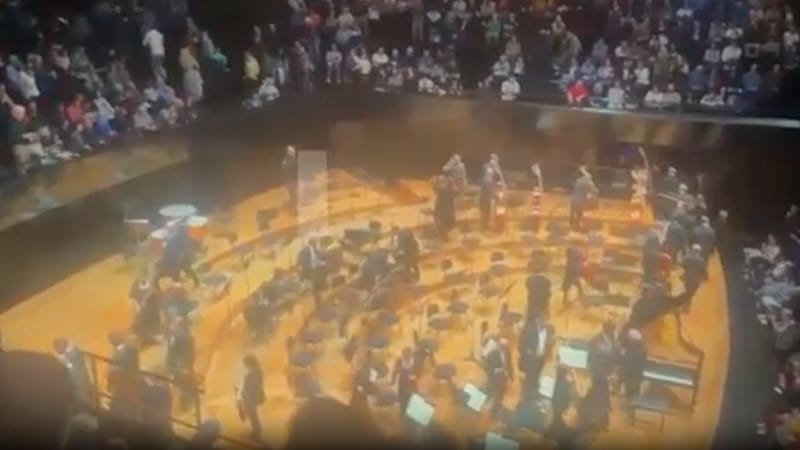
A concert by the Israel Philharmonic Orchestra in Paris faced a significant disruption when pro-Palestinian protesters entered the venue and set off alarms and flares, creating a moment of confusion and fear among attendees. The sudden actions forced the musicians to leave the stage temporarily, interrupting the performance and raising concerns about safety and security within cultural spaces.
The incident led to the arrest of four individuals, according to local authorities. French officials strongly condemned the event, labeling it an act of antisemitism and a direct attack on the principles of free cultural expression. The government emphasized that such disruptions undermine the values of dialogue and understanding that art and music are meant to foster.
The protesters had been vocal in their opposition to the concert prior to the event, arguing that it represented a form of cultural whitewashing of Israeli policies. Their message was clear: they believed the presence of the orchestra in Paris supported a narrative that ignored the complexities of the region’s political landscape. This stance reflects broader debates around the role of art in addressing social and political issues, with some advocating for cultural boycotts as a form of protest against perceived injustices.
Background on the Protests
The protests were not isolated incidents but part of a larger movement that has seen similar disruptions at various cultural events across Europe. Activists have increasingly used public demonstrations to draw attention to their causes, often targeting high-profile events where their message can reach a wide audience. In this case, the focus was on the Israel Philharmonic Orchestra, which has long been a symbol of cultural diplomacy between Israel and the international community.
The orchestra’s presence in Paris was intended to promote cross-cultural exchange and highlight the shared heritage of music across different nations. However, the actions of the protesters overshadowed these intentions, turning what should have been a celebration of art into a moment of tension and conflict.
Reactions from the Public and Officials
Following the incident, there was a mixed response from the public. Some expressed support for the protesters, believing that their actions were justified given the ongoing conflicts in the Middle East. Others criticized the disruption, arguing that it detracted from the opportunity for peaceful dialogue through the arts.
French officials, however, were firm in their condemnation. They reiterated that freedom of expression must be protected, but so too must the right of artists to perform without fear of intimidation or violence. The government called for a thorough investigation into the incident, emphasizing the need to ensure that such disruptions do not become a regular occurrence.
Implications for Cultural Events
This event raises important questions about the balance between free speech and the protection of cultural institutions. While protests are a legitimate form of expression, the methods used in this case were seen as excessive and potentially dangerous. The use of alarms and flares inside a concert hall is not only disruptive but also poses a risk to the safety of everyone present.
As cultural events continue to play a vital role in fostering understanding and unity, it is essential that they remain spaces where people can come together without fear. The incident in Paris serves as a reminder of the challenges that arise when political tensions intersect with the world of the arts.
Conclusion
The disruption of the Israel Philharmonic Orchestra’s concert in Paris highlights the complex relationship between politics, culture, and public expression. While the right to protest is fundamental, the manner in which it is exercised must be considered carefully to avoid causing harm or undermining the very values that such events aim to promote. As discussions around these issues continue, the importance of maintaining safe and respectful spaces for cultural exchange remains more critical than ever.