
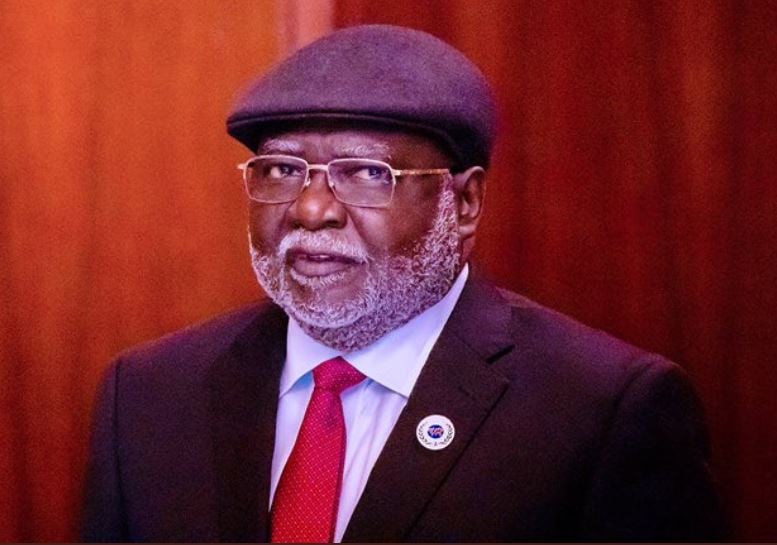
A Legacy of Integrity: The Judicial Journey of Olukayode Ariwoola
Olukayode Ariwoola, the former Chief Justice of Nigeria, has made a strong statement about his judicial career, emphasizing that his decisions were always made without bias. He expressed confidence in his conscience, stating that he has no regrets over the judgments he delivered during his tenure.
Ariwoola served as the Chief Justice of Nigeria from 2022 to 2024, leaving behind a legacy of impartiality and fairness. His journey in the judiciary began long before his appointment as Chief Justice. Prior to this role, he was involved in several critical judicial positions, including serving on the Election Petition Tribunals in Zamfara and Enugu states in 1999. He also participated in the Election Appeal Courts in various cities such as Port-Harcourt, Enugu, Benin, Yola, and Ilorin at different times.
His career took a significant turn when he was sworn in as a Justice of the Court of Appeal in 2005 and later as a Justice of the Supreme Court in 2011. These appointments marked the beginning of a long and distinguished career in the Nigerian judiciary.
During an exclusive interview with Saturday PUNCH, Ariwoola shared insights into his approach to justice. He emphasized that his decisions were based on the fear of God and a commitment to the law. He said, “I handled cases strictly on merit throughout my judicial career. I also served as Chairman of the Armed Robbery Tribunal for about three years at the trial court, where I delivered judgments based on evidence and the law, without bias. Those deserving of conviction were sentenced, and those who should be freed were discharged. I did so with a clear conscience and without regret.”
Addressing Allegations of Religious Conflict
Ariwoola also addressed concerns regarding the allegations of Christian genocide in Nigeria. He highlighted that the country’s insecurity problem transcends religious and ethnic lines. He called for unity among Nigerians, urging them to come together despite their differences.
He explained, “The Boko Haram issue is not religious. Kidnapping and terrorism have nothing to do with religion. I attend church when I can. My eldest sister, from the same mother, was a Baptist, and I used to go to church with her. There is no Christian song I cannot sing with them. Neither Christians nor Muslims should be against each other because our God is a God of peace.”
A Life Rooted in Faith and Service
Ariwoola’s personal life reflects his deep faith and commitment to community service. His relationship with his family, particularly his sister, illustrates his openness and respect for different religious practices. This personal connection has shaped his perspective on interfaith harmony and coexistence.
Throughout his career, Ariwoola has demonstrated a steadfast commitment to justice, integrity, and the rule of law. His experiences in various judicial roles have equipped him with the knowledge and wisdom necessary to navigate complex legal issues while maintaining a sense of moral responsibility.
As he looks back on his career, Ariwoola remains confident in the decisions he made and the principles he upheld. His message to the public is one of hope and unity, encouraging all Nigerians to work towards a peaceful and prosperous future.
Key Highlights from Ariwoola’s Career
- Judicial Roles: Served on Election Petition Tribunals and Election Appeal Courts across multiple states.
- Appointments: Sworn in as Justice of the Court of Appeal in 2005 and as Justice of the Supreme Court in 2011.
- Leadership: Acted as Chairman of the Armed Robbery Tribunal for three years.
- Philosophy: Decisions were based on merit, evidence, and the law, with a clear conscience.
- Interfaith Perspective: Advocated for unity between Christians and Muslims, emphasizing that religion should not be a source of conflict.