
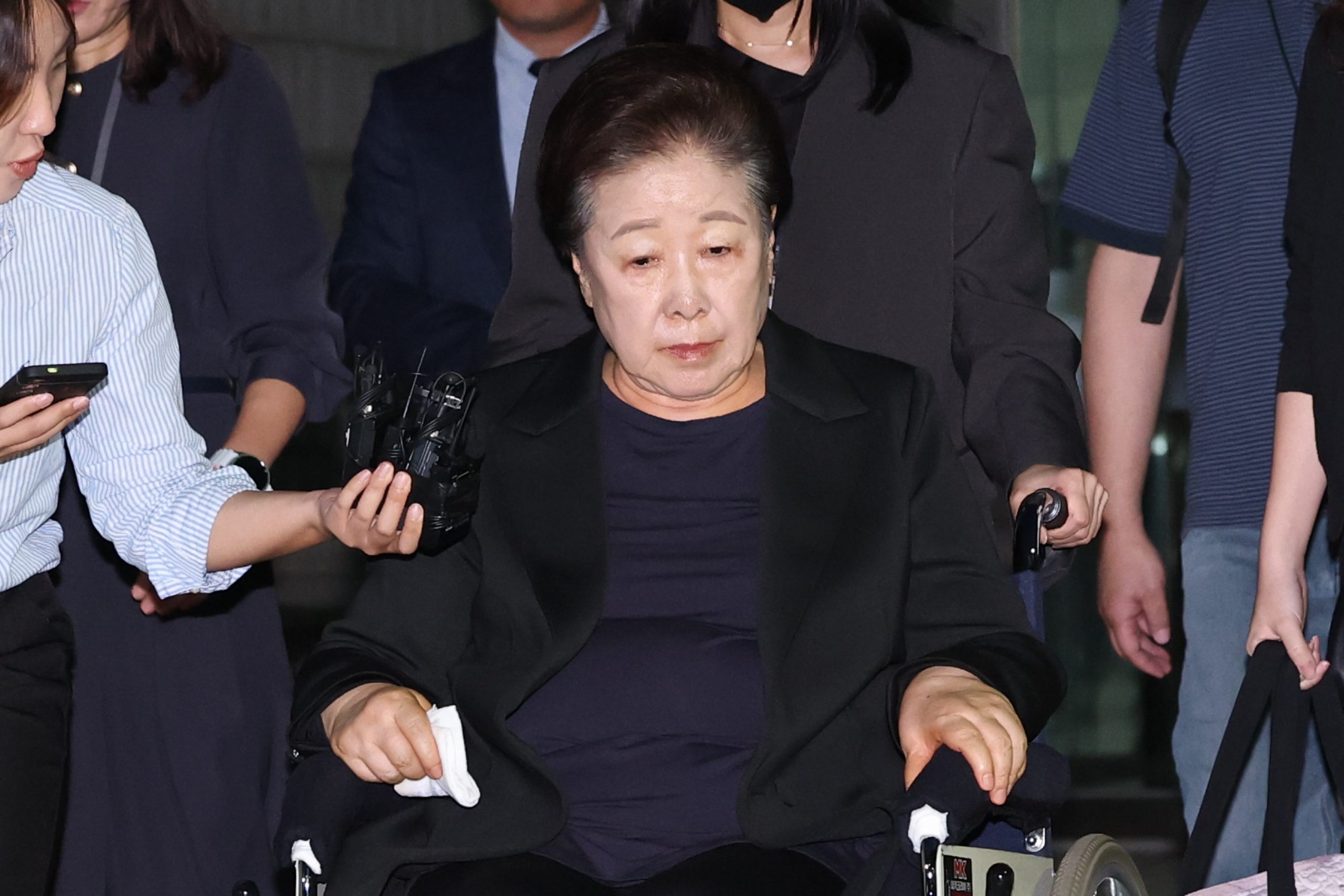
Han Hak-ja’s Return to Detention After Suspension Period Ends
Han Hak-ja, the leader of the Family Federation for World Peace and Unification (Unification Church), has returned to the Seoul Detention Center after her suspension period expired. She had been temporarily released on suspended execution of detention following her arrest and indictment on multiple charges, including violations of the Political Funds Act. However, her request for an extension of the suspension period was reportedly denied by the court.
Han underwent eye surgery and was initially granted a temporary release. She returned to the detention center ahead of the expiration of her suspension period at 4 p.m. on the 7th. The decision to return her to custody came after she applied for the suspension on the 1st, citing the need for medical treatment due to late-stage glaucoma. According to her statement, she had planned the procedure based on the minimum necessary schedule for surgery and recovery.
During her time in detention, Han reportedly experienced difficulty seeing. The Seoul Detention Center has stated that it will provide necessary medical treatment after the surgery. The court accepted her request for the suspension, but with strict conditions. These included requiring her to return to the detention center by 4 p.m. on the same day, restricting her residence to the hospital grounds during the temporary release, prohibiting contact with anyone other than legal representatives or medical personnel, and banning communication related to the case.
Additionally, Han was instructed not to flee or destroy evidence and to appear when summoned, even during the suspension period. These conditions were put in place to ensure her compliance with the legal process and to prevent any potential interference with the ongoing investigation.
Legal Charges Against Han Hak-ja
Han was referred to trial last month on several serious charges. She is accused of conspiring with former Unification Church global headquarters director Yun Young-ho to provide 100 million Korean won in political funds to People Power Party representative Kweon Seong-dong in January 2022. She is also charged with splitting 144 million Korean won in Unification Church funds for donations to the People Power Party’s metropolitan and provincial offices ahead of the 20th presidential election. These actions are alleged to be violations of the Political Funds Act.
In addition to these charges, Han faces allegations under the Anti-Graft Act. She is accused of giving luxury items, including a Graff necklace, to former first lady Kim Keon-hee on two occasions in July 2022. Furthermore, she is charged with embezzlement in the course of business for diverting Unification Church funds to procure these items.
These charges highlight the gravity of the legal issues Han is facing and underscore the complexity of the case. The court’s decision to deny her request for an extension of the suspension period indicates that the judicial system is proceeding with the legal process, despite her medical condition.
Implications of the Case
The case against Han Hak-ja has drawn significant public attention, particularly given her position as the leader of the Unification Church. The allegations involve not only financial misconduct but also potential violations of anti-corruption laws. This has led to increased scrutiny of the church’s activities and its connections with political figures.
The outcome of this case could have broader implications for how religious organizations operate within the legal framework of South Korea. It also raises questions about the role of such groups in political funding and their adherence to ethical standards.
As the legal proceedings continue, the focus remains on ensuring that justice is served while respecting the rights of all parties involved. The court’s decisions in this case will likely set a precedent for similar cases in the future.