
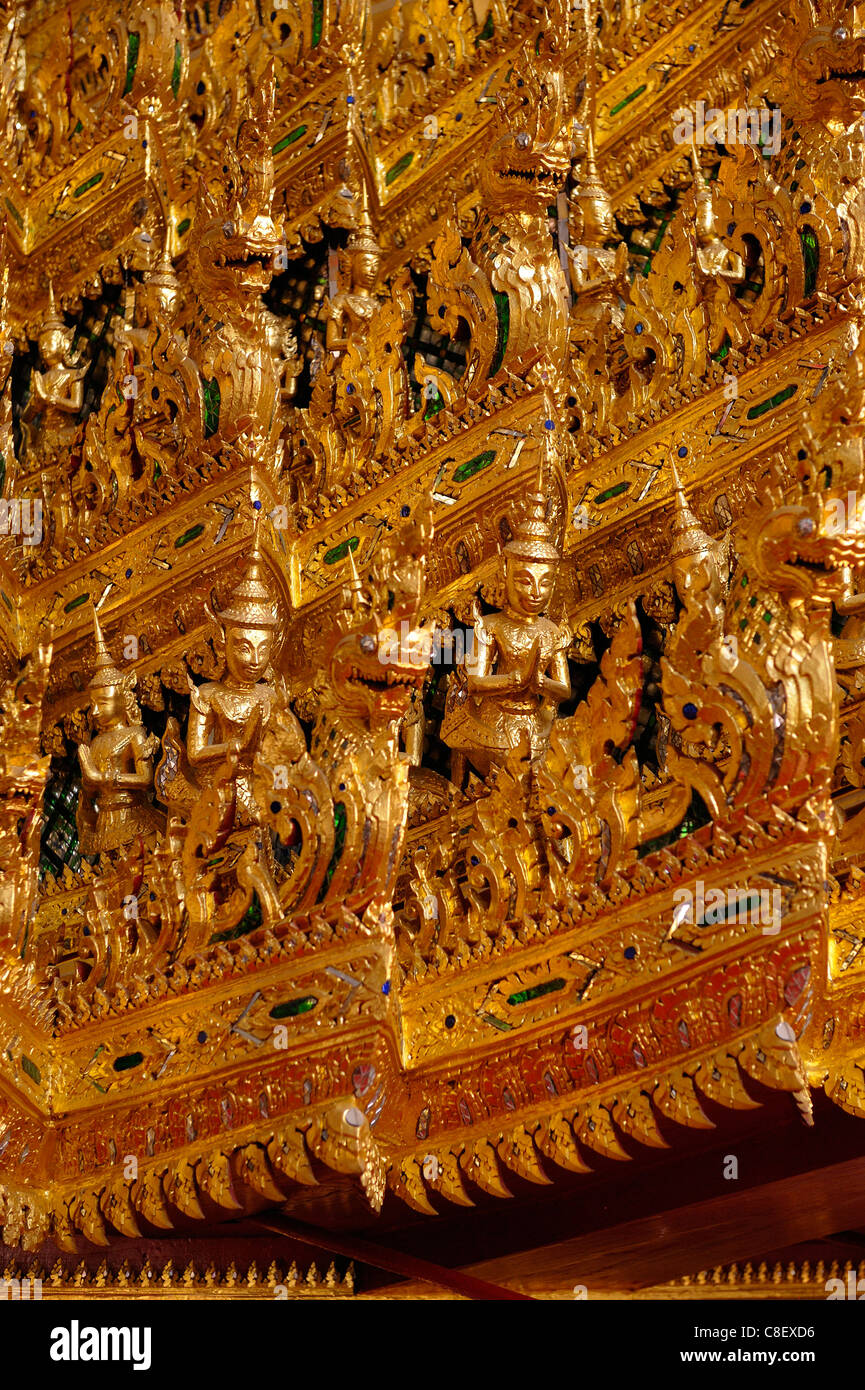
Restoration of Royal Chariots for the Cremation Ceremony
The Fine Arts Department (FAD) has initiated a significant restoration project focused on royal chariots that will be used in the cremation ceremony of Her Majesty Queen Sirikit The Queen Mother. This restoration is expected to be completed by October next year, marking an important step in honoring the late queen’s legacy.
HRH Princess Maha Chakri Sirindhorn recently presided over a ceremonial event dedicated to the restoration of royal chariots and other ceremonial components. These items will play a central role in the royal cremation ceremony, which is set to take place at the National Museum Bangkok. The princess emphasized the importance of meticulous work, urging all involved parties to pay close attention to the quality of materials and craftsmanship, including the intricate use of mirror mosaics, to ensure the restoration meets the highest standards.
Collaboration and Scope of the Restoration Project
To carry out this ambitious task, the FAD has closed the Royal Chariot Hall at the National Museum. The restoration work is being conducted in collaboration with the Army’s Ordnance Department and the Naval Dockyard Department. The project will involve five royal chariots, including the Phra Maha Phichai Ratcharot, also known as the Great Victory Royal Chariot. Alongside these larger chariots, smaller chariots, palanquins, and other ceremonial elements will also be restored.
The restoration process will combine scientific methods, expert craftsmanship, and traditional artistry to preserve both the structural integrity and aesthetic beauty of the royal chariots. Mr. Phnombootra Chandrajoti, director-general of the FAD, highlighted that the Conservation Science Division will handle the cleaning and preservation of the chariots, while artisans from the Ten Crafts or Chang Sip Mu will focus on gilding, mirror inlay, and decorative works. These tasks will be carried out in accordance with traditional techniques and royal standards.
Timeline and Completion Goals
“This major restoration is expected to be completed between September and October 2026, in time for the completion of the royal crematorium,” said Mr. Phnombootra. The timeline reflects the careful planning and coordination required to ensure that all elements of the cremation ceremony are ready for the event.
The FAD has assigned its various divisions to oversee different aspects of the royal cremation. The Office of Architecture has already completed the initial design for the royal crematorium. This design ensures adherence to ancient royal traditions and incorporates symbolic motifs that represent the late Queen Mother’s lifelong contributions, particularly in nature conservation and botanical preservation.
Cultural and Artistic Significance
In addition to architectural and structural preparations, the Office of Performing Arts will coordinate performances for the royal ceremony. These performances will reflect the cultural and artistic heritage of the country, adding a layer of solemnity and reverence to the event.
The restoration of the royal chariots and the preparation of the crematorium are not just technical endeavors but also deeply symbolic acts. They serve as a tribute to the legacy of Her Majesty Queen Sirikit The Queen Mother, whose life was marked by dedication to the arts, culture, and the environment.
Conclusion
As the restoration progresses, the efforts of the FAD and its collaborators highlight the importance of preserving historical and cultural artifacts. The project underscores the value of combining modern techniques with traditional craftsmanship to honor the past while preparing for future ceremonies. With the completion of the crematorium and the restoration of the royal chariots, the nation will have a lasting tribute to one of its most revered figures.