
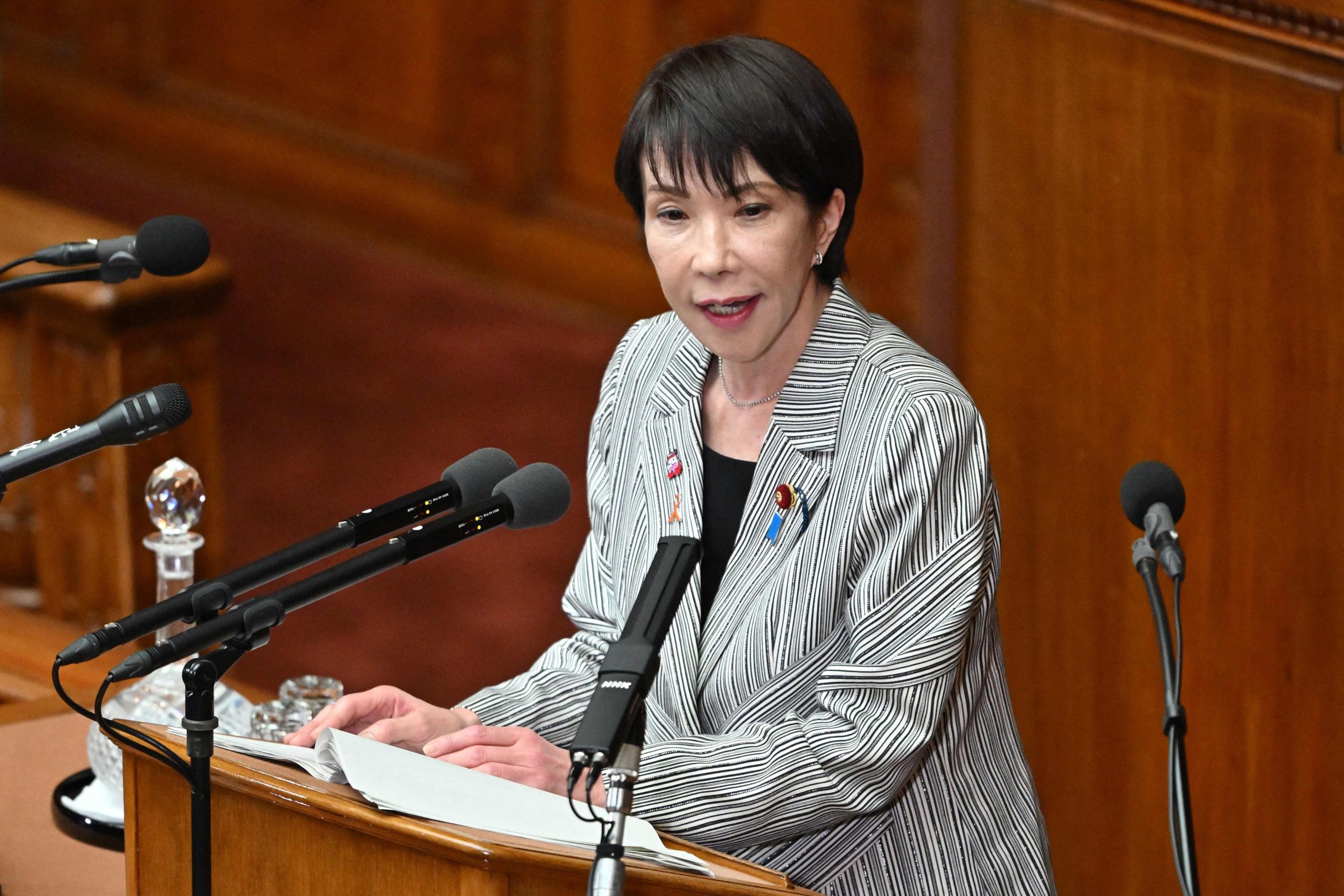
Japanese Prime Minister’s Remarks on Taiwan Contingency Spark International Attention
Japanese Prime Minister Sanae Takaichi has made a significant statement regarding the potential implications of a Chinese invasion of Taiwan. She suggested that such an event could be considered an existential crisis for Japan, which might justify the use of collective self-defense rights. This is the first time a sitting Japanese prime minister has publicly indicated the possibility of military action in response to a hypothetical scenario involving China and Taiwan.
During a meeting with the House of Representatives budget committee, Takaichi reiterated her previous stance. When questioned about her remarks during the Liberal Democratic Party leadership election, where she mentioned that a Chinese blockade of Taiwan could become an existential crisis, she confirmed, “I believe it could be considered an existential crisis.”
In 2015, the Shinzo Abe administration revised Japan’s pacifist constitution to allow for collective self-defense in situations where Japan’s survival is threatened by an attack on Japan or an allied nation. While the Japanese government had previously considered a Taiwan contingency as a potential existential crisis internally, this is the first official public acknowledgment of such a stance.
Takaichi further explained, “If the U.S. military intervenes to break a naval blockade and China uses force to prevent this, it could be an existential crisis.” She added, “A simple increase in civilian vessels making passage difficult would not qualify, but if a blockade occurs during wartime with drones deployed, different considerations may apply.” She concluded, “Judgments will be made based on all available information regarding the specific circumstances of any actual incident.”
Implications and Concerns
The comments from Takaichi have raised concerns about the potential impact on Japan-China relations. Previous leaders had maintained a level of ambiguity to avoid provoking Beijing. Former Prime Minister Fumio Kishida avoided a direct answer last February when asked if a Taiwan contingency would constitute an existential crisis, stating, “It is difficult to generalize, as judgments must be made by synthesizing information.”
However, former Prime Ministers Shinzo Abe and Taro Aso have made similar remarks post-retirement. The Asahi Shimbun analyzed, “This goes beyond previous government positions. As a prime minister’s parliamentary response becomes official policy, it carries significant weight. It could heighten military tensions between Japan and China.”
Broader Context and Regional Dynamics
The shift in Japan’s official stance reflects a broader trend in regional security dynamics. With increasing assertiveness from China, neighboring countries are reassessing their strategic positions. Japan’s reevaluation of its defense policies is part of a larger conversation among Asian nations about how to respond to growing regional challenges.
The potential for military involvement in a Taiwan conflict raises questions about the role of the United States and other regional allies. The U.S. has long maintained a policy of strategic ambiguity toward Taiwan, but recent developments suggest a possible shift in this approach.
Conclusion
Takaichi’s remarks signal a significant change in Japan’s approach to regional security. By openly acknowledging the potential for military action in response to a Chinese invasion of Taiwan, the Japanese government is sending a clear message to both allies and adversaries. This development underscores the complex interplay of geopolitics, military strategy, and international relations in East Asia.
As the situation continues to evolve, the implications of these statements will likely be closely monitored by policymakers, analysts, and the global community. The balance between deterrence, diplomacy, and military preparedness remains a critical challenge for Japan and its regional partners.