
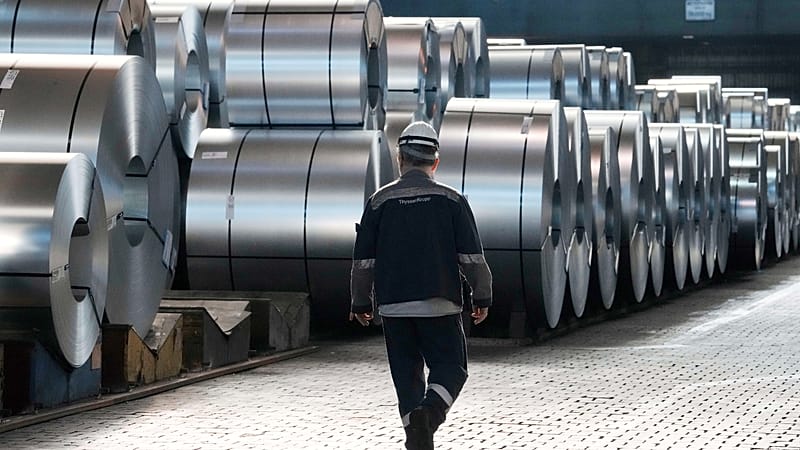
Germany’s Steel Industry Faces an Existential Crisis
Germany’s steel industry is at a critical juncture, with Chancellor Friedrich Merz warning of an “existential crisis” and calling for greater economic self-reliance in Europe. This concern was echoed by Finance Minister Lars Klingbeil during a recent summit at the Chancellery, where strategies to secure the sector’s future were discussed.
Mr. Klingbeil emphasized the importance of prioritizing European and domestic suppliers if Germany is to invest in its defense industry. He suggested that a stronger sense of “buy European” and “European patriotism” could help bolster the industry. Chancellor Merz also expressed support for an EU plan aimed at protecting the bloc’s steel industry, hinting at potential joint Franco-German initiatives.
The Economic Impact of a Struggling Steel Sector
The German steel industry supports over half a million jobs, spanning from suppliers to customers. However, rising energy costs and low-priced imports have made it increasingly difficult for the sector to remain competitive. A study by the University of Mannheim, commissioned by the Hans Böckler Foundation, warned that a collapse in domestic production could cost the German economy up to €50 billion annually in lost value added.
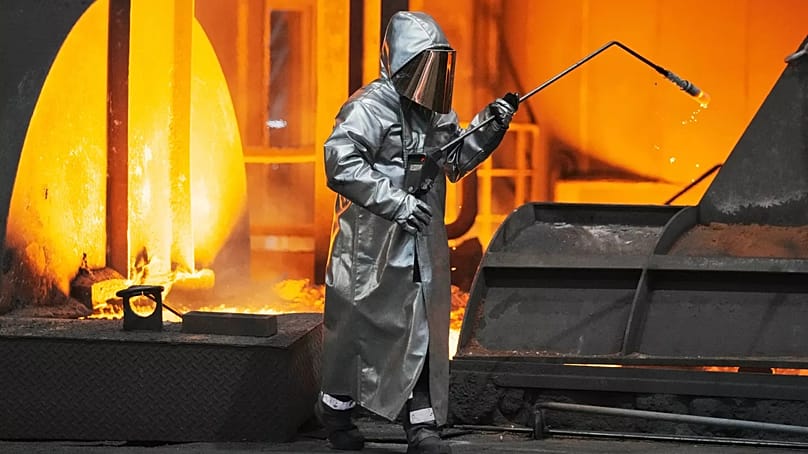
The researchers estimated that at least 30,000 jobs could be lost if domestic production were to decline. Key sectors such as metal manufacturing, mechanical and electrical engineering, and the automotive industry would face sharply higher costs if forced to rely on imported steel. To safeguard industrial capacity, the study recommends maintaining annual steel production of around 40 million tonnes in Germany to ensure demand can be reliably met in the long term.
Global Trade Challenges: US Tariffs and Chinese Subsidies
While Germany’s economy continues to stagnate, China has poured record levels of subsidies into its steel industry, leading to a massive expansion in production capacity. This allows Chinese firms to sell steel at highly competitive prices globally. In response, the United States has imposed steep import tariffs, including a 50% tariff on European steel, creating major challenges for German exporters.
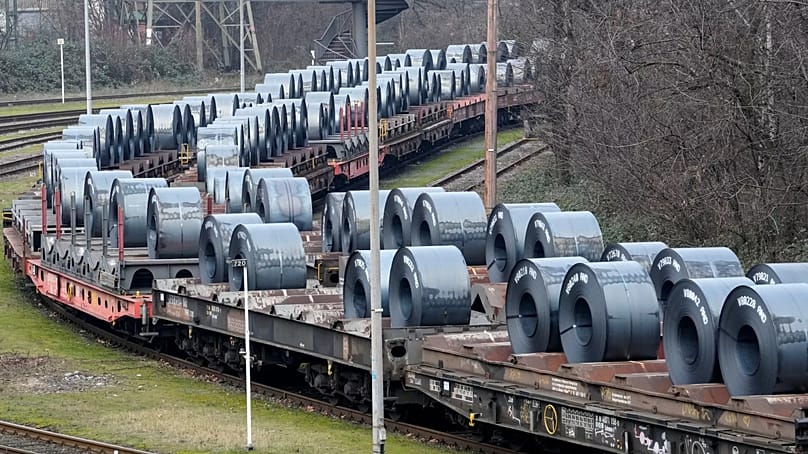
Although the European Union is the world’s second-largest steel producer, it accounts for only about 14% of global output, according to figures from the industry body Eurofer. Asia dominates the sector, producing around three-quarters of the world’s crude steel, with Germany remaining the EU’s leading producer. However, Europe’s steel output has been falling steadily. Eurofer data shows that EU crude steel production fell to 130 million tonnes in 2024, down from around 170 million tonnes in 2010. Germany also recorded a weak year for steel production, and at the end of 2024, its largest producer Thyssenkrupp announced plans to cut 11,000 jobs.
EU Seeks Tougher Trade Measures
Demand for steel across Europe has declined in recent years amid sluggish economic growth. Industry analysts warn that Chinese exports to the EU could increase further as Beijing redirects steel originally destined for the US, where higher tariffs now apply. EU Commission investigations have found that some Chinese steel products—such as tin-coated and organic-coated varieties—have been sold in Europe below their production cost, prompting the imposition of anti-dumping duties. Brussels has described the situation as unfair competition.
In early October, the European Commission proposed extending and tightening tariffs on steel. Under the plan, the quota for duty-free imports would be halved, while tariffs on excess imports could rise to 50%. The proposal still requires approval from both the European Parliament and EU member states.
Germany’s Options: Energy Costs Under Scrutiny
Germany has limited influence over global trade dynamics but may seek relief through domestic energy policy. One proposal is the introduction of an industrial electricity price aimed at reducing costs for energy-intensive sectors such as steel. Trade unions and industry leaders have called for the government to move quickly. The powerful IG Metall union is demanding the introduction of an industrial electricity rate of five cents per kilowatt hour from 1 January 2026, as outlined in the coalition agreement.
Economics Minister Katherina Reiche (CDU) confirmed this week that a lower industrial electricity price would come into effect in 2026, though details of the cost and implementation are yet to be announced.
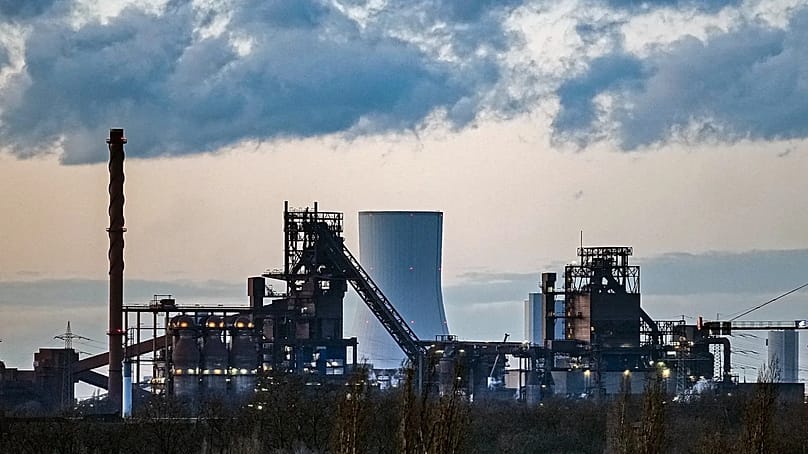
Industry Calls for Cheaper Energy and Green Investment
The German Steel Federation has also urged the government to ensure competitive electricity prices for manufacturers. Trade union and company representatives took part in Thursday’s summit at the Chancellery. According to calculations by the German Economic Institute (IW), an industrial electricity price could save German companies up to €1.5 billion a year. However, economists warn that if the measure is only applied for three years, as currently proposed, the impact would be limited.
Researchers from the University of Mannheim, in their recent study, also called for greater investment in facilities capable of producing more climate-friendly steel. Although the transition is costly, they said it was increasingly urgent to cut carbon emissions from the industry.
“An end to steel production in Germany would severely endanger the country’s entire industrial base — with serious consequences for the economy, society and political stability,” Jürgen Kerner, the deputy chair of the IG Metall union, told the German Press Agency (dpa). Mr. Kerner said both federal and state governments must “do everything possible” to safeguard Germany’s steel industry and make it fit for the future.