
Trade Disruptions Hit Nepali Traders Hard
Nepali traders are facing severe challenges due to significant disruptions in the supply chain. Cross-border trade with China through key border points such as Rasuwagadhi and Tatopani has been almost completely halted for nearly four months, leaving hundreds of containers stranded on the Chinese side. This situation has caused substantial financial losses for traders, especially during the festive and winter seasons.
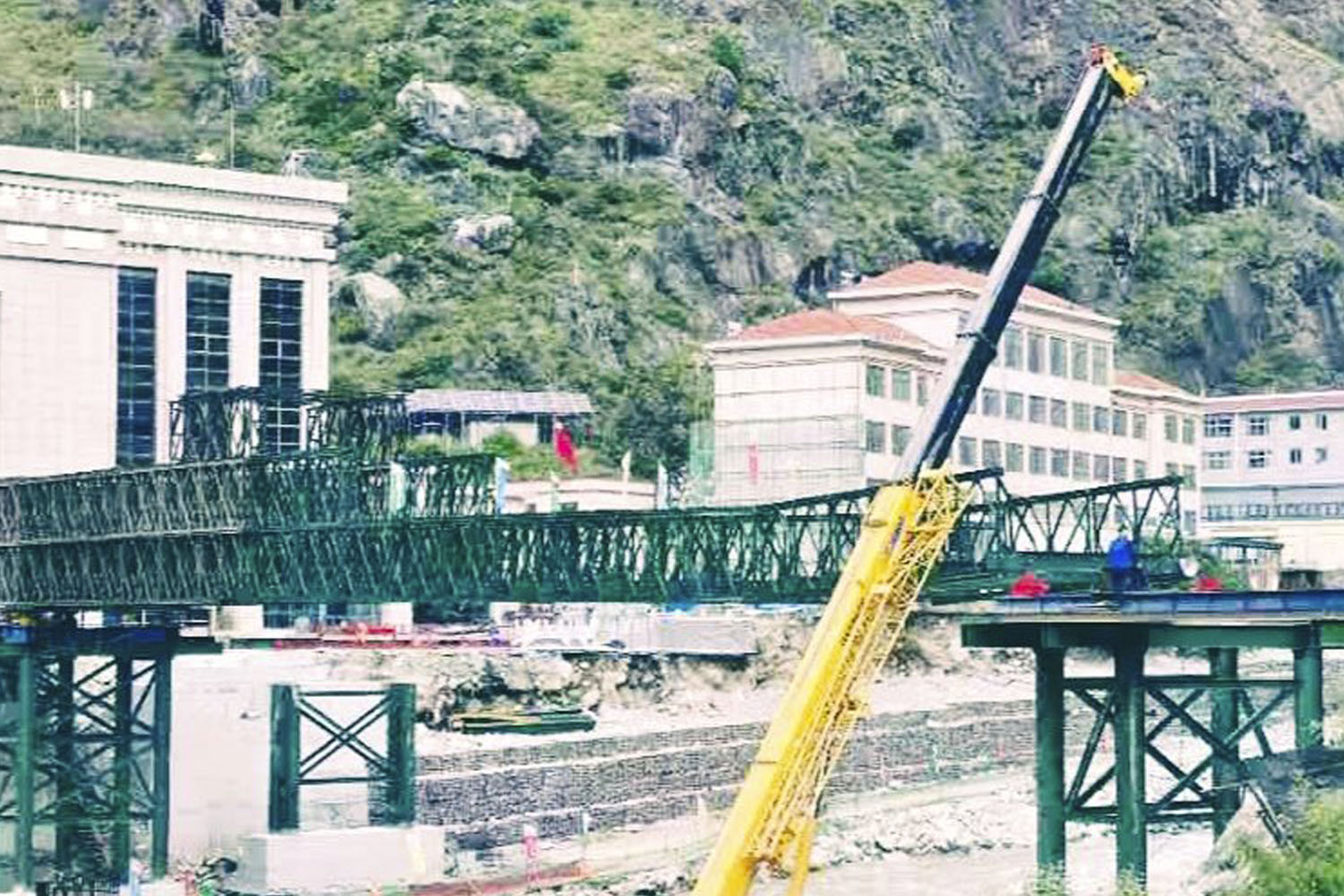
The Miteri Bridge, which connects Nepal and China, remains under repair after being swept away in July. Additionally, China is only dispatching a limited number of containers daily, exacerbating the problem. Ram Hari Karki, president of the Nepal Trans-Himalayan Border Commerce Association, highlighted that there is no official date set for the resumption of operations at the Rasuwagadhi border point. At the Tatopani border, despite normal road conditions, only three to four containers are dispatched daily.
Karki mentioned that a delegation from the association recently met with trade officials at the Chinese Embassy to request an increase in container movement through Tatopani and faster completion of the Miteri Bridge construction. However, traders remain concerned about the lack of communication regarding the reduced container dispatches from the Chinese side.
The association has repeatedly called for at least 30 to 40 containers to be allowed daily, but their requests have not been addressed. Not only are festive goods affected, but also essential winter supplies. According to Karki, approximately 10 to 15 percent of winter goods come via ship through Kolkata, but most traders, particularly small ones, rely on the northern border points for imports.
Transporting goods via Kolkata takes nearly 40 days and increases transportation costs by 5 to 7 percent. Following the association’s appeal, officials at the Chinese Embassy stated they would investigate and respond after assessing the situation. However, traders have not received any updates since the meeting.
The Ministry of Industry, Commerce, and Supplies has confirmed that it regularly communicates with Chinese authorities regarding the issue. Sita Niraula Phuyal, undersecretary at the ministry’s bilateral and regional trade division (China), noted that a technical issue has delayed the Miteri Bridge construction, which is expected to take two more weeks to complete. The bridge is anticipated to resume operations by mid-November.
Regarding the limited container movement through Tatopani, Phuyal mentioned that no official communication has been received regarding the reduced dispatch of containers from the Tatopani side. According to the association, around 80 containers used to enter Nepal daily through Rasuwagadhi and Tatopani combined. Now, only three to four containers arrive each day.
Nearly 900 containers have been stranded in Khasa on the Chinese side for over three months. Despite these prolonged disruptions, imports from China have increased by 33.39 percent, while exports have fallen by 66.14 percent in the first three months of the current fiscal year ending mid-October.
According to the Department of Customs, Nepal imported goods worth Rs104.89 billion from China during the review period, while exports amounted to only Rs186.42 million. This resulted in a trade deficit of Rs104.70 billion with China. In the last fiscal year, Nepal imported goods worth Rs341.10 billion from China and exported goods worth Rs2.63 billion, leaving a trade deficit of Rs338.47 billion.
Nepal mainly imports readymade garments, footwear, bags, consumer electronics, and other household goods from China. As hopes of an early resumption of trade through Rasuwagadhi and Tatopani fade, traders have turned to the Korala border point in Upper Mustang. More than 200 trucks entered Nepal through Korala in the past two months, traders said. However, with recent rainfall and snowfall in Mustang, the Korala border has also been closed, according to sources.
Once Nepal’s primary trade route with China, Sindhupalchok’s Tatopani border point has faced frequent disruptions since the 2015 earthquake. Seasonal landslides and poor infrastructure have made the route highly unstable, particularly along the Khasa-Tatopani stretch, which is prone to monsoon blockages. At the Rasuwagadhi crossing in Rasuwa district, a flash flood from the Chinese side in July washed away the border bridge and damaged customs facilities. The alternative Tatopani route has also faced repeated landslides along the Araniko Highway.
China is Nepal’s largest supplier of goods during the festival season, especially garments, decorative items, and electronics, making the ongoing disruption a major blow for Nepali traders this year.