
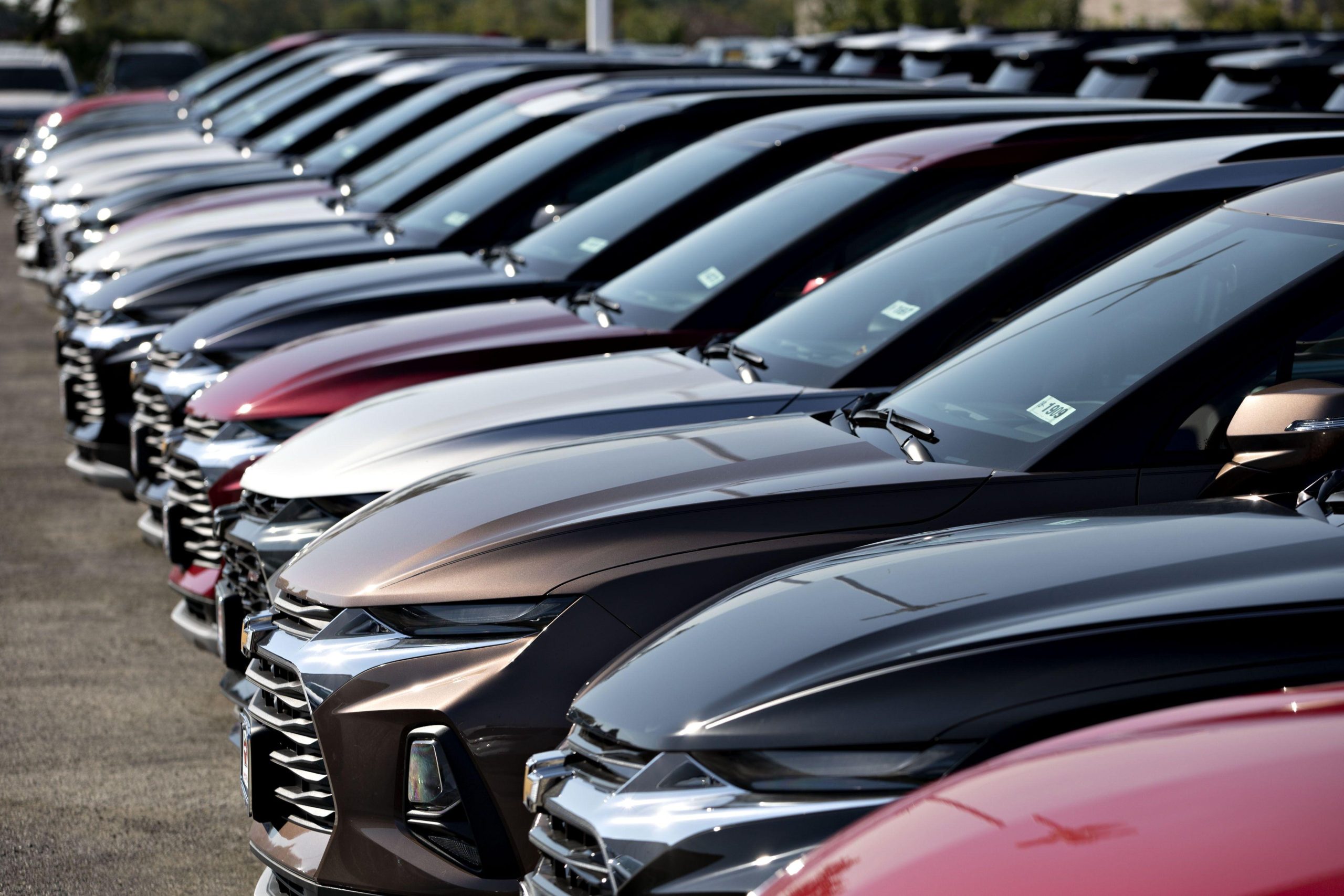
The Automobile Market in Crisis
The automobile market in Nigeria is experiencing one of its most challenging periods in recent years. According to data from the National Bureau of Statistics, passenger car imports have continued to decline sharply, reflecting a broader collapse in consumer purchasing power and business activity across the transport sector.
In the first six months of 2025, the value of passenger motor car imports stood at N479.26bn, marking a 9.69 per cent drop from the N530.67bn recorded during the same period in 2024. This downward trend mirrors the previous year’s figures, where the total import value fell from N1.47tn in 2023 to N1.26tn in 2024, representing a 14.29 per cent decline.
A quarterly breakdown of the data reveals that Q1 2025 saw imports valued at N224.58bn, while Q2 2025 recorded N254.67bn. In contrast, Q1 2024 had imports worth N238.73bn, and Q2 2024 stood at N291.93bn. These numbers highlight the consistent slowdown in vehicle importation since 2023.
Challenges Faced by Dealers and Analysts
Dealers and analysts have indicated that this trend is not unexpected. They attribute it to persistent foreign exchange challenges, high import duties, and the low purchasing power of Nigerians, which have combined to make car ownership increasingly unaffordable for both households and businesses.
Cletus Aregbesola, a vehicle sales expert, explained that the high cost of the dollar and steep customs tariffs remain the biggest reasons for the continued fall in car imports. He noted that import duties have become unbearable for dealers, with tariffs ranging between 75 and almost 100 per cent on cars. This has forced many potential buyers to postpone new purchases and focus instead on maintaining their existing vehicles.
Aregbesola also highlighted the impact of rising fuel costs on car ownership. With the price of petrol increasing, people are questioning whether they can sustain the cars they own. Most families are now focused on feeding, rent, and school fees rather than considering new car purchases.
Impact on Auto Businesses
The decline in car importation has hit the profitability of auto businesses, leading to layoffs and restructuring. Aregbesola revealed that many auto companies that used to sell 2,000 or 3,000 units annually are now struggling to sell 500. Corporate fleet purchases, which once supported bulk sales, are now rare. When those orders don’t come, the businesses struggle.
To survive, dealers have begun embracing Chinese car brands, which are relatively cheaper compared to European or American vehicles. Aregbesola noted that the market is now pro-Chinese vehicles, with some models costing between N30m to N40m, while equivalent European models cost over N100m.
Many car dealers have diversified into after-sales and maintenance services to stay afloat, as more Nigerians choose to repair rather than replace their cars. Aregbesola emphasized that after-sales services are now a major source of income for dealers.
Economic Factors and Government Initiatives
Economist Prof Segun Ajibola highlighted that the continued decline in car imports reflects the harsh realities of the economy. He pointed out that the decline in the value of the local currency has increased the landing costs of imported goods. With limited purchasing power, most car users now rely more on repairs and refurbishing old cars instead of buying new ones.
Ajibola also noted that the import data likely does not include the large number of Tokunbo cars entering the country through unofficial channels. He mentioned that smuggling of Tokunbo cars distorts the market, as those who evade customs duties can sell at cheaper prices.
Despite government initiatives like the Renewed Hope Automobile Credit Fund and the Nigeria Consumer Credit Corporation, stakeholders say access to affordable credit remains a major problem. Ajibola argued that Nigeria must develop its own local automobile industry to reduce reliance on imports.
Local Production and Policy Challenges
While the Federal Government has made moves to stimulate local production through credit schemes and assembly plant incentives, progress remains slow. The Centre for the Promotion of Private Enterprise (CPPE) listed motor vehicle assembly among the “challenged and recessionary sectors.” CPPE Director Muda Yusuf noted that the sector reversed Q1 gains to contract by 1.5 per cent, reflecting import pressure and weak demand.
Lambert Ekewuba, Executive Director of the Motorcycle Manufacturers Association of Nigeria, confirmed that local production was below the optimal level. He called for the Federal Government to partner with Original Equipment Manufacturers to accomplish a successful component deletion programme, which would pave the way for a lucrative local auto manufacturing sector.
The Federal Government, through the National Automotive Design and Development Council and CrediCorp, launched initiatives to ease vehicle ownership and stimulate local production. However, the impact of these programmes is yet to be felt in the market.
Conclusion
Dealers and economists agree that the decline in car imports is not only a reflection of weak demand but also a sign of deeper structural challenges in Nigeria’s economy, including high inflation, rising taxes, and limited credit access. Aregbesola urged the government to rethink its import and tariff policies if it wants to revive the sector.
As the average new vehicle now costs between N40m and N100m, and used cars between N10m and N25m, the dream of car ownership is fast slipping beyond the reach of most Nigerians. The sector’s contraction is not just a statistical trend; it represents the growing economic strain facing households and the fading shine of a once vibrant automobile trade.