
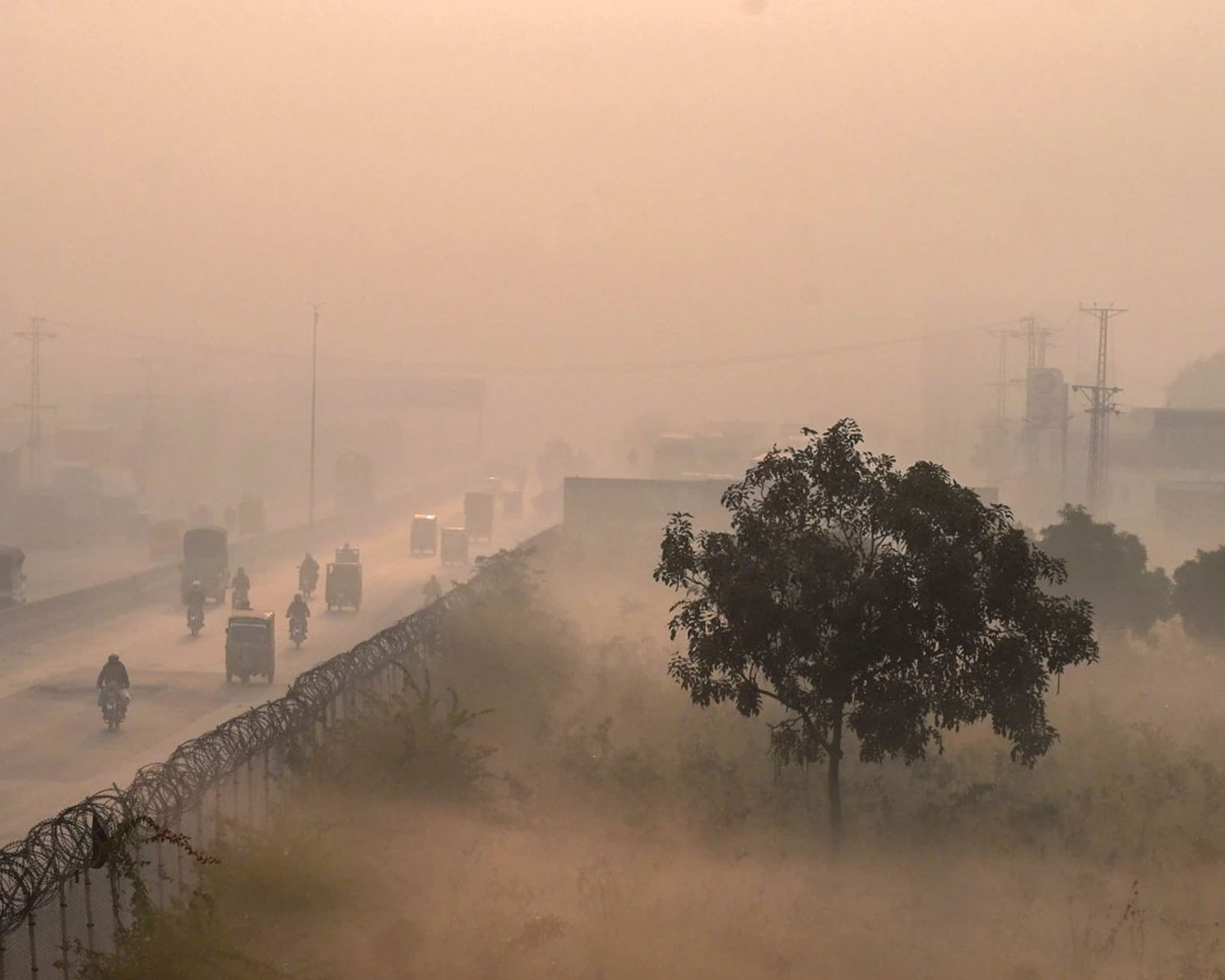
Persistent Smog Crisis Threatens South Asia
A severe smog crisis continues to affect South Asia, with cities like Lahore and New Delhi experiencing dangerously high levels of air pollution. This has led to significant health risks for millions of residents in the region. The situation has become increasingly alarming, as the toxic haze spreads across multiple cities, reducing visibility and worsening respiratory conditions.
On Saturday morning, Lahore took the top spot on the global pollution charts at 9:43 am, with an Air Quality Index (AQI) of 388, which is classified as hazardous. New Delhi followed closely behind with an AQI of 293, indicating serious concerns about air quality. The smog is driven by a combination of factors, including vehicular emissions, industrial pollutants, crop burning, and stagnant weather conditions. These elements have created a thick haze that affects both cities, making it difficult for people to breathe and see clearly.
By 10:15 am, the situation worsened rapidly. New Delhi surged to the top with an AQI of 456, while Lahore slipped to second place with an AQI of 332, still in the hazardous category. In Lahore, the main pollutant was fine particulate matter (PM2.5), measured at 241 micrograms per cubic metre—approximately 48 times higher than the World Health Organisation’s (WHO) safe limit. Karachi also saw its air quality deteriorate, reaching an AQI of 231, classified as very unhealthy.
Other major cities in Punjab experienced similarly dire conditions. Gujranwala recorded an AQI of 431, with PM2.5 levels 61 times above the WHO limit, while Faisalabad reached 337, nearly 49 times higher than the recommended threshold. Officials in Punjab attributed the worsening air quality to polluted easterly winds blowing in from India, which have exacerbated the haze that has been affecting much of Punjab and northern India for several days.
The thick smog has triggered widespread complaints of throat irritation, coughing, and breathing difficulties. Public health experts have urged residents to limit outdoor activity and wear protective masks, warning of heightened risks of stroke, heart disease, lung cancer, and respiratory infections linked to prolonged exposure.
The Punjab Environment Department issued a recent advisory confirming that easterly winds from India are worsening air quality in Lahore. “The average AQI in Lahore is expected to remain between 320 and 360,” the advisory stated. “While pollution levels are high, they are somewhat under control. Improvement is expected between 1 pm and 5 pm.”
The smog has also disrupted transportation, with dense fog and low visibility forcing the temporary closure of the M-1 Motorway from Peshawar to Rashakai. According to a motorway police spokesperson, the route has since reopened after visibility improved. Citizens have been advised to avoid unnecessary travel during foggy conditions.
The smog season coincides with the onset of winter, when lower temperatures, stagnant air, and widespread crop burning trap pollutants near the ground across the Punjab plains. As the environmental crisis deepens, experts warn that coordinated regional action and public cooperation are urgently needed to mitigate health impacts and curb emissions during this hazardous smog season.
Key Pollutants and Their Impact
- Fine Particulate Matter (PM2.5): This is one of the most dangerous pollutants, as it can penetrate deep into the lungs and bloodstream. In Lahore, PM2.5 levels were 241 micrograms per cubic metre, far exceeding the WHO’s safe limit.
- Vehicular Emissions: A major contributor to urban air pollution, especially in densely populated areas like Lahore and New Delhi.
- Industrial Pollutants: Factories and power plants release various harmful substances that contribute to the formation of smog.
- Crop Burning: Farmers often burn crop residues, releasing large amounts of smoke and particulates into the atmosphere, particularly during the winter months.
Regional Effects and Responses
- Lahore: Experienced the highest AQI of 388 at 9:43 am, with PM2.5 levels significantly above the WHO limit.
- New Delhi: Recorded an AQI of 293 initially, later rising to 456, highlighting the severity of the crisis.
- Karachi: Saw its AQI reach 231, reflecting the spread of the smog beyond just the northern regions.
- Gujranwala and Faisalabad: Both cities faced extremely high AQI levels, with PM2.5 concentrations well above safe thresholds.
Transportation Disruptions
- M-1 Motorway Closure: The motorway was temporarily closed due to dense fog and low visibility, disrupting travel between Peshawar and Rashakai.
- Reopening of Routes: After visibility improved, the motorway was reopened, but citizens were advised to avoid unnecessary travel during foggy conditions.
Long-Term Solutions
Experts emphasize the need for long-term strategies to combat the smog crisis. This includes stricter regulations on industrial emissions, promoting cleaner energy sources, and implementing policies to reduce crop burning. Public awareness campaigns and community involvement are also essential in mitigating the health impacts of air pollution.