
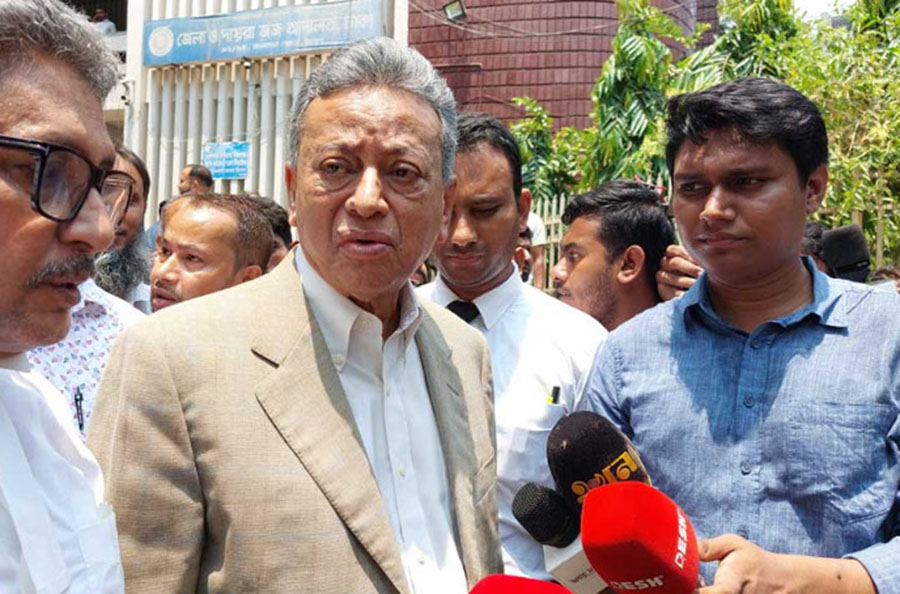
BNP Leader Urges Political Parties to Avoid Confrontation Over Referendum Issue
BNP senior leader Amir Khosru Mahmud Chowdhury has called on political parties to avoid escalating tensions over the issue of a referendum, emphasizing that the current Constitution does not provide for such a process. He stressed the importance of maintaining stability and preventing political confrontation.
“The current interim government has been formed under the existing Constitution and has taken oath in accordance with it. There is no provision for a referendum in this Constitution,” he stated during a dialogue titled ‘Jonotar Ishthehar (People’s Manifesto)’ at a city hotel.
Khosru highlighted that if political parties wish to introduce a referendum, they must first secure a public mandate through the next election. He suggested that proposals should be presented in Parliament, and only after these are approved can a referendum be held.
“We may have many desires and demands, but not all of them can be met by sitting in Dhaka and trying to reach consensus through the Consensus Commission. The only real solution is to go to the people and resolve these issues through their mandate,” he said.
As a member of the BNP Standing Committee, Khosru emphasized the need for political parties to embrace the spirit of a people’s mandate rather than imposing their ideas on others.
Call for Respect and Stability
Khosru acknowledged that everyone has the right to protest. However, he noted that the people of Bangladesh no longer want confrontational politics. “They want stability. Even when there is disagreement, people want to show respect for others’ views. That culture must take root among us,” he added.
He warned against rushing to the streets over the referendum issue, cautioning that such actions could lead to violence. “You can’t keep going out into the streets over every issue. If one group stages a protest and another group then also takes to the streets in response, what will happen? There will be clashes. If the largest party mobilizes on the streets and another large group protests against them, we will see violent confrontation,” he said.
Khosru pointed out that the people of Bangladesh did not remove autocratic ruler Sheikh Hasina only to drag the country back into confrontational politics. “We must be extremely careful. There are those who may try to link such actions to attempts to disrupt or delay the election,” he said.
Consensus and Democratic Values
Khosru mentioned that BNP initially announced a 27-point state reform proposal, which was later expanded to 31 points through consultations with 42 parties and people from all walks of life. He explained that after publishing the proposal, they sought public feedback nationwide and online, inviting suggestions to refine it further.
“People’s input is essential. Each party has its own philosophy and ideas, but no one should try to impose their views outside the agreed consensus,” he said.
After long discussions under the Consensus Commission, political parties reached an agreement and signed a joint charter, he added, stating, “That consensus must be respected during implementation. No one can enforce their own version unilaterally.”
Khosru observed that after 15-17 years of Sheikh Hasina’s rule, an authoritarian mindset has developed, with some politicians believing only their opinions matter. “But democratic politics requires respect for differing views,” he said.
Concerns Over Election Integrity
He warned that attempts to bypass consensus or impose unilateral decisions could undermine democracy. “There is no scope to go beyond the consensus reached among political parties. If anyone wants to move beyond that, they should go to the people in the next election with their manifesto.”
Referring to the recent killing in Chattogram, Khosru suggested it appeared to stem from internal feuds within a student organization but suspected that those trying to delay or obstruct the upcoming election might be involved.
On BNP’s election preparations, he said the party’s forthcoming manifesto would focus on job creation, rural economic growth, education, healthcare, and investment reform.
“BNP has a clear plan to create 10 million jobs within 18 months. We have identified exactly where and how those jobs will be created,” he said, adding that the plan prioritizes agriculture, manufacturing, and services.
Khosru also pledged to invest up to 5% of GDP in education and healthcare, focusing on skills development and technology-based employment for the youth.
“We will not pursue mega projects by printing money or taking excessive loans. Our investment will focus on job creation and sustainable growth,” he said.