
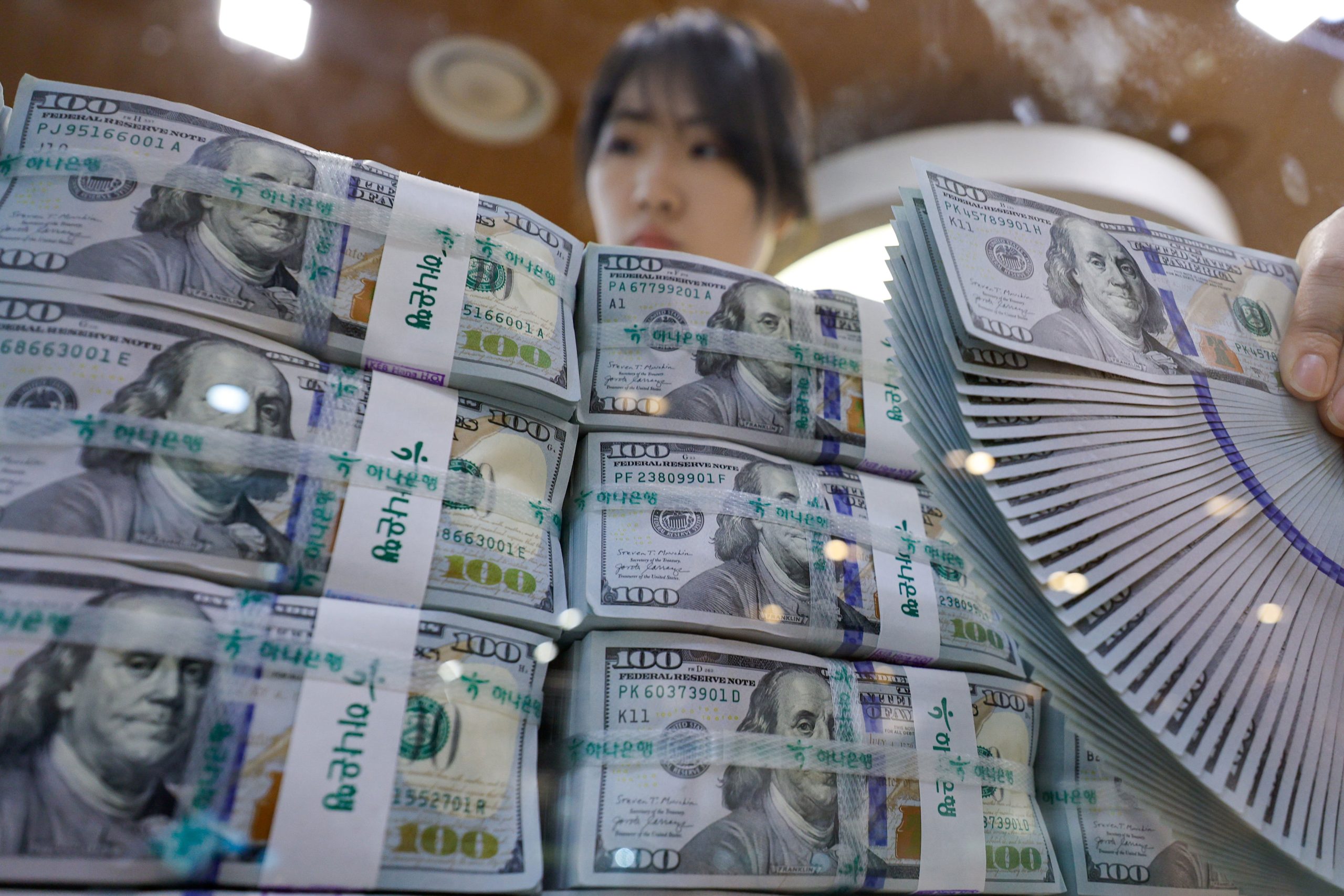
Overview of South Korea’s Foreign Asset Management
The foreign asset returns managed by the Ministry of Economy and Finance and the Bank of Korea have historically shown negative results once every four years. This trend has raised concerns, especially in light of recent developments involving the Korea-U.S. negotiations. According to these discussions, South Korea is expected to invest a total of $200 billion in cash within the U.S., with an annual limit of $20 billion.
KIC’s Performance and Growth
According to data provided by the Korea Investment Corporation (KIC) to the office of Rep. Cha Gyu-geun from the Rebuilding Korea Party on the 9th, KIC reported an 11.7% return from the start of this year until the end of September. As a result, the size of foreign assets under KIC’s management increased from $206.5 billion at the end of last year to $227.6 billion by the end of September this year—an increase of $21.1 billion over nine months.
Among the various funding methods considered for the U.S. investment during the Korea-U.S. negotiations, the foreign assets entrusted to KIC by the Bank of Korea and the Ministry of Economy and Finance represent the largest portion. This highlights the critical role KIC plays in managing South Korea’s foreign investments.
Stable Returns Over the Past Three Years
Over the past three years, KIC has maintained relatively stable annual returns. For instance, it achieved a 11.6% return in 2023 and 8.49% in 2024. These figures have remained close to the benchmarks, showing consistent performance. However, since KIC first received $1 billion in entrusted assets from the Bank of Korea in 2006, there have been five instances of operational losses over the 20-year period up to this year: in 2008, 2011, 2015, 2018, and 2022.
Notable Losses and Challenges
One significant example occurred in 2022, when the return rate dropped to -14.4% immediately after the COVID-19 pandemic. This led to a substantial reduction in the size of KIC-managed foreign assets, which fell from $205 billion at the end of 2021 to $169.3 billion by the end of 2022—a decrease of $35.7 billion in just one year.
From 2014 to last year, KIC-managed foreign assets grew by $121.8 billion, increasing from $84.7 billion to $206.5 billion. This growth resulted in an annual average of approximately $12 billion. However, this amount falls significantly short of the agreed-upon scale for the U.S. investment, raising questions about the feasibility of meeting the target.
Market Concerns and Potential Impacts
Market insiders have pointed out that concerns over funding the U.S. investment could act as a potential factor for exchange rate increases. The uncertainty surrounding the specific scale and methods of investment has led to heightened market anxiety. However, some analysts argue that these concerns may be exaggerated, as the details of the investment are still under negotiation.
Conclusion
The performance of KIC and its role in managing South Korea’s foreign assets remain crucial in the context of the country’s financial strategies. While KIC has shown stability in recent years, the historical volatility and challenges in meeting investment targets highlight the complexity of managing large-scale foreign assets. As negotiations with the U.S. continue, the focus will likely shift towards finding sustainable solutions that balance economic goals with market stability.