Overview of Culinary Evaluations
This year’s major culinary evaluations, including the ‘Michelin Guide’ and the ‘Blue Ribbon Survey,’ have concluded. Restaurants that were selected in all three assessments—each with distinct evaluation criteria—must stand out. The Michelin Guide, which relies on a small group of experts, the Blue Ribbon Survey, which gauges restaurant quality based on public opinion, and the ‘Seoul Food 100 Selection,’ curated by 60 domestic food experts for foreign visitors, were analyzed.
A total of 16 restaurants were simultaneously selected in all three: 36 Michelin-starred restaurants (one star or higher), 43 Blue Ribbon Survey top-tier restaurants (three ribbons), and the Seoul Food 100 Selection. These included nine Korean, four Western, and three Japanese restaurants.
Korean Restaurants in the Spotlight
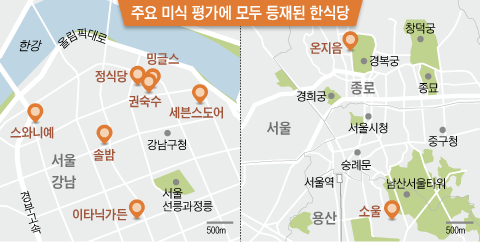
The nine Korean restaurants were: Kwon Sooksoo, Mingles, Seventh Door, Soul, Solbam, Soigne, Onjium, Itanic Garden, and Jeongsingdang. Choi Jeong-yoon, Korean regional chair of the ‘World’s 50 Best Restaurants’—often called the “Olympics of gastronomy”—said, “These nine restaurants are recognized globally for their technical precision, creativity, and embodiment of Korean identity. They can be considered national representative Korean restaurants.” Known as ‘modern Korean cuisine,’ these fine-dining establishments are leading K-food trends worldwide, including in New York.
Diverse Sub-Genres Within Korean Cuisine
While grouped under Korean cuisine, the nine restaurants span diverse sub-genres, from traditional Korean (Onjium) to ‘contemporary Korean,’ where boundaries with other genres blur. Food critic Kang Ji-young explained, “Within the broader category, Kwon Sooksoo, Mingles, Solbam, and Jeongsingdang can be seen as ‘Korean cuisine closer to tradition,’ while Soigne, Seventh Door, Itanic Garden, and Soul fall into ‘Korean cuisine at the intersection of other genres.’”
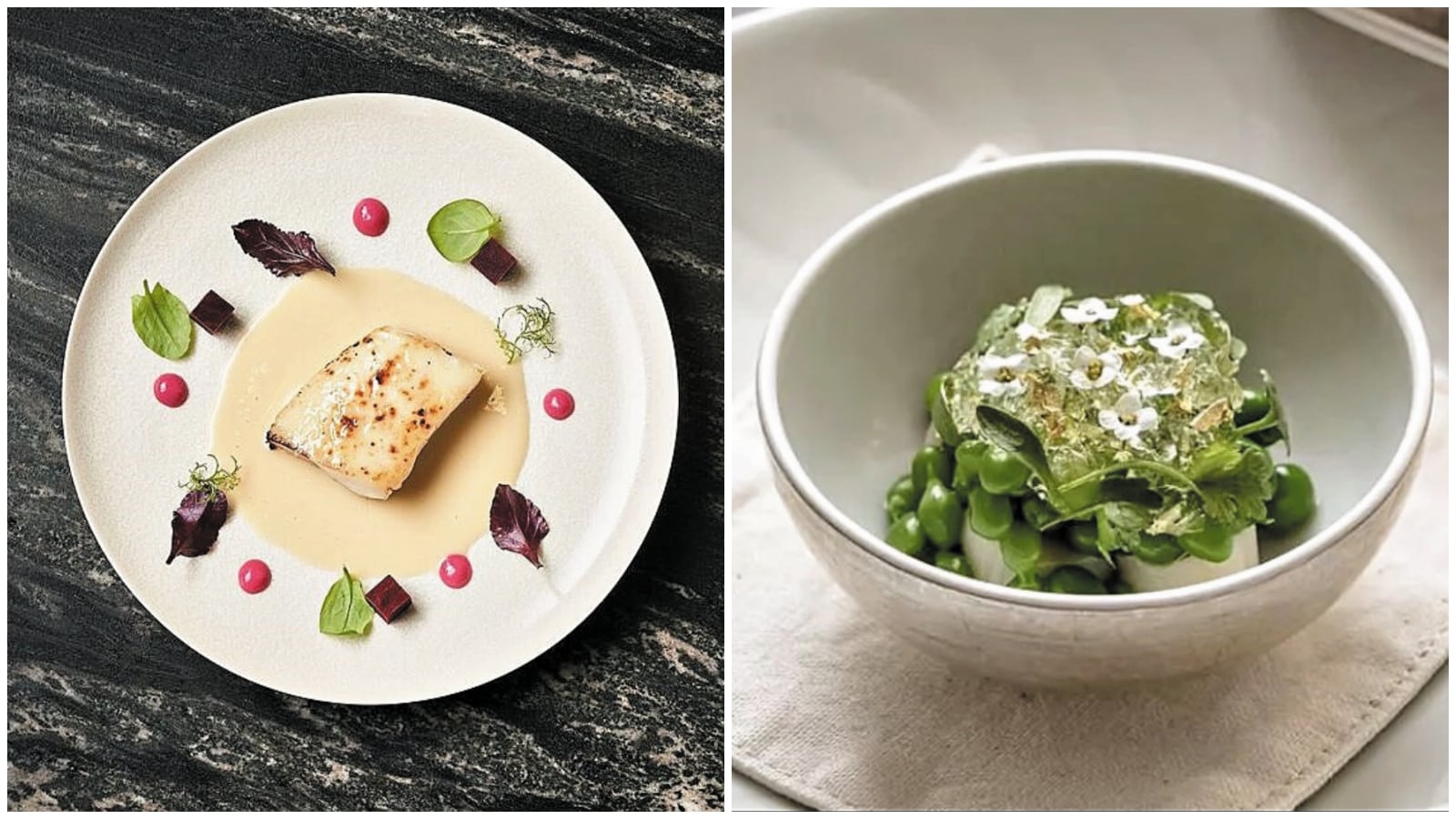
For instance, Kwon Sooksoo builds menus around traditional Korean flavors, famously featuring a ‘Kimchi Cart’ with homemade kimchi varieties early in the course. In contrast, Soigne appears French at first glance but reinterprets Korean flavors and ingredients.
Most selected Korean restaurants are part of the ‘Gangnam fine-dining’ scene, but Soul stands apart as one of the culinary leaders in Itaewon and Haebangchon, alongside Chef Anh Sung-jae’s ‘Mosu.’ Choi described Soul as, “A pioneer of a new gastronomic territory in Haebangchon, crafting Korean cuisine with a youthful sensibility.”
Chinese and Western Cuisine Highlights
No Chinese restaurants made the list, likely reflecting Michelin’s tendency to rarely award stars to Chinese establishments. This year, only two of Michelin’s 36 starred restaurants (5.5%) were Chinese. Food columnist Jeong Dong-hyun noted, “Michelin favors refined service and creative menus, but the strength of Korean Chinese restaurants lies in elevating conventional dishes. In this regard, the Michelin Guide may diverge from local tastes.”
In Western cuisine, the four restaurants selected in all three evaluations were: Kang Min-chul Restaurant, La Miette, Alla Prima, and Zero Complex. In Japanese cuisine, the three were: Goryori Ken, Mitou, and Sosuhun.
Common Appearances Across Evaluations
When comparing Michelin’s ‘Bib Gourmand’ list (affordable yet excellent restaurants), all Blue Ribbon ribbons (one to three), and the Seoul Food 100 Selection, five restaurants appeared in all three: pork restaurant Geumdwaejigukdang, vegan Korean restaurant Kkotbap Epida, Pyongyang cold noodle restaurant Uraeok, mandu shop Jahason Mandu in Buam-dong, and Jinjin, a Chinese restaurant by chefs Wang Yong-seong and Hwang Jin-sun.