
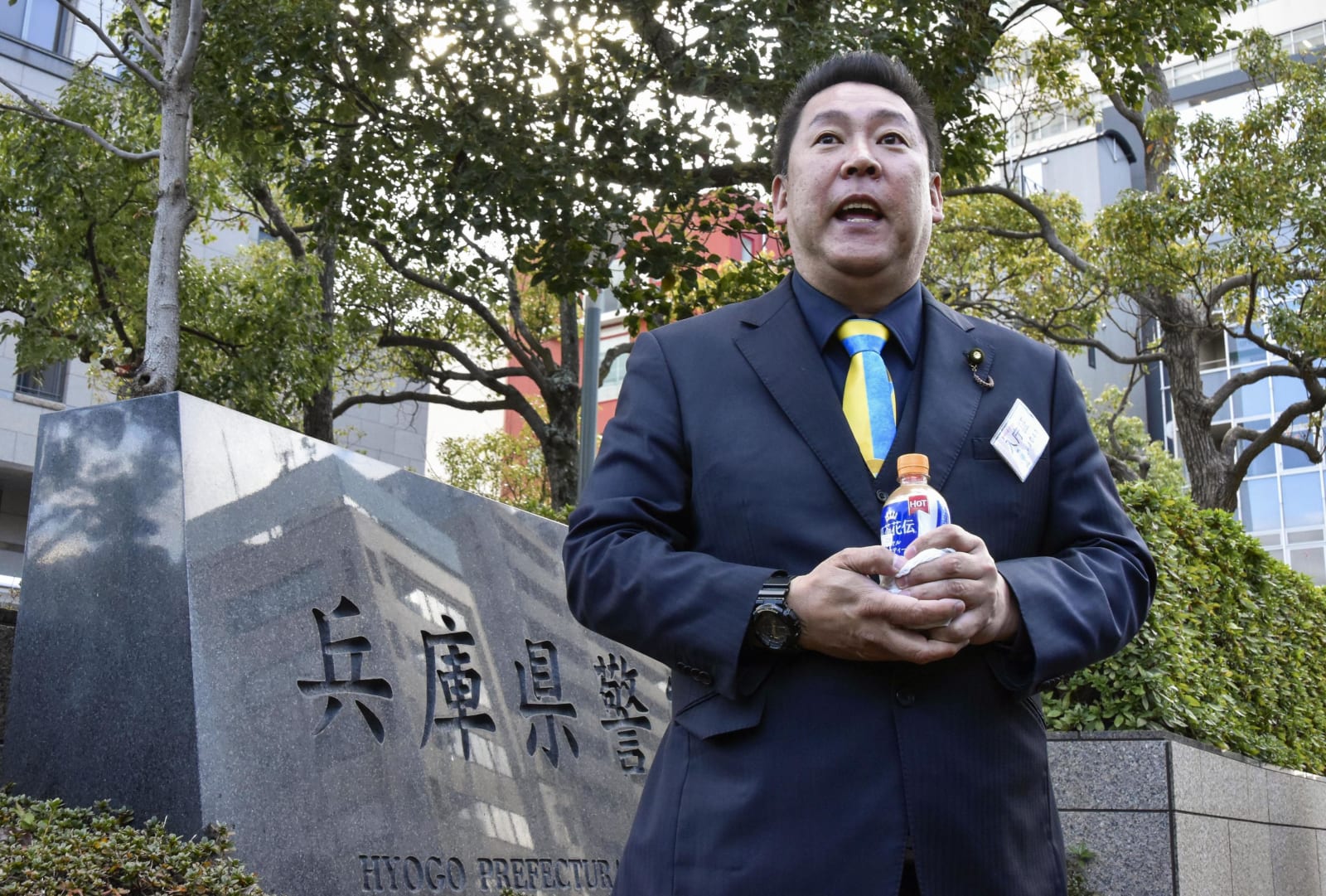
Arrest of Japanese Political Leader Over Defamation Allegations
In a significant development in Japanese politics, Takashi Tachibana, the leader of the NHK Party, was arrested on Sunday for allegedly defaming a critic of a candidate he supported in the Hyogo gubernatorial election. The arrest has sparked discussions about the ethical boundaries of political discourse and the responsibilities of public figures.
Tachibana, who leads a political party that campaigns against Japan’s public broadcaster, NHK, is accused of spreading false information about Hideaki Takeuchi, a member of the Hyogo prefectural assembly. The allegations stem from remarks made during a campaign speech in December last year, where Tachibana claimed he was “pretty sure” that Takeuchi was “undergoing police questioning.”
This claim was later repeated in a social media post and another campaign speech in January, where Tachibana alleged that Takeuchi was “scheduled to be arrested.” Following the spread of these statements, the prefectural police issued a denial, which led Tachibana to issue an apology.
Despite the denial, the claims had already caused significant damage. Takeuchi, who was part of a special committee investigating abuse of power allegations against then-Hyogo Governor Motohiko Saito, faced intense online harassment. He eventually resigned as an assembly member and passed away in January.
The widow of Takeuchi filed a criminal complaint against Tachibana earlier this year, asserting that his statements were entirely false. In response, Tachibana stated on social media that he had informed the police during a voluntary questioning that there were sufficient grounds for his remarks.
Political Context and Implications
Tachibana’s party holds a seat in the House of Councillors, and he has been associated with a parliamentary group led by the ruling Liberal Democratic Party. His political career has often been marked by controversy, particularly regarding his criticisms of the NHK and his involvement in the Hyogo gubernatorial election.
During the election, Tachibana criticized the committee that investigated Saito’s alleged misuse of power. He claimed he was using the opportunity to support Saito, although Saito ultimately lost his position after a no-confidence motion was passed by the prefectural assembly. However, Saito later secured reelection.
The arrest of Tachibana comes at a time when he was preparing to announce his plans to run for mayor of Ito in Shizuoka Prefecture. The mayoral election is scheduled for December, and the timing of the arrest raises questions about how it might affect his campaign.
Police Response and Legal Proceedings
According to the police, Tachibana was arrested to prevent any potential evidence tampering. They also described his remarks as “groundless,” indicating that they do not believe the claims he made were substantiated.
The case highlights the complex relationship between political speech and legal accountability. While political leaders often make bold statements, the line between legitimate criticism and defamation can be thin. This incident serves as a reminder of the importance of responsible communication in public life.
As the legal proceedings unfold, the case will likely draw attention from both the media and the public. It underscores the need for transparency and integrity in political discourse, especially when such statements can have real-world consequences for individuals involved.
Conclusion
The arrest of Takashi Tachibana marks a pivotal moment in Japanese political history. It brings into focus the challenges of balancing free speech with the responsibility to avoid spreading false information. As the situation develops, it will be crucial to monitor how this case influences future political behavior and the broader conversation around accountability in public office.